
You’ve used the creams. You’ve taken the antibiotics. For a few weeks, your skin calms down — and then it flares again.
Persistent rosacea isn’t a sign that you haven’t found the right topical yet. It’s often a signal that something systemic is driving the inflammation — and until that is identified, symptom management will only go so far.
You’ve used the creams. You’ve taken the antibiotics. For a few weeks, your skin calms down — and then it flares again. If you’re looking for rosacea root cause treatment, you’re in the right place.
Persistent rosacea isn’t a sign that you haven’t found the right topical yet. It’s often a signal that something systemic is driving the inflammation — and until that is identified, symptom management will only go so far.
At Unique Verve, we approach rosacea through a functional medicine lens: investigating the internal contributors — gut health, immune dysregulation, hormonal patterns, toxin burden, and more — that conventional dermatology rarely evaluates.
best functional medicine & skincare practitioner award winner by:





The rosacea root cause treatment approach is commonly sought by people who:
If any of these resonate, a functional medicine evaluation and rosacea root cause treatment may offer a different perspective than what you’ve tried before.
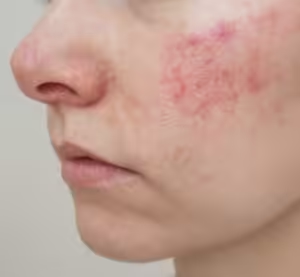
Conventional rosacea management focuses primarily on reducing visible symptoms — topical anti-inflammatories, azelaic acid, ivermectin cream, or oral antibiotics. These can provide meaningful short-term relief. But for many patients, flare-ups return once treatment stops.
This pattern suggests that the upstream contributors remain active.
Emerging research and clinical observation point to several systemic factors that may sustain rosacea activity:
Studies have found a significantly higher prevalence of small intestinal bacterial overgrowth (SIBO) in rosacea patients compared to healthy controls — with some research showing improvement in skin symptoms following SIBO eradication. H. pylori colonization has also been associated with rosacea in a subset of patients. The gut-immune axis appears to influence vascular reactivity and inflammatory tone in ways that may manifest on the skin.
Rosacea and histamine intolerance share significant clinical overlap: flushing, facial redness, heat sensitivity, and reactivity to wine, aged cheeses, fermented foods, and temperature changes. Impaired histamine clearance — often related to DAO enzyme activity or gut permeability — may sustain inflammatory and vascular responses in susceptible individuals.
Many patients report that rosacea worsens around hormonal transitions — perimenopause, luteal phase, or periods of elevated cortisol. Estrogen influences vascular tone and skin barrier competence; fluctuations in estrogen and progesterone may contribute to flare variability. Cortisol dysregulation through chronic stress activates inflammatory cascades that can sensitize facial vasculature over time.
Thyroid hormones regulate skin cell turnover, barrier integrity, and sebaceous gland activity. Both hypothyroidism and subclinical thyroid dysfunction can compromise skin resilience and increase susceptibility to inflammatory responses. A full thyroid panel — including free T3, free T4, reverse T3, and TPO as well Tg antibodies — often reveals patterns that standard TSH screening misses.
The skin is a secondary elimination organ. When the liver or gut is under stress, inflammatory metabolites may be rerouted through the skin. Elevated environmental toxin burden, impaired phase II liver detoxification, or significant gut permeability can compound inflammatory signaling in rosacea-prone individuals.
Demodex folliculorum mites are a normal component of facial skin flora, but in rosacea patients — particularly papulopustular subtype — they are often found in significantly higher densities. Their presence may trigger immune activation and perpetuate the inflammatory cycle, particularly in the context of a compromised skin barrier or immune imbalance.
Because these contributors interact and vary by individual, a one-size-fits-all protocol is unlikely to produce lasting results. This is the core premise of a functional medicine approach.
Rosacea root cause treatment begins with a comprehensive evaluation of your skin presentation, health history, symptom timeline, dietary patterns, stress history, and any available lab work. This is not a brief intake — it is a structured clinical investigation designed to surface the patterns and contributors that are specific to you.
This foundational step is where root-cause identification begins.
Using the data from your assessment and labs, I build a targeted, phased plan that may include:
Every recommendation has a clinical rationale and a measurable goal. The program spans three months because meaningful physiological recalibration — particularly in gut integrity, immune tone, and hormonal patterns — requires sustained, structured intervention.
Standard dermatology panels rarely capture the systemic contributors to rosacea. Depending on your presentation, testing may include:
Testing is individualized and discussed based on your clinical picture — not ordered as a blanket protocol.
Appropriate skincare selection is particularly important for rosacea-prone skin.
Clients receive personalized product guidance focused on barrier repair, function, preservation, irritation minimization, and long-term skin resilience.
I am with you every step of the way. Regular follow-ups, educational resources, and compassionate guidance ensure your progress toward optimal health.
Healing isn’t linear — and you’re not doing this alone.
We track progress, adjust protocols, and support your body as it recalibrates for sustainable results.
Your progress is monitored and recommendations are refined as needed to support sustainable outcomes.
You can heal your body and have glowing skin again. You can feel healthy and vibrant again!
Take charge of your well-being today. Start by booking a Comprehensive Skin and Health Assessment today.
Now that you understand the process, the next step is clarity.
A Comprehensive Functional Skin and Health Assessment allows us to connect the dots between your symptoms, labs, and lifestyle — so you’re no longer guessing.
Due to the individualized nature of this program, a limited number of new clients are accepted each month.
Still have questions? Review the FAQs at the bottom of the page or email us at [email protected]
"I had struggled with rosacea for years — constant redness, burning sensations, and unpredictable flare-ups. I tried multiple treatments that helped temporarily, but nothing felt sustainable. Working with Natalie was different. She took time to understand my triggers and overall health patterns. Within a few months, my skin felt calmer, less reactive, and significantly more stable. I finally feel confident leaving the house without worrying about sudden redness." With targeted testing, a personalized nutrition and supplement regimen, Natalie reduced my Hashimoto's antibodies by 90%, rebalanced my hormones, and completely revitalized my metabolism in less than one year. I lost all the weight I had gained — and then some — regained my energy, and feel better now than I did before my diagnosis. Over two years later, I still work with Natalie regularly.
Sarah P.
★★★★★
"My rosacea used to flare with stress, certain foods, and even temperature changes. Natalie helped me understand that my skin wasn't just reacting randomly. The personalized plan, along with customized facial treatments, made a noticeable difference. My skin tone looks more even, and the constant flushing has reduced dramatically. I appreciate the thoughtful, whole-body approach."With targeted testing, a personalized nutrition and supplement regimen, Natalie reduced my Hashimoto's antibodies by 90%, rebalanced my hormones, and completely revitalized my metabolism in less than one year. I lost all the weight I had gained — and then some — regained my energy, and feel better now than I did before my diagnosis. Over two years later, I still work with Natalie regularly.
Allyson B.
★★★★★
"I had been prescribed antibiotics multiple times for rosacea flare-ups. While they helped initially, the redness and irritation always returned. Natalie explained a more integrative strategy and helped me explore contributing factors I had never considered. The results have been far more stable than anything I tried before. My skin finally looks healthier — and best of all, I have also lost some stubborn weight, my energy is back, and I no longer experience hair loss and GI symptoms."
Nicole D.
★★★★★
"For the first time, someone explained rosacea to me in a way that connected my skin to other symptoms I was experiencing. The comprehensive assessment and functional medicine program made everything feel individualized instead of generic. My skin tone is more balanced, and I no longer experience flare-ups. I feel like I finally have a plan that supports long-term stability rather than quick fixes."
Patricia G.
★★★★★
Rosacea does not have a single identifiable cause. Current research suggests it involves an interaction of vascular dysregulation, immune activation, impaired skin barrier function, and heightened inflammatory signaling. Contributing factors under active investigation include gut microbiome imbalances (particularly SIBO and H. pylori), demodex mite density, hormonal fluctuations, histamine intolerance, and genetic predisposition affecting inflammatory thresholds. Because these variables interact differently in each person, triggers and presentation vary significantly — which is why standardized protocols often produce inconsistent results.
Emerging evidence suggests that microbial influences, gastrointestinal dynamics, genetic predisposition, and immune patterning may also play a role in certain cases. Because rosacea appears to result from an interaction of several regulatory systems, triggers and contributing variables can differ significantly between individuals.
This variability is one reason why standardized treatment approaches may yield inconsistent results, and why a more individualized functional medicine approach can be beneficial.
Recurring flare-ups after treatment typically indicate that the upstream contributors have not been addressed. Topical therapies and antibiotics can reduce surface inflammation, but if the systemic drivers — gut permeability, hormonal dysregulation, histamine burden, toxin load — remain active, rosacea is likely to return once treatment stops. A functional medicine evaluation is designed to identify and address these underlying patterns rather than cycling through symptom management.
A functional medicine rosacea root cause treatment evaluates inflammatory drivers, barrier health, vascular sensitivity, and lifestyle variables to develop a personalized strategy rather than relying on a single intervention.
Yes, and this is one of the better-studied areas in rosacea research. Multiple clinical studies have identified a higher prevalence of SIBO in rosacea patients compared to healthy controls, with some showing skin improvement following treatment. The gut-skin axis operates through immune, inflammatory, and microbial pathways — dysbiosis, intestinal permeability, and altered microbial metabolites can influence skin inflammatory tone in ways that manifest as rosacea or worsen existing presentations.
Because triggers vary widely between individuals, identifying personal patterns is often key to improving long-term skin stability.
Hormonal fluctuations are a recognized trigger for many rosacea patients. Estrogen influences vascular tone and skin barrier function; changes during the luteal phase, perimenopause, or periods of elevated cortisol can lower the inflammatory threshold and increase flushing reactivity. Functional evaluation of sex hormones, estrogen metabolism pathways, and cortisol patterns can identify whether hormonal contributors are playing a role in your specific presentation.
Testing is individualized based on your presentation and history, and is always discussed before ordering. Commonly relevant panels include a Gut Zoomer and food sensitivity panel, full thyroid evaluation (beyond standard TSH), a urinary hormone panel to assess sex hormones and cortisol patterns, a Total Tox Burden panel, and a micronutrient assessment. Standard labs — CBC with differential, CMP, fasting insulin, fasting blood glucose, HbA1C, lipid panel — are also reviewed. The goal is to remove guesswork and allow for a targeted, strategic approach rather than trial and error.
For this reason, functional model may evaluate digestive health when clinically relevant.
Rosacea is conventionally described as a chronic condition requiring ongoing management. From a functional medicine rosacea root cause treatment perspective, the goal is to identify and address the physiological contributors driving chronic inflammation and vascular reactivity — with the aim of significantly reducing flare frequency and improving long-term skin stability. Results vary by individual, but many patients who have experienced limited success with conventional management find meaningful improvement when systemic contributors are properly investigated and addressed.
A dermatologist's primary focus is identifying and managing skin-level pathology — which is appropriate and valuable, particularly for diagnosis, subtype classification, and ruling out other conditions. A functional medicine rosacea root cause treatment approach is complementary rather than competitive: it investigates the systemic and lifestyle contributors that may be sustaining rosacea activity below the surface. Many clients have received a rosacea diagnosis and pursued conventional treatment before coming to us — the functional evaluation adds a layer of investigation that standard dermatology appointments are not structured to provide.
Yes. The Initial Functional Medicine Health & Skin Assessment and follow-up functional medicine appointments are available virtually. Lab testing through Vibrant Wellness and standard panels can be arranged remotely as well.
I’m Natalie, an AFMC-Certified Functional Medicine Practitioner with over two decades of experience in advanced skincare, wellness, and root-cause healing.
I am honored to have been recognized with the title of Boston’s Best Facial by InStyle Magazine, Allure Magazine, and Improper Bostonian Magazine, as well as being named Best Functional Medicine Practitioner. These recognitions reflect my commitment to excellence in both advanced skincare and integrative, root-cause wellness care.
As a Certified Functional Medicine Practitioner, I’ve completed a rigorous 3-year long training at The School of Applied Functional Medicine which is an Accredited Continuing Medical Education (CME) Provider.
WHAT IS AFMC CERTIFICATION (Advanced Training in Functional Medicine)?
Dedicated practitioners commit to 620+ hours of rigorous training in advanced functional medicine sciences and validated application through clinical case studies.
Read more about my Functional Medicine journey and education



Functional Medicine is a constantly evolving field — and staying current matters.
I am deeply committed to ongoing education and continuously invest in my clinical growth by:
Reviewing current clinical research and emerging studies
Attending advanced Functional Medicine seminars and professional trainings
Participating in educational webinars led by leading clinicians and researchers
Staying up to date on evolving lab technologies, protocols, and evidence-based strategies
This ensures that the care I provide reflects the most current science, while remaining personalized, practical, and results-driven.
Your health deserves more than outdated protocols — it deserves informed, intentional care.
Disclaimer: Information and content on this website is provided for information and educational purposes only, and is not intended as a substitute for the advice provided by your physician or other healthcare professional. No information offered here should be interpreted as a diagnosis of any disease, nor an attempt to treat or prevent or cure any disease or condition. If you have any concerns or questions about your health, you should always consult with a physician or other healthcare professional. Do not disregard, avoid, or delay obtaining medical or health-related advice from your healthcare professional. Always speak with your healthcare professional before taking any medications or supplements. Information provided on this website does not create a doctor-patient relationship between you and any professional affiliated with this website. Information and statements regarding dietary supplements have not been evaluated by the Food and Drug Administration and are not intended to diagnose, treat, cure or prevent any disease. Natalie Maibenko, a Functional Skincare Therapist is not acting in the capacity of a doctor and will not diagnose, treat or cure any disease, condition or other physical or mental ailment of the human body. Rather she serves as a mentor and guide who helps a client to reach her/his own health and wellness goals through implementing incremental, positive, healthy, sustainable lifestyle changes that help the client to live and thrive using simple methods.