Why Rosacea Flares After the Holidays
(And What Your Skin Is Actually Responding To)
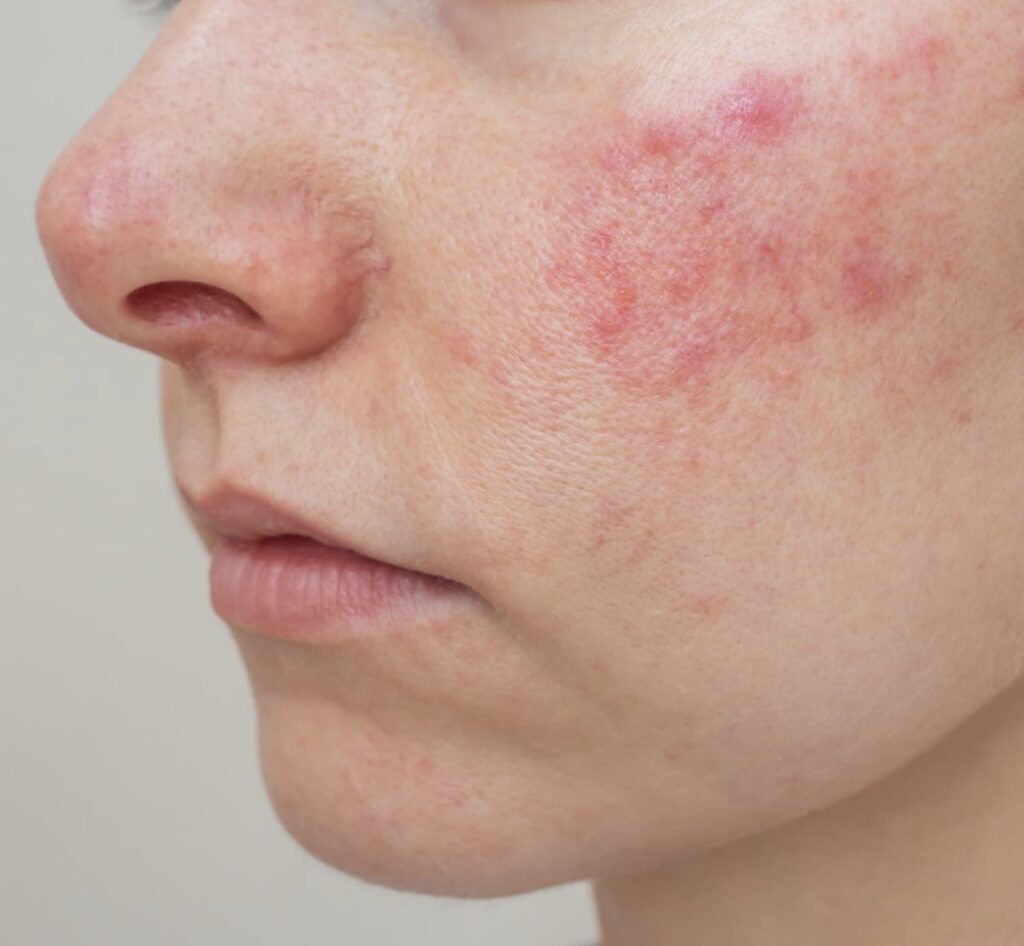
If your skin feels more red, flushed, sensitive, or reactive after the holidays, you’re not imagining it – and you’re not alone.
January is one of the most common times I see rosacea flares, persistent redness, broken capillaries, and sudden skin sensitivity appear or worsen. While many people blame cold weather or skincare products, the truth is far deeper.
Post-holiday rosacea is not a surface issue.
It’s a reflection of systemic inflammation, histamine overload, gut disruption, hormonal stress, and detoxification congestion — all of which peak after the holidays.
Let’s break down why this happens and how to truly reset your skin.
Why Redness Flares After the Holidays
During the holidays, even people with “healthy” skin routines experience a perfect storm internally:
Each of these alone can affect the skin.
Together, they significantly increase systemic inflammation.
When inflammation rises faster than the body can clear it, the skin often becomes the outlet.
1. Alcohol → Vasodilation + Histamine Release
Alcohol directly:
- Dilates blood vessels (causing flushing)
- Increases histamine release
- Slows liver detoxification
For rosacea-prone skin, this creates persistent redness and visible capillaries, not just temporary flushing.
2. Sugar & Refined Carbs → Inflammatory Cascades
Holiday sugar intake:
- Spikes blood sugar and insulin
- Increases inflammatory cytokines
- Triggers oxidative stress
Inflammation always shows up where the tissue is weakest — for many people, that’s the face.
Inflammation Doesn’t Stay Hidden
Inflammation doesn’t always show up as pain or illness.
For many people, it appears as:
- Facial flushing
- Persistent redness
- Burning or stinging skin
- Increased sensitivity to products
- Rosacea flares
The skin functions as more than a physical barrier: it is an active immune organ.
When the internal environment is overwhelmed, the skin reacts.
The Role of Histamine in Rosacea Flares and Facial Redness
Many holiday foods are histamine “bombs”, including:
- Wine, champagne and alcohol in general
- Aged cheeses
- Chocolate
- Leftovers
- Fermented foods
Histamine plays a role in immune signaling and blood vessel dilation.
When histamine clearance pathways are overwhelmed and when the body’s ability to break down histamine is reduced or impaired, symptoms may include:
- Flushing
- Red patches
- Warm or burning skin
- Rosacea-like reactions
- Dermatitis
This is why redness often feels sudden or intense, even when skincare hasn’t changed.
Gut-Skin Axis – Gut Disruption=Skin Inflammation

The gut and skin communicate constantly through the immune system.
Holiday stress, late meals, alcohol, and sugar can:
- Disrupt the gut microbiome balance allowing “bad” bugs to thrive and take over the space in the gut
- Increase intestinal permeability (“leaky gut”)
- Allow inflammatory compounds into circulation
When this happens, the skin often responds quickly.
This gut–skin connection explains why topical products alone may soothe temporarily, but don’t always prevent flares.
The skin is an immune organ – when the gut barrier breaks down, the skin reacts.
Stress, Sleep Loss & Cortisol Dysregulation
Holiday stress + poor sleep:
This is why rosacea often burns, tingles, or flushes more intensely during stressful periods.
Why Skincare Alone Often Isn’t Enough
Topical products can:
✔ Temporarily soothe
✔ Reduce surface inflammation
✖ But they cannot correct histamine overload
✖ They cannot restore gut integrity
✖ They cannot support liver detoxification
That’s why rosacea often improves briefly and why many people experience a cycle:
calm → flare → calm → flare.
True rosacea correction requires internal recalibration.
Liver Congestion & Detox Overload
Your liver processes:
- Alcohol
- Hormones
- Environmental toxins
- Histamine
- Inflammatory byproducts
When the liver is overloaded, toxins are re-circulated instead of eliminated, and the skin becomes a secondary detox organ — resulting in rosacea flares, redness, breakouts, and sensitivity.
Supporting the Skin by Calming the Body
For many people with rosacea and chronic redness, meaningful improvement happens when internal inflammation is addressed — not just when the skin is soothed from the outside.
Approaches that support:
- inflammation regulation
- histamine clearance
- gut balance
- and the body’s natural detox pathways
often help reduce the internal stressors that drive facial redness and reactivity.
This is why many of my clients choose a structured, functional-medicine–based detox approach — not as a quick fix or “cleanse,” but as a way to support the systems that influence how the skin responds.
This detox isn’t about restriction.
It’s about helping the body process what it’s already dealing with more efficiently.
If rosacea flares feel cyclical or difficult to calm with skincare alone, addressing internal triggers can be a valuable next step.
Redness Is Feedback, Not a Flaw
One of the most important reframes is this:
Your skin isn’t overreacting.
It’s responding.
Facial redness and rosacea flares are often the body’s way of communicating that something internally needs attention.
When the internal environment becomes calmer, when histamine overload challenges are addressed, the skin follows.
How a Functional Medicine Detox Calms Rosacea From Within
My Functional Medicine Detox Program is designed to address the root drivers of rosacea and skin redness.
Key Benefits for Rosacea-Prone Skin
✔ Supports liver detox pathways
✔ Reduces histamine burden
✔ Restores gut barrier integrity
✔ Lowers systemic inflammation
✔ Reduces oxidative stress
✔ Improves insulin sensitivity, skin resilience and tolerance
When inflammation calms internally, the skin no longer needs to overreact.
Why Awareness Is the First Step
You don’t need to “fix” your skin overnight.
But understanding:
- why rosacea flares happen
- what triggers them
- and why timing (like post-holidays) matters
– gives you control instead of frustration.
From there, you can choose the right next step — whether that’s deeper education, personalized guidance, or simply observing patterns more clearly.
Final Thought
Rosacea flares and facial redness are not surface-level issues.
Rosacea and rosacea flares are the skin’s way of signaling that the body is under internal stress — whether from inflammation, histamine load, gut and hormonal imbalance or an overwhelmed detox system.
When these internal factors are understood and supported, the skin becomes calmer, more resilient, and less reactive over time.
This shift doesn’t happen by forcing the skin to behave — it happens by listening to what it’s responding to.
If you’re curious whether internal support could be helpful for your skin, this is something I explore with clients on an individual basis.
Learn more about my functional medicine approach in reversing rosacea and health problems –here.
Learn more about Functional Medicine Cellular Detox – here.

Founder, Unique Verve
Master Esthetician | Certified Functional Medicine Practitioner
Specializing in Root-Cause Skin Health, Functional Medicine & Cellular Detoxification
As a Certified Functional Medicine Practitioner my Expertise Encompasses:
- Immune System: frequent illness, UTIs, yeast infections
- Allergies, Asthma
- Skin Problems: acne, cystic acne, rosacea, dermatitis, ichthyosis, psoriasis, vitiligo, melasma
- Inflammation: arthritis, rhinitis, joint & muscle pain, migraines, headaches
- Sleep Disturbunces, Insomnia
- Gut Problems: IBS/IBD, bloating, acid reflux, gas, constipation, diarrhea, parasites, fungal/yeast overgrowths
- Hormonal Imbalances: PCOS, PMS symptoms, weight problems/inability to lose weight, thyroid problems
- Hair Loss, Alopecia
- Mood Imbalances: anxiety, depression, irritability
- Metabolic Dysfunction, Insulin Resistance, Type 2 Diabetes
- Optimizing Wellness for Successful Pregnancy
- Autoimmune Conditions: Hashimoto’s thyroiditis, grave’s disease, reumatoid arthritis (RA), lupus, etc
- Bone Health: osteopenia/ osteoporosis
- Effective Anti-Aging Strategies without Injectables with the inside-out & outside-in approach
- Detoxification of Heavy Metals, Mycotoxins, Environmental Toxins
- Reversing Breast Implant Illness
- Preparation for the Explant Surgery and Optimization of Wellness & Vitality Post-Explant
DISCLAIMER:
Information and content on this website is provided for educational purposes only, and is not intended to diagnose, treat and to be a substitute for the advice provided by your physician or other healthcare professional. No information offered here should be interpreted as a diagnosis of any disease, nor an attempt to treat or prevent or cure any disease or condition. If you have any concerns or questions about your health, you should always consult with a physician or other healthcare professional. Do not disregard, avoid, or delay obtaining medical or health-related advice from your healthcare professional. Always speak with your healthcare professional before taking any medications, supplements or pursuing any wellness programs. Information provided on this website does not create a doctor-patient relationship between you and any professional affiliated with this website.