Discover Root Cause of PCOS through Functional Medicine Lens
PCOS rarely looks the same in every woman — but the underlying drivers are often strikingly consistent. Acne, hair loss, and irregular cycles are not isolated problems. They are the visible expression of internal imbalances that, when identified through functional medicine approach and precision testing, can be systematically addressed.
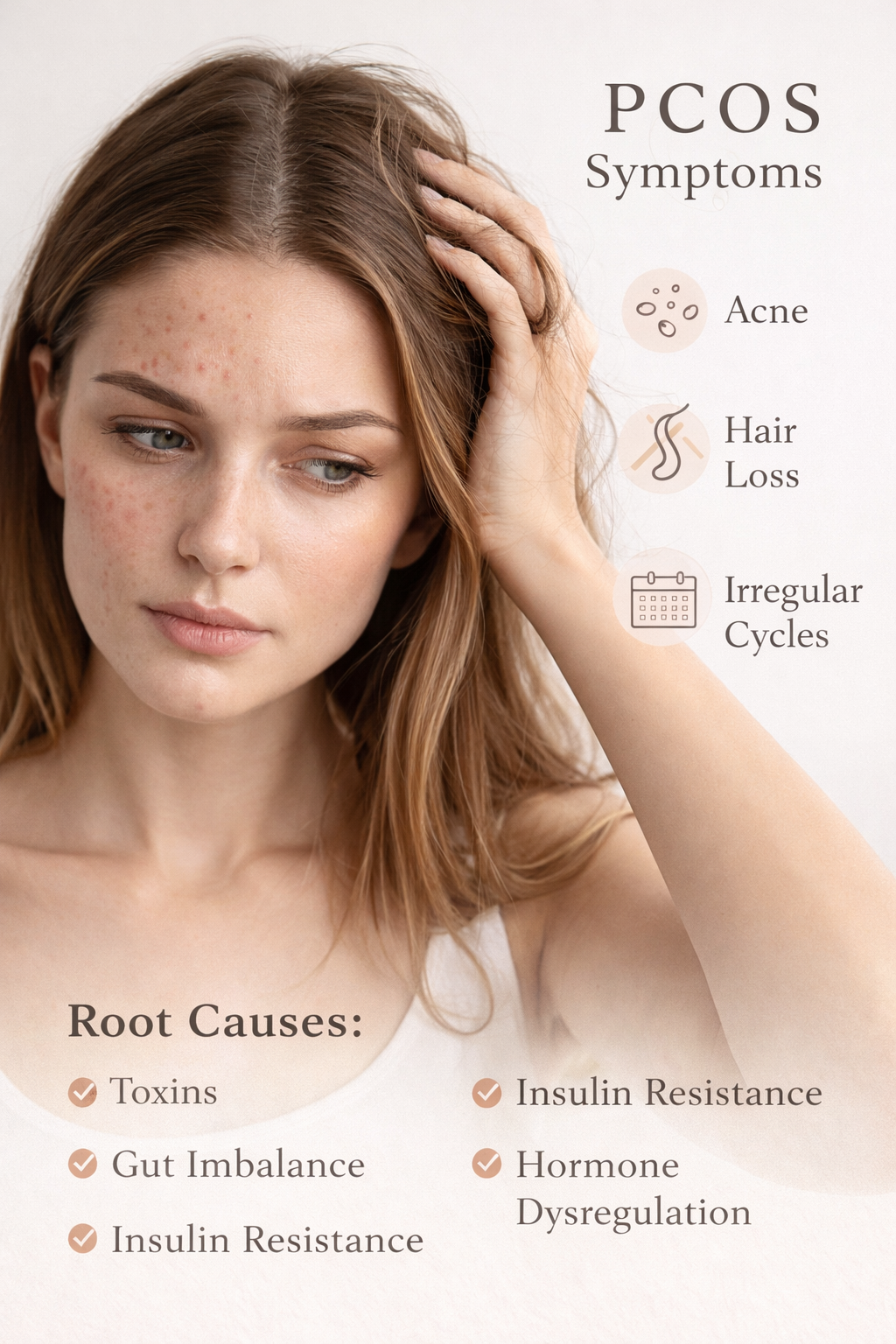
PCOS symptoms are visible signals of deeper upstream dysfunction — including insulin resistance, gut imbalances, toxic burden, and hormone dysregulation.
Polycystic Ovary Syndrome affects an estimated 8–13% of women of reproductive age, yet the majority are managed with a one-size-fits-all approach that addresses symptoms while the underlying dysfunction continues unchecked. In functional medicine, we operate from a fundamentally different premise: hormones are downstream messengers. To resolve PCOS, we must identify and correct what’s happening upstream.
Because hormones are rarely the root cause.
They are the result of deeper imbalances happening inside the body.
And until those imbalances are identified and addressed, symptoms like acne, irregular cycles, weight gain, and mood swings tend to persist — no matter how many topical products, supplements, or prescriptions are used.
This article outlines the primary root causes I consistently identify in clinical practice — and why a data-driven, integrative approach that addresses both internal physiology and skin health is often the missing piece for women who’ve tried everything else.
If you’ve been diagnosed with PCOS and prescribed birth control — only to find yourself still struggling with acne, fatigue, irregular cycles, and weight gain — there’s a clinical reason your treatment isn’t working. Your hormones are not the problem. They’re the result of the problem.
PCOS Is Not a Hormone Problem — It’s a Root-Cause Problem
One of the biggest misconceptions I see is that PCOS starts with hormones.
In reality, what I consistently observe in my practice is this:
PCOS is driven by upstream dysfunction — and hormonal imbalance is the downstream consequence.
Very often, this includes:
- Adrenal dysfunction (hyper-responsive stress response)
- Blood sugar dysregulation and rising insulin
- Environmental toxin exposure
- Gut imbalances and inflammation
Many women I work with are told their only option is birth control.
But that approach suppresses symptoms — it doesn’t resolve what’s driving them.
Why “It’s a Hormone Problem” Is an Incomplete Diagnosis
Hormonal imbalance is real and measurable in PCOS. Elevated androgens, disrupted progesterone, irregular LH/FSH ratios — these are well-documented. But characterizing PCOS as a hormone disorder is like treating a fever without asking what’s causing the inflammation.
In my practice, I use Vibrant’s Wellness Testing, including comprehensive Urinary Hormone Test — a comprehensive panel comparable to the DUTCH test — alongside metabolic and specialty labs to map the full hormonal picture. What I consistently find is this: the hormonal dysfunction is a consequence, not a cause. And the causes are almost always identifiable with the right testing.
The clinical principle I work from: Test, don’t guess. Every woman with PCOS presents differently. Precision medicine begins with precision data — not assumptions about what her body needs.
The Four Primary Root Causes of PCOS
Androgen Dominance & 5α-Reductase Activity
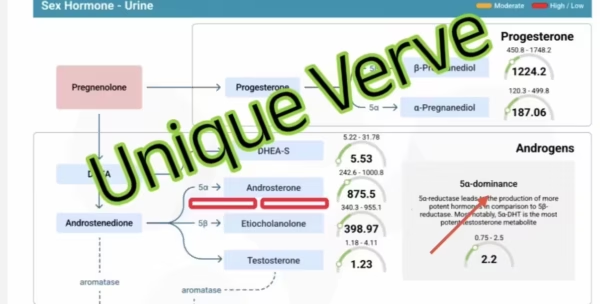
Many women with PCOS don’t simply have elevated testosterone — they have a heightened conversion preference toward dihydrotestosterone (DHT), driven by 5α-reductase enzyme activity. This is frequently linked to genetic SNPs and nutrient insufficiencies I identify through Vibrant Wellness testing panel.
Clinically, this manifests as cystic acne, scalp hair thinning, hirsutism, mood imbalances, irregular or absent cycles, anxiety, depression, difficulty conceiving, weight gain, and more.
Addressing DHT conversion — not just total testosterone — is critical for resolving these symptoms at the source.
Blood Sugar Dysregulation & Hyperinsulinemia
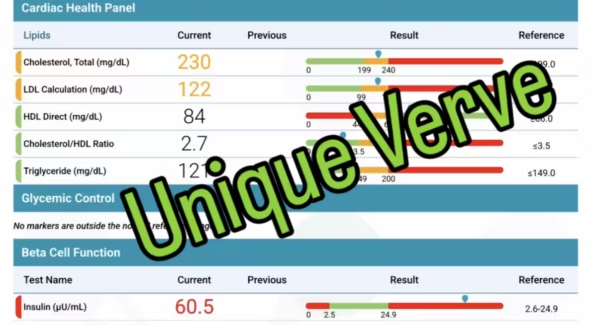
Elevated fasting insulin is one of the most prevalent findings in my PCOS panels. When insulin is chronically elevated, the ovaries are directly stimulated to overproduce androgens, progesterone signaling becomes disrupted, and ovulation becomes irregular or absent. The downstream consequences — weight gain, intense carbohydrate cravings, energy crashes, mood dysregulation — are not character flaws. They are metabolic signals. Fasting insulin and full metabolic markers are non-negotiable in my PCOS workup.
Adrenal Dysfunction & Cortisol Dysregulation
Approximately 20–30% of PCOS cases are primarily adrenal in origin, identified by elevated DHEAS on labs. This presentation is closely tied to chronic physiological and psychological stress, a dysregulated cortisol rhythm, and a hyper-responsive nervous system. What makes adrenal PCOS particularly important to identify is that it requires a fundamentally different treatment approach from ovarian PCOS — and conflating the two leads to ineffective outcomes.
Toxic Burden, Gut Dysbiosis & Hidden Inflammatory Stressors
This is consistently the most overlooked category in conventional PCOS management. Through mycotoxin testing, heavy metal panels, and comprehensive gut/stool analysis, I regularly identify exposures and imbalances that are silently perpetuating hormonal disruption.
Mold toxins, heavy metals, endocrine-disrupting chemicals, candida overgrowth, and intestinal permeability each impair detoxification pathways, amplify systemic inflammation, and disrupt receptor-level hormone signaling.
Without addressing these, even the most well-designed hormone protocol will have limited lasting effect.
How These Factors Connect: The Clinical Chain Reaction
What makes PCOS so complex — and so frequently mismanaged — is that these root causes don’t operate in isolation. They create a self-reinforcing cascade:
The PCOS Upstream Cascade
→Toxic burden & gut dysbiosis increase intestinal permeability and systemic inflammation
→Inflammation impairs insulin receptor sensitivity, elevating fasting insulin
→Elevated insulin directly stimulates ovarian androgen production
→Excess androgens suppress progesterone and disrupt ovulation
→Adrenal stress compounds the androgen load and impairs cortisol balance
→The result: the full clinical picture of PCOS — acne, irregular cycles, weight gain, fatigue, mood disruption, hair loss, difficulty to conceive
This is why prescribing a hormone-targeted intervention without addressing the upstream environment produces only temporary, partial results. The hormones will re-dysregulate because the conditions driving them have not changed.
What Women With PCOS Commonly Experience (Before We Even Test)
Most of my clients come to me feeling frustrated and unheard.
They often report:
- Persistent acne
- Irregular cycles or missing periods
- Hair loss or facial hair growth
- Weight gain and intense cravings
- Fatigue, brain fog, irritability, and mood swings
- Fertility challenges
And many of them have already tried:
- Birth control
- Antibiotics
- Benzoyl Peroxide
- Spironolactone
- Harsh acne treatments
- Over-the-counter supplements
Without lasting results.
Not because they’re doing something wrong — but because the root cause hasn’t been addressed.
A Brief Clinical Case
Clinical Case Study
A client presented with a constellation of symptoms that had been attributed, separately, to stress, diet, and genetics — none of which led to lasting improvement.
Presenting Symptoms
- Persistent cystic acne unresponsive to topical treatments
- Irregular cycles and absent ovulation
- Fatigue, brain fog, and poor concentration
- Intense sugar cravings and progressive weight gain
- Mood instability, irritability, anxiety
- Joint pain, chronic sinus congestion, and environmental sensitivities
What Testing Revealed
- Elevated DHT with confirmed 5α-reductase preference (see image above)
- High fasting insulin with normal fasting blood sugar indicating early stage of insulin resistance (see image above)
- Significant mycotoxin burden and heavy metal accumulation
- Candida overgrowth with intestinal permeability markers
- Deficiencies in vitamin A, B vitamins, zinc, and magnesium as well genetic SNPs (impairments) associated with these nutrients leading to her persistent hormonal acne
- Low thyroid function (subclinical, missed on standard TSH panel)
Outcomes After 3-Month Functional Medicine Program
- Acne resolved — without antibiotics, benzoyl peroxide, spironolactone or hormonal contraception
- Menstrual cycle normalized
- Energy, concentration, and mood substantially improved
- Cravings eliminated; gradual weight normalization
- Joint pain, sinus symptoms, and sensitivities resolved
What made the difference was not one intervention — it was a comprehensive protocol that addressed the toxic burden, replenished depleted nutrients, restored gut integrity and microbial balance, regulated blood sugar, and supported the stress response simultaneously. Internal healing was paired with customized clinical skincare and Environ vitamin infusion facial treatments, because the skin is not separate from the endocrine system — it is a direct reflection of it.
Where Most PCOS Treatments Go Wrong
The standard-of-care approach to PCOS — oral contraceptives, metformin, topical acne treatments — is not without merit in specific contexts. But it becomes problematic when applied as a first-line universal response, because it treats the signal while leaving the source intact.
There are additional layers worth noting clinically. Long-term antibiotic use for acne can significantly worsen gut dysbiosis — one of the root drivers we’re trying to correct. Many conventional skincare products and cosmetics contain parabens, phthalates, and synthetic fragrances that function as endocrine disruptors, compounding the hormonal load. And prescribing the pill without investigating insulin, gut integrity, or toxic burden means the underlying pathology will likely resurface — often with greater severity — once the medication is discontinued.
This is not a failure of the patient. It is a failure of the diagnostic framework.
My Clinical Approach: Where Functional Medicine Meets Aesthetic Medicine
What distinguishes my practice is the integration of two disciplines that are rarely combined: rigorous functional medicine principles and diagnostics with clinical aesthetic medicine. Because PCOS is not only an internal hormonal condition — it manifests visibly, on the skin, and that manifestation has its own contribution to the stress load affecting the neuroendocrine axis.
My framework follows a consistent sequence: establish strong nutritional and lifestyle foundations; regulate the stress response and adrenal reactivity; replenish specific nutrient deficiencies identified through testing; systematically remove the toxic, microbial, and inflammatory stressors driving dysfunction; and complete the process with a targeted functional medicine detox protocol. Throughout, we support skin integrity from the outside — with clinical-grade, microbiome-considerate skincare — because barrier disruption is both a symptom of PCOS and a perpetuating factor in it.
The result is not symptom suppression. It is measurable, sustained physiological resolution — because the conditions that created the dysfunction have been corrected.
Your PCOS Questions, Answered
What is the root cause of PCOS?
PCOS does not have a single root cause — it is driven by a combination of upstream physiological dysfunctions that ultimately result in hormonal imbalance. The most common underlying drivers include blood sugar dysregulation and elevated fasting insulin, adrenal dysfunction, androgen metabolism issues (particularly elevated 5α-reductase activity converting testosterone to DHT), gut dysbiosis, and toxic burden from sources such as mycotoxins, heavy metals, and endocrine-disrupting chemicals.
In functional medicine, we view the hormonal imbalance of PCOS as the consequence of these upstream disruptions — not the cause. This is why treating hormones alone, without addressing what’s driving them, rarely produces lasting results.
Why doesn’t birth control fix PCOS?
Hormonal birth control works by suppressing your body’s own hormone production, which can reduce symptoms like irregular cycles and acne while you’re taking it. However, it does not address the underlying causes of PCOS — insulin resistance, adrenal dysfunction, gut imbalances, or toxic burden remain active while symptoms are masked.
This is why many women find that symptoms return — often with greater intensity — when they stop the pill. Symptom suppression and root-cause resolution are not the same thing. A functional medicine approach aims to correct the dysfunction that is generating the hormonal imbalance, so that the body can regulate itself without ongoing pharmaceutical intervention.
Can PCOS be reversed with functional medicine?
Many women experience complete resolution of PCOS symptoms — regular cycles, cleared skin, normalized weight, restored energy — when the root causes are properly identified and addressed. Whether this constitutes a “reversal” depends on the individual’s specific drivers and how comprehensively they are treated.
What functional medicine can achieve, with precision testing and a personalized protocol, is the correction of the internal conditions that are perpetuating PCOS. When insulin is regulated, gut integrity is restored, toxic burden is reduced, and nutrient deficiencies are replenished, the hormonal system often normalizes on its own. In clinical practice, this approach consistently produces results that symptom-management treatments cannot.
What is adrenal PCOS and how is it different?
Adrenal PCOS is a subtype — affecting approximately 20–30% of women with PCOS — in which the excess androgen production originates primarily from the adrenal glands rather than the ovaries. It is identified clinically by elevated DHEAS on lab panels, and is commonly associated with chronic stress, a dysregulated cortisol rhythm, and a hyperreactive nervous system.
This distinction matters significantly for treatment. Protocols designed for ovarian PCOS may be largely ineffective for adrenal PCOS. Accurately identifying the source of androgen excess — through comprehensive hormone testing — is essential before designing an effective intervention plan. This is one of the key reasons that individualized testing, rather than a one-size-fits-all approach, is foundational to functional medicine care for PCOS.
How does gut health affect PCOS?
The gut microbiome plays a direct role in both hormone metabolism and systemic inflammation — two central factors in PCOS. When the gut is dysbiotic (imbalanced), intestinal permeability increases, allowing inflammatory compounds into the bloodstream that impair insulin receptor sensitivity and disrupt hormone signaling at the cellular level.
Additionally, a specific subset of gut bacteria known as the estrobolome is responsible for metabolizing and recycling estrogen. When this system is compromised — through dysbiosis, candida overgrowth, or antibiotic disruption — estrogen recycling becomes erratic, compounding hormonal imbalance. A comprehensive gut and stool analysis is a non-negotiable part of my PCOS workup for this reason.
Can toxins and mold worsen PCOS?
Yes — and this is one of the most consistently overlooked contributors in conventional PCOS management. Mycotoxins (produced by mold), heavy metals such as lead and mercury, and endocrine-disrupting chemicals found in plastics, personal care products, and environmental pollutants all have the capacity to interfere directly with hormone receptor function, impair the liver’s detoxification pathways, and drive systemic inflammation.
In clinical practice, I regularly identify significant toxic burden in women presenting with PCOS who have not responded to conventional treatments. Addressing this burden — through targeted detoxification protocols — is frequently the missing intervention that produces a measurable shift in hormonal function and symptom resolution.
What tests does a functional medicine practitioner run?
A comprehensive functional medicine workup for PCOS goes well beyond standard blood work. My panel includes: Vibrant’s Urinary Hormone Test (mapping androgens, cortisol rhythm, estrogen, and their metabolites, 5α-reductase activity, cortisol, melatonin, and much more); fasting insulin and full metabolic markers; comprehensive micronutrient testing with genetic SNPs to identify inherited vulnerabilities; mycotoxin testing; heavy metal panels; and a comprehensive gut and stool analysis including candida assessment and intestinal permeability markers.
This level of data is what allows for a truly personalized protocol. Without it, supplementation and treatment plans are based on guesswork — and guesswork produces inconsistent results.
Why is my PCOS acne not responding to topicals?
PCOS-related acne — particularly cystic or hormonal breakouts along the jawline and chin — is driven by elevated DHT acting on the sebaceous glands. No topical product, however effective, can lower DHT levels or correct the insulin dysregulation and 5α-reductase activity generating it. This is why externally-focused treatments consistently fail to produce lasting results for women with PCOS.
Lasting skin clearance requires internal correction alongside intelligent external support. In my practice, clinical skincare and Environ vitamin infusions are used as part of the overall protocol — but always in conjunction with internal functional medicine work, not as a standalone approach. The skin is a reflection of internal physiology. When the underlying hormonal and metabolic environment is corrected, the skin responds accordingly.
Address Your PCOS at the Root
Ready to Get Answers?
If you’ve been managing symptoms without resolution, the root cause hasn’t been identified yet. Let’s change that with precision testing and a personalized protocol built around your biology.
BOOK A FUNCTIONAL MEDICINE CONSULTATION
Written by Natalie Maibenko – a Certified Functional Medicine Practitioner and Master Esthetician in Boston with 20+ years of experience and founder of Unique Verve
Unique Verve | Functional Medicine & Advanced Skincare | Back Bay, Boston

As a Certified Functional Medicine Practitioner my Expertise Encompasses:
- Immune System: frequent illness, UTIs, yeast infections
- Allergies, Asthma
- Skin Problems: acne, cystic acne, rosacea, eczema, dermatitis, ichthyosis, psoriasis, vitiligo, melasma
- Inflammation: arthritis, rhinitis, joint & muscle pain, migraines, headaches
- Sleep Disturbunces, Insomnia
- Gut Problems: IBS/IBD, bloating, acid reflux, gas, constipation, diarrhea, parasites, fungal/yeast overgrowths
- Hormonal Imbalances: PCOS, PMS symptoms, weight problems/inability to lose weight, thyroid problems
- Hair Loss, Alopecia
- Mood Imbalances: anxiety, depression, irritability
- Metabolic Dysfunction, Insulin Resistance, Type 2 Diabetes
- Optimizing Wellness for Successful Pregnancy
- Autoimmune Conditions: Hashimoto’s thyroiditis, grave’s disease, reumatoid arthritis (RA), lupus, etc
- Bone Health: osteopenia/ osteoporosis
- Effective Anti-Aging Strategies without Injectables with the inside-out & outside-in approach
- Detoxification of Heavy Metals, Mycotoxins, Environmental Toxins
- Reversing Breast Implant Illness
- Preparation for the Explant Surgery and Optimization of Wellness & Vitality Post-Explant
With love and gratitude,
Natalie Maibenko
Functional Medicine & Skincare Expert in Boston – Helping You Take Control of Your Health and Achieve Lasting Skin Results
DISCLAIMER:
Information and content on this website is provided for educational purposes only, and is not intended to diagnose, treat and to be a substitute for the advice provided by your physician or other healthcare professional. No information offered here should be interpreted as a diagnosis of any disease, nor an attempt to treat or prevent or cure any disease or condition. If you have any concerns or questions about your health, you should always consult with a physician or other healthcare professional. Do not disregard, avoid, or delay obtaining medical or health-related advice from your healthcare professional. Always speak with your healthcare professional before taking any medications, supplements or pursuing any wellness programs. Information provided on this website does not create a doctor-patient relationship between you and any professional affiliated with this website.