
Benzoyl Peroxide Not Working For Acne? Hormonal Acne Explained.
🏅 Quick Answer
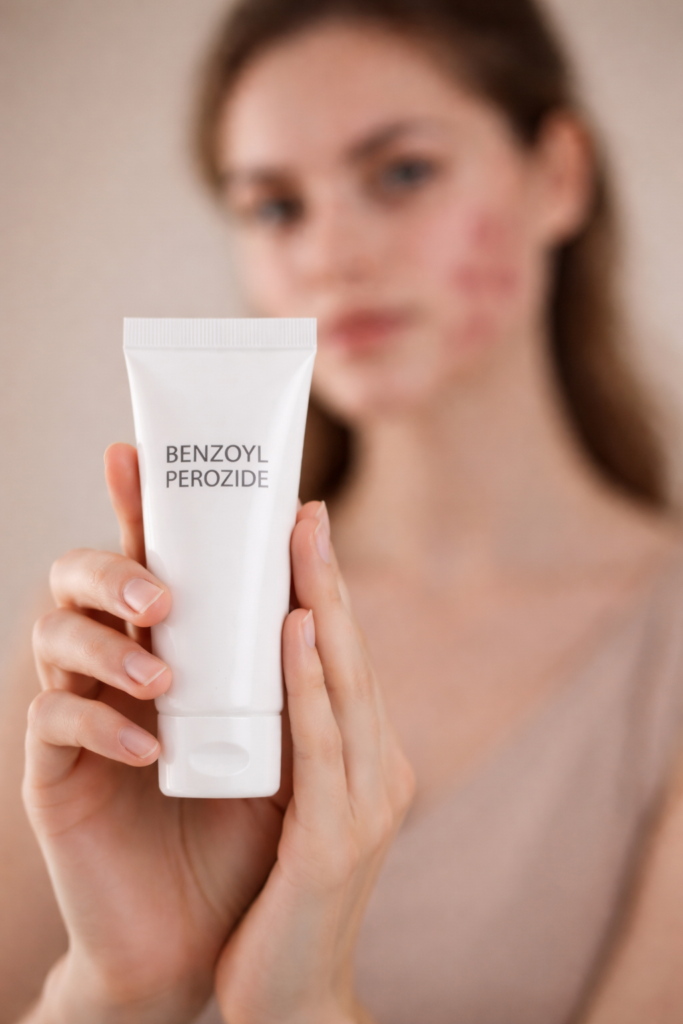
Benzoyl peroxide often does not work for hormonal acne because it targets acne-causing bacteria, not the underlying hormonal and metabolic imbalances that drive excess sebum production. While benzoyl peroxide can reduce inflammation and kill C. acnes bacteria on the surface, hormonal acne is primarily triggered by internal factors — elevated androgens, insulin resistance, cortisol dysregulation, gut permeability, and impaired liver detoxification. Beyond its limited effectiveness, prolonged use can compromise the skin barrier, deplete critical antioxidants, and paradoxically worsen the inflammatory environment. Research published in Science (1981) also identified benzoyl peroxide as a tumor promoter via its free-radical-generating mechanism — a finding that is rarely communicated to consumers. Effectively treating hormonal acne requires addressing internal root causes, not just suppressing surface bacteria.
“Many of my clients come to me after using benzoyl peroxide for months without results…”
Why Benzoyl Peroxide Is Commonly Used for Acne
Benzoyl peroxide has been a dermatological staple for decades. It works by releasing reactive oxygen species (free radicals) directly into the follicle, which kill Cutibacterium acnes (C. acnes), formerly known P. Acnes bacteria — the bacteria historically associated with inflammatory acne. It also has mild anti-inflammatory and keratolytic (skin-shedding) effects that can reduce visible redness and unclog pores in the short term.
For a subset of acne presentations — particularly comedonal or mild inflammatory acne in teenagers with oilier skin — benzoyl peroxide can provide temporary improvement. This is why it remains widely recommended by conventional dermatology.
However, the fundamental problem is this: it was designed for one type of acne, and it is being broadly applied to a very different one.
Why Benzoyl Peroxide Not Working For Acne and Always Fails for Hormonal Acne?
The core problem why benzoyl peroxide not working for acne: hormonal acne is not primarily driven by bacteria. It is driven by internal physiological imbalances that create an environment in which there is an increase in oil production (driven by hormonal imbalance), bacterial overgrowth, pilo-sebaceous duct blockage and subsequently pore congestion, and where inflammation is sustained. Applying an antibacterial agent to a hormonally driven condition is like mopping the floor while the pipe is still leaking.
The internal drivers of hormonal acne include:
- Androgens (especially testosterone and DHT) that stimulate sebaceous glands to produce excessive sebum
- Insulin resistance and elevated IGF-1, which upregulate androgen activity and increase sebum production
- Cortisol dysregulation from chronic stress, which elevates androgens and worsens inflammatory signaling
- Estrogen-progesterone imbalances, particularly during perimenopause, the luteal phase, or as a result of liver congestion
- Thyroid dysfunction, which impairs cell turnover, collagen synthesis, and skin barrier integrity
- Gut dysbiosis and increased intestinal permeability (“leaky gut”), which generate systemic inflammation and disrupt estrogen metabolism
- Impaired liver detoxification, which causes estrogen recycling and hormonal burden on the skin
None of these mechanisms are addressed by benzoyl peroxide. This is why women using it month after month — or year after year — report the same result: acne that temporarily improves, then returns, in the same location, on the same cycle.
If your acne follows a hormonal cycle — worsening before your period, concentrated along the jawline and chin, accompanied by PMS symptoms, fatigue, or bloating — your skin is expressing an internal imbalance. That is not a benzoyl peroxide problem.
What I See in My Practice: A Consistent Clinical Pattern
In over 20 years of working with women dealing with inflammatory and cystic acne, I have seen a very predictable pattern in clients who come to me after extended benzoyl peroxide use. The longer it has been used, the more compromised the skin tends to be — and the more resistant to healing.
When I evaluate these clients’ skin with the Visia Skin Scanner, they consistently present with:
- Diffused redness and reactive skin, often across the cheeks and jawline
- Chronic dryness and flaking — even while still experiencing breakouts
- Heightened sensitivity to products that were previously tolerated
- A compromised acid mantle (skin’s first barrier defense system) and disrupted skin microbiome
- Post-inflammatory hyperpigmentation (PIH) that was not present before treatment began
- Persistent cystic breakouts, particularly along the jaw, chin, and lower cheeks
“This is the exact pattern I see in many of my hormonal acne clients…”
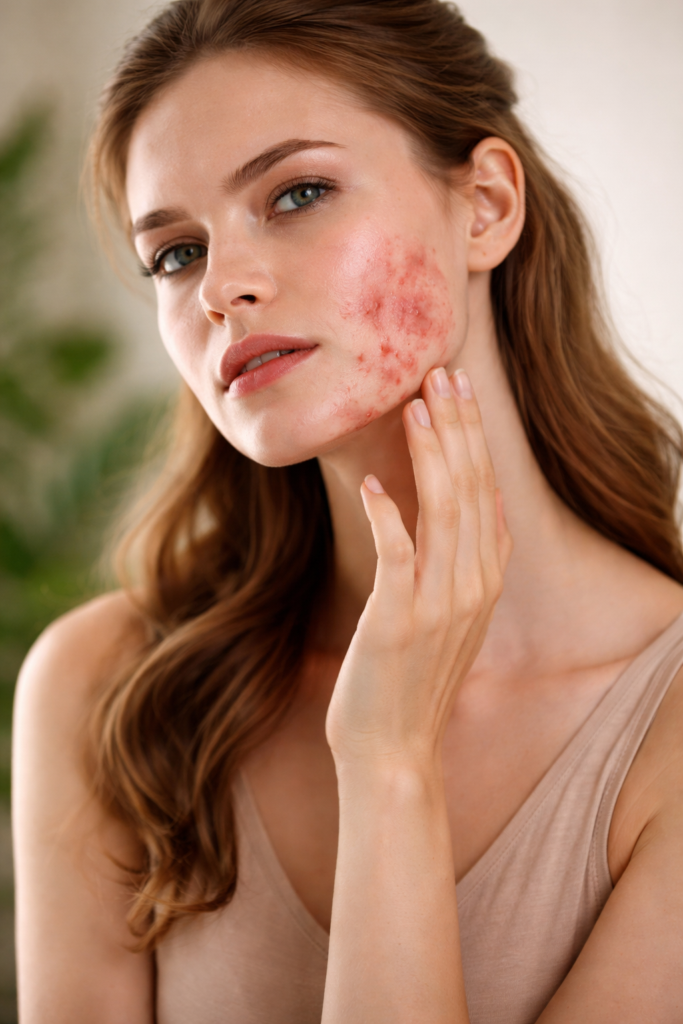
Many of these clients have been using benzoyl peroxide daily for one to three years. They are not seeing improvement — they are experiencing a worsening skin environment, while the root cause of their acne goes entirely unaddressed.
This clinical reality raises an important question: is benzoyl peroxide simply ineffective for hormonal acne, or is it actively making the condition worse?
In many cases — the answer is both.
The Hidden Damage: Oxidative Stress, Skin Barrier Breakdown, and Even Tumor Promotion
Benzoyl peroxide works by generating free radicals — this is its mechanism of action. While this destroys C. acnes on the surface, it also creates a state of persistent oxidative stress in the skin. Over time, this has measurable — and sobering — consequences.
What Are Free Radicals, and Why Do They Matter?
Before we go further, it is worth understanding what free radicals actually are and why their generation in the skin is not a benign event.
Free radicals are unstable molecules that are missing an electron. In their drive to become stable, they steal electrons from neighboring molecules — including DNA, cellular proteins, and lipid membranes. This chain reaction of electron theft is called oxidative stress, and it causes cumulative cellular damage at the molecular level.
The skin has its own antioxidant defense system — including vitamins A, C, and E, glutathione, and superoxide dismutase — specifically designed to neutralize free radicals before they cause damage. When the free radical load exceeds the skin’s antioxidant capacity, the damage becomes structural: broken DNA strands, disrupted cell signaling, impaired repair mechanisms, and accelerated cellular aging. This leads to oxidative stress and subsequently to tissue damage.
Benzoyl peroxide does not generate a small or incidental amount of free radicals. It generates them as its primary and intentional mechanism. Every application is a controlled oxidative event on your skin’s surface.
The Science: Benzoyl Peroxide as a Tumor Promoter
This is the piece of the benzoyl peroxide conversation that almost never makes it into mainstream skincare — and it should.
In 1981, a peer-reviewed study published in Science — one of the most prestigious scientific journals in the world — investigated the carcinogenic potential of benzoyl peroxide. The study, conducted by Slaga et al. and funded in part by the National Cancer Institute, found that benzoyl peroxide promoted both papillomas and carcinomas when applied topically to mice after tumor initiation.
To understand why this is significant, you need to understand how cancer develops in two stages:
- Stage 1 — Tumor Initiation: A carcinogen causes a permanent mutation in a cell’s DNA. The cell is now “initiated” — primed for malignancy — but has not yet become cancerous.
- Stage 2 — Tumor Promotion: A separate agent stimulates the initiated cell to proliferate rapidly, amplifying the damaged cell population and advancing the progression toward a tumor.
The study found that benzoyl peroxide did not act as a tumor initiator on its own — meaning it did not directly mutate DNA. However, benzoyl peroxide was shown to have significant tumor-promoting activity — meaning it created the conditions for already-damaged cells to proliferate.
The researchers also found that a single topical application of benzoyl peroxide produced marked epidermal hyperplasia and induced a large number of dark basal keratinocytes — cellular changes that mirror those caused by some of the most potent known tumor promoters. Additionally, benzoyl peroxide inhibited metabolic cooperation (intercellular communication) in Chinese hamster cells — a hallmark behavior of tumor-promoting compounds, because disrupting cell-to-cell communication is one of the ways abnormal cells escape the body’s normal regulatory controls.
The authors concluded that caution should be recommended in the use of this and other free radical-generating compounds.
That recommendation was published in 1981. Yet today, benzoyl peroxide is sold over the counter in concentrations up to 10%, applied daily, often for months or years at a time — by teenagers, young adults, and women navigating hormonal acne — with no accompanying warning about these findings.
What This Means in Practice
I want to be precise here, because nuance matters.
This study does not prove that benzoyl peroxide causes cancer in humans using it topically for acne. The research was conducted in animal models, and tumor promotion requires prior DNA initiation — a two-step process. Benzoyl peroxide alone, in this research, was not a complete carcinogen.
However, several important points deserve serious consideration:
- We live in a high-oxidative-stress environment. Ultraviolet radiation, environmental pollutants, dietary oxidants, and chronic inflammation all act as potential DNA-initiating agents. The skin of someone with inflammatory hormonal acne is already in a state of heightened oxidative and immune activity. The question of whether benzoyl peroxide’s free radical generation adds meaningful tumor-promoting stimulus in this context — over months or years of daily use — is one that has not been adequately studied in humans.
- Free radical damage is cumulative. Unlike a single exposure, daily topical application means repeated, sustained oxidative stress to the same tissue over an extended period.
- The study was published in Science and funded by the NCI. This is not fringe research. It was important enough to be published in one of the world’s most rigorous scientific journals, and the authors specifically called for caution in its use.
- The skin’s antioxidant reserves are finite. Benzoyl peroxide depletes the very antioxidants — vitamins A and C — that the skin relies on to neutralize free radical damage and support DNA repair.
From a functional medicine perspective, the body’s capacity to handle oxidative burden depends entirely on its current state: nutritional status, antioxidant reserves, detoxification capacity, inflammatory load, and systemic health. A woman already dealing with hormonal imbalance, liver congestion, nutrient depletion, and systemic inflammation has a reduced capacity to buffer oxidative stress — making the cumulative impact of daily benzoyl peroxide use more significant, not less.
This is not a reason for alarm. It is a reason for informed decision-making. And it is one of the reasons I do not use benzoyl peroxide in my practice — there are more effective, less oxidatively damaging approaches available.
You deserve to make skincare decisions with complete information. The fact that a widely available acne treatment has been identified as a tumor promoter in peer-reviewed research — and that this finding is almost never disclosed to consumers — is something I believe every patient has the right to know.
Depletion of Skin-Protective Antioxidants
Research shows that benzoyl peroxide depletes vitamin A (retinol) and vitamin C from the skin. This matters enormously:
- Vitamin A regulates sebum production, promotes healthy cell turnover and collagen production, and is essential for skin barrier and DNA repair. Its depletion contributes to keratinization disorders and melanogenesis — the very process that clogs pores and contributes to post-inflammatory pigmentation.
- Vitamin C is a critical antioxidant that neutralizes free radicals, supports collagen synthesis, and helps prevent post-inflammatory hyperpigmentation. Its depletion leaves skin more vulnerable to oxidative damage and slower to heal.
In other words, the treatment designed to reduce acne is removing two of the most important compounds the skin needs to heal itself.
Disruption of the Acid Mantle and Skin Microbiome
The skin’s acid mantle — a thin film maintained at a pH of approximately 4.5–5.5 — is your skin’s first line of defense. It regulates the skin microbiome, prevents harmful microorganism overgrowth, and supports barrier function. Benzoyl peroxide’s oxidative action disrupts this pH environment, compromising the acid mantle and altering the microbial balance on the skin’s surface.
A disrupted skin microbiome is not just a cosmetic problem. It is associated with increased inflammation, impaired healing, and a greater susceptibility to colonization by pathogenic organisms — including overgrowth of C. acnes in deeper follicular structures.
Compromised Skin Barrier
Chronic use of benzoyl peroxide breaks down the lipid barrier of the stratum corneum — the outermost layer of skin responsible for retaining moisture and protecting against environmental insults. When this barrier is compromised:
- Trans-epidermal water loss (TEWL) increases, leading to dehydration, impaired shedding of dead skins, consequently to pore congestion and reactive oiliness
- Environmental irritants and inflammatory triggers penetrate more easily
- The skin’s ability to regulate its own inflammatory response is impaired
- The cycle of irritation, inflammation, and breakouts intensifies
The skin cannot heal what it cannot protect. A compromised barrier is not a foundation for acne recovery — it is an obstacle to it.
A Deeper Mechanism: How Bacteria Move Into the Pilosebaceous Unit
This is one of the most important — and least discussed — mechanisms through which overuse of benzoyl peroxide worsens acne, particularly cystic acne.
Under healthy skin conditions, C. acnes bacteria reside predominantly on the skin surface, where they play a role in maintaining normal skin pH and suppressing more pathogenic organisms. In a balanced environment, they are not inherently problematic.
However, when the skin surface is over-dried and the barrier is compromised:
- The surface environment becomes inhospitable for bacterial survival
- Bacteria migrate deeper into the pilosebaceous unit — the hair follicle and attached sebaceous gland
- Inside the sebaceous gland, bacterial lipases convert stored triglycerides into free fatty acids
These free fatty acids are recognized by the immune system as foreign bodies. This triggers:
- A localized immune and inflammatory response inside the gland
- Rupture of the follicle wall in severe cases
- Formation of deep, painful cystic lesions that are far more difficult to resolve than surface breakouts
This is a critical paradox: the aggressive surface treatment designed to kill bacteria may be driving those bacteria deeper, into an environment where the resulting inflammation becomes more severe, not less.
This is also why many women notice that cystic acne worsens with harsh topical treatments. The skin is responding to a disrupted environment — not improving because of the treatment.
Case Study: The Pattern I See Most Frequently
A client comes to me in her early-to-mid 30s. She has been dealing with cystic acne primarily along the jawline and chin for several years. She has tried benzoyl peroxide washes and spot treatments, a course or two of antibiotics, and possibly spironolactone — with partial or temporary improvement only.
Her skin at the time of her consultation typically shows:
- Active cystic breakouts concentrated along the jaw and lower face
- Significant redness and reactive sensitivity across the cheeks
- Dryness and visible flaking in areas of active benzoyl peroxide use
- Early-to-moderate post-inflammatory hyperpigmentation (confirmed via Visia skin analysis)
- A tight, uncomfortable skin texture despite ongoing oiliness in the T-zone
When I take a comprehensive health history, the skin picture is rarely the whole story. These clients also describe:
- PMS symptoms: bloating, mood changes, breast tenderness, or cramping
- Energy crashes, brain fog, or afternoon fatigue
- Digestive symptoms: bloating after meals, inconsistent bowel habits, or food sensitivities
- Sleep disruption, anxiety, or difficulty managing stress
- Sometimes thyroid symptoms: hair thinning, cold intolerance, weight changes
These are not coincidental. They are a systemic picture. And they explain exactly why topical treatment alone — however well-intentioned — will not resolve the acne.
Skin is not a separate organ. It is a mirror of internal function. When we treat acne as though it exists in isolation from hormones, gut health, stress physiology, and detoxification — we are treating a symptom, not a person.
The Functional Medicine Perspective: Acne as a Signal, Not a Diagnosis
One of the most important shifts in my practice — and in functional medicine broadly — is reframing what acne actually is.
Acne is not a skin disease. It is a signal — the skin’s visible expression of internal imbalance.
The skin functions as a detoxification organ. When primary detox pathways (the liver, kidneys, lymphatic system, and gut) are congested or overwhelmed, the body redirects elimination through the skin. Breakouts — particularly inflammatory, cystic, or recurring acne — often reflect:
- Hormonal burden that the liver is not adequately metabolizing and clearing
- Gut dysbiosis and intestinal permeability that generate systemic inflammatory signals
- Insulin resistance that elevates androgen activity and sebum production
- Nutritional deficiencies (particularly zinc, vitamin A, vitamin D, and omega-3s) that impair skin immunity and barrier repair
- Thyroid underfunction that slows cellular repair and lipid metabolism
- Environmental toxin accumulation that creates inflammatory and endocrine-disrupting load
When we see the skin’s breakouts through this lens, the question is no longer “how do we kill the bacteria?” The question becomes: “what is the body trying to express, and what does it need to restore balance?”
That is a fundamentally different — and far more effective — approach to lasting skin health.
What Actually Works: A Root-Cause Approach to Hormonal Acne
In my practice, acne treatment is never one-dimensional. It requires working from both the outside and the inside — repairing the skin while simultaneously addressing the internal environment that is generating breakouts.
1. Repairing and Protecting the Skin Barrier
The first priority — especially after benzoyl peroxide use — is restoring skin barrier integrity. This means:
- Removing all oxidizing, drying, and barrier-disrupting agents
- Supporting the acid mantle with pH-appropriate, gentle formulations
- Rebuilding the lipid barrier with ceramide-supportive and skin-identical ingredients
- Restoring the skin microbiome with microbiome-conscious skincare protocols
2. Vitamin A: The Most Important Nutrient for Acne-Prone Skin
Vitamin A is the single most critical nutrient for oil regulation, cell turnover, follicular health, and skin barrier repair. Rather than depleting it (as benzoyl peroxide does), restoring vitamin A levels — both topically and internally — addresses the biological mechanisms that generate acne.
In my practice, I use Environ Skincare, which is built on a progressive Vitamin A delivery system. Environ’s DF technology — combining ultrasound and pulsed iontophoresis — drives active ingredients including vitamins A, C, E, peptides, and hyaluronic acid deeper into the skin than topical application alone can achieve.
This is not surface treatment. It is nutritional skin rehabilitation.
3. Advanced Clinical Treatments
Alongside Vitamin A therapy, I incorporate:
- Lactic acid treatments: hydrating, antibacterial, anti-inflammatory, and effective for post-inflammatory pigmentation without the barrier disruption of harsher acids
- DF Vitamin Infusion Facials: driving antioxidants, peptides, and vitamins into the deeper layers of the skin using Environ’s clinical technology
- Microchanneling with growth factors: stimulating collagen and cell regeneration, supporting repair of PIH and textural damage
- Visia Skin Analysis: documenting sub-surface congestion, PIH, and inflammatory activity to track objective improvement over time
4. Functional Medicine: Addressing the Internal Root Causes
Topical treatment creates the conditions for skin healing. Functional medicine addresses WHY the skin needed to break out in the first place. Depending on the clinical picture, this includes:
- Comprehensive hormonal assessment: estrogen, progesterone, testosterone, DHEA-S, SHBG, and androgen metabolites
- Insulin and metabolic markers: fasting insulin, HbA1c, and fasting blood sugar to identify insulin resistance early
- Full thyroid panel: TSH, Free T3, Free T4, Reverse T3, and thyroid antibodies — not just TSH
- Gut health evaluation: intestinal permeability, microbiome diversity, and liver detox capacity
- Nutritional assessment: vitamin A, D, zinc, omega-3s, minerals and antioxidant status
- Cortisol and adrenal function: particularly in women with stress-triggered acne patterns
Based on the findings, I develop a personalized protocol that may include targeted supplementation, dietary modifications, detox support, and hormone-balancing strategies — all evidence-based and grounded in functional medicine principles.
The goal is not to suppress acne. The goal is to restore the conditions in which your skin no longer needs to break out.
Why Topicals Alone Will Never Be Enough in the Treatment of Hormonal Acne
Many of my Boston clients have, by the time they reach me, already invested significantly in skincare — professional-grade products, multiple active ingredients, and sometimes years of consistent effort. Their skin is not improving, or improves only to relapse.
This is not because they are doing something wrong. It is because they are working from the outside of a problem that originates on the inside.
Until the hormonal, metabolic, gut, and nutritional drivers of their acne are addressed, the skin will continue to express the imbalance — regardless of what is applied to the surface.
This is why functional dermatology — the integration of root-cause functional medicine with advanced corrective skincare — is not a luxury approach. It is the only approach that addresses both dimensions of the problem.
Acne Treatment in Boston: A Different Approach
If you have been struggling with hormonal or cystic acne and have tried benzoyl peroxide, antibiotics, or hormonal medications without lasting results, the issue is not that you haven’t found the right topical. The issue is that the treatment has been targeting the wrong cause.
At Unique Verve in my Boston clinic, I combine advanced corrective skincare with functional medicine to address acne from both directions: repairing the skin barrier and skin environment at the surface, while investigating and resolving the internal imbalances driving breakouts.
If your skin has been compromised by prolonged benzoyl peroxide use, that is also something I can help with — restoring barrier integrity, rebuilding antioxidant reserves, and creating the conditions for genuine healing.
👉 Book your Acne Treatment & Functional Dermatology Consultation in Boston
👉 Explore Functional Medicine for Hormonal Acne
Frequently Asked Questions: Benzoyl Peroxide and Hormonal Acne
Why is benzoyl peroxide not working for acne?
Benzoyl peroxide may not be working because your acne is driven by hormonal or metabolic factors rather than surface bacteria. If your breakouts follow a cycle, concentrate along the jawline or chin, or have persisted despite months of consistent use, the underlying cause is likely internal — elevated androgens, insulin resistance, gut inflammation, or impaired detoxification. Benzoyl peroxide does not address any of these mechanisms. A more effective approach involves investigating and correcting the internal root causes, alongside repairing any skin barrier damage caused by prolonged treatment.
Can benzoyl peroxide make acne worse?
Yes. In some cases — particularly with extended or daily use — benzoyl peroxide can worsen acne. By over-drying the skin surface and generating persistent oxidative stress, it can compromise the skin barrier and acid mantle. This altered environment can drive C. acnes bacteria deeper into the pilosebaceous unit, where bacterial lipases convert sebum into free fatty acids that trigger a more severe inflammatory response. The result can be deeper, more painful cystic breakouts, increased sensitivity, and post-inflammatory hyperpigmentation that was not present before treatment began.
Is benzoyl peroxide bad for your skin barrier?
Prolonged or excessive benzoyl peroxide use can significantly compromise the skin barrier. Its oxidative mechanism depletes vitamin A and vitamin C from the skin — two nutrients essential for barrier repair and antioxidant protection — and disrupts the lipid integrity of the stratum corneum. It also alters the pH of the acid mantle and shifts the skin microbiome. For women with sensitive, reactive, or hormonally driven skin, this barrier compromise often creates more problems than the original acne.
Has benzoyl peroxide been linked to cancer?
A landmark study published in Science in 1981 (Slaga et al., funded by the National Cancer Institute) identified benzoyl peroxide as a tumor promoter in animal models. The research showed that while benzoyl peroxide did not directly mutate DNA (it was not a tumor initiator), it promoted the growth of both papillomas and carcinomas when skin had been previously exposed to a carcinogenic initiator. The authors specifically recommended caution in the ongoing use of benzoyl peroxide and other free-radical-generating compounds. This research has not been widely communicated to consumers, despite benzoyl peroxide being sold in concentrations up to 10% without prescription. It does not prove that benzoyl peroxide causes cancer in humans — but it raises legitimate questions about the long-term cumulative impact of daily application, particularly in individuals with existing oxidative stress, hormonal imbalance, or impaired antioxidant capacity.
What type of acne does benzoyl peroxide actually help?
Benzoyl peroxide is most effective for mild-to-moderate inflammatory or comedonal acne in which C. acnes plays a central and primary role — typically seen in younger, oilier skin types without a strong hormonal or metabolic component. It is generally much less effective for hormonal acne (particularly cystic, jawline-predominant breakouts), acne associated with insulin resistance or PCOS, perimenopause-related breakouts, or acne driven by gut dysbiosis or liver congestion.
What is the best treatment for hormonal acne?
The most effective and lasting approach to hormonal acne involves a two-pronged strategy: repairing the skin environment at the surface, while addressing the internal imbalances that drive breakouts. Topically, this means restoring the skin barrier, rebuilding antioxidant reserves (particularly vitamin A), and using anti-inflammatory, barrier-supportive treatments. Internally, this means investigating hormonal patterns, insulin and blood sugar regulation, thyroid function, gut health, and liver detoxification capacity through a functional medicine lens.
Should I stop using benzoyl peroxide if I have hormonal acne?
If your acne is not responding to benzoyl peroxide, or if your skin has become increasingly dry, reactive, or sensitive during treatment, it is worth reassessing the approach entirely. Transitioning to a barrier-supportive, vitamin A-based skincare regimen and addressing internal hormonal and metabolic factors typically produces significantly better long-term outcomes. I recommend working with a practitioner who can evaluate both the skin and the internal picture together.
What does hormonal acne look like?
Hormonal acne typically presents as deep, tender, cystic or nodular breakouts concentrated along the lower face — particularly the jawline, chin, and lower cheeks. Unlike bacterial acne, it tends to be deeper, more painful, slower to heal, and cyclically recurring. It often worsens in the week before menstruation and may be accompanied by PMS, irregular cycles, fatigue, bloating, mood changes, or hair thinning. In perimenopause, hormonal acne can appear or worsen even in women who never had significant acne earlier in life.
Can gut health affect acne?
Yes — significantly. The gut-skin axis is well-established in functional medicine and increasingly supported by conventional dermatology research. Gut dysbiosis and intestinal permeability (“leaky gut”) generate systemic inflammatory signals that can manifest as acne, rosacea, eczema, and other inflammatory skin conditions. The gut microbiome also directly regulates estrogen metabolism through the estrobolome — a collection of gut bacteria that govern estrogen recycling. When disrupted, estrogen is inadequately cleared, contributing to hormonal imbalance and hormonally driven acne. Addressing gut health is often a central component of lasting acne resolution.
Written by Natalie Maibenko – a Certified Functional Medicine Practitioner and Master Esthetician in Boston with 20+ years of experience and founder of Unique Verve
Unique Verve | Functional Medicine & Advanced Skincare | Back Bay, Boston
uniqueverve.com

Natalie Maibenko
Functional Medicine & Skincare Expert in Boston – Helping You Take Control of Your Health and Achieve Lasting Skin Results
As a Certified Functional Medicine Practitioner my Expertise Encompasses:
- Immune System: frequent illness, UTIs, yeast infections
- Allergies, Asthma
- Skin Problems: acne, cystic acne, rosacea, eczema, dermatitis, ichthyosis, psoriasis, vitiligo, melasma
- Inflammation: arthritis, rhinitis, joint & muscle pain, migraines, headaches
- Sleep Disturbunces, Insomnia
- Gut Problems: IBS/IBD, bloating, acid reflux, gas, constipation, diarrhea, parasites, fungal/yeast overgrowths
- Hormonal Imbalances: PCOS, PMS symptoms, weight problems/inability to lose weight, thyroid problems
- Hair Loss, Alopecia
- Mood Imbalances: anxiety, depression, irritability
- Metabolic Dysfunction, Insulin Resistance, Type 2 Diabetes
- Optimizing Wellness for Successful Pregnancy
- Autoimmune Conditions: Hashimoto’s thyroiditis, grave’s disease, reumatoid arthritis (RA), lupus, etc
- Bone Health: osteopenia/ osteoporosis
- Effective Anti-Aging Strategies without Injectables with the inside-out & outside-in approach
- Detoxification of Heavy Metals, Mycotoxins, Environmental Toxins
- Reversing Breast Implant Illness
- Preparation for the Explant Surgery and Optimization of Wellness & Vitality Post-Explant
DISCLAIMER:
Information and content on this website is provided for educational purposes only, and is not intended to diagnose, treat and to be a substitute for the advice provided by your physician or other healthcare professional. No information offered here should be interpreted as a diagnosis of any disease, nor an attempt to treat or prevent or cure any disease or condition. If you have any concerns or questions about your health, you should always consult with a physician or other healthcare professional. Do not disregard, avoid, or delay obtaining medical or health-related advice from your healthcare professional. Always speak with your healthcare professional before taking any medications, supplements or pursuing any wellness programs. Information provided on this website does not create a doctor-patient relationship between you and any professional affiliated with this website.