
Introduction
Can poor sleep make rosacea worse? If you notice your skin is significantly more reactive, redder, or more prone to flaring after a difficult night, you are not imagining it. Poor sleep is one of the most consistent and most underappreciated drivers of rosacea — not because it is a trigger in the same way that spicy food or alcohol is a trigger, but because it removes the conditions in which your body is able to repair, regulate, and restore itself at every level simultaneously.
Sleep is not a passive state. It is the body’s primary active restoration window — for the skin, for the gut, for the immune system, and as research has now confirmed, for the brain itself. When sleep is consistently poor, every system that rosacea depends on for healing is compromised at the same time. The stress hormones rise. The immune cells become dysregulated. The gut loses its repair window. The natural antioxidant protection your body produces during sleep is depleted. And the skin — the most visible downstream expression of all of these systems — reflects every one of those losses simultaneously.
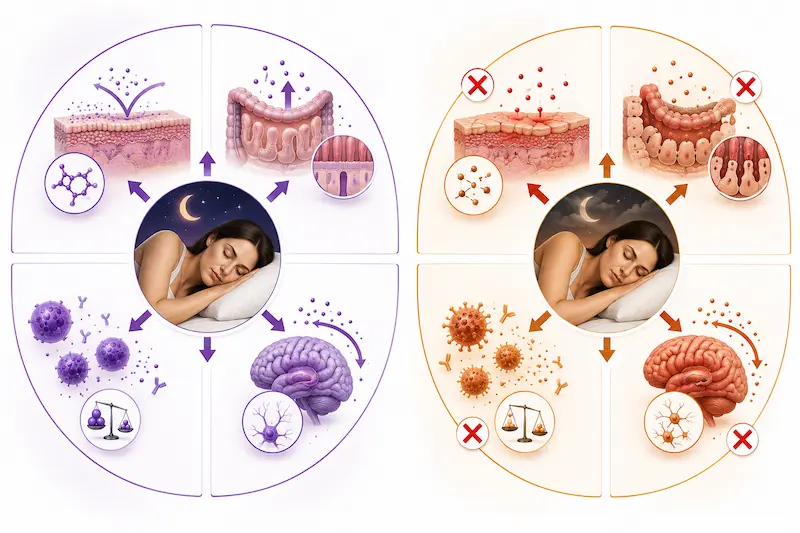
This post explains what poor sleep actually does to the internal environment that rosacea depends on, why even one night of disrupted sleep starts a cascade that can sustain itself for days, and why the urgency of addressing chronic poor sleep goes significantly beyond skin health alone.
Sleep Is Not Rest — It Is Active Repair
The most important reframe for understanding why poor sleep worsens rosacea is recognizing that sleep is not simply the absence of wakefulness. It is the body’s dedicated repair, restoration, and waste-clearance period — the window during which processes that cannot happen efficiently while you are active and upright are given the conditions they need to do their work.
During sleep, the skin undergoes its most significant repair activity. Cell turnover accelerates. Collagen synthesis increases. The skin barrier — the acid mantle and ceramide layer that protects rosacea’s reactive vasculature from environmental triggers — is restored. Blood flow to the skin increases, delivering the nutrients and immune mediators that daytime activity and UV exposure have depleted. When sleep is consistently poor or insufficient, this repair window is shortened or removed entirely. The skin begins the next day already behind — barrier not fully restored, repair processes incomplete, reactive vasculature less protected than it was the night before.
The gut undergoes its own repair during sleep. Intestinal permeability — the leaky gut state that allows bacterial fragments and food particles to trigger systemic immune activation — is most effectively addressed during sleep when digestive demand is low and repair resources can be redirected to restoring the gut lining. Removing the sleep window consistently means the gut’s repair is incomplete night after night, progressively worsening the intestinal permeability and systemic immune activation that drive rosacea’s inflammatory picture from the inside out.
Melatonin — Your Body’s Natural Antioxidant and Immune Regulator
One of the most important and least recognized consequences of poor sleep for rosacea is what happens to melatonin. Most people think of melatonin purely as a sleep hormone — the signal that tells your body it is time to sleep. But melatonin is also one of the most powerful antioxidants your body produces, and it plays a critical role in regulating the immune function that directly affects rosacea.
Melatonin scavenges the reactive oxygen species — the oxidative damage molecules — that accumulate with wakefulness, stress, and environmental exposure. It enhances the body’s own antioxidant enzyme systems, modulates immune cell activity, reduces inflammatory signaling, and plays a direct role in maintaining the immune regulation that prevents mast cell hyperreactivity and the histamine overload driving rosacea. When sleep is poor and melatonin production is suppressed, this antioxidant and immune regulatory protection is removed — increasing oxidative stress, dysregulating immune function, and creating the internal conditions in which mast cells become more reactive and inflammation becomes harder to contain.
The Gut Connection to Melatonin
What most people — and most practitioners — don’t realize is that melatonin production is deeply dependent on gut health. Melatonin is synthesized from serotonin, and approximately 90 percent of the body’s serotonin is produced in the gut. Vitamin B6 — the same nutrient that the body uses to break down histamine through the DAO enzyme — is an essential cofactor for converting tryptophan into serotonin in the gut. When gut dysbiosis depletes B6 through impaired absorption and elevated gut inflammation, the body loses both its histamine-degrading capacity AND its serotonin-producing capacity simultaneously. Less serotonin means less melatonin. Less melatonin means less antioxidant protection and less immune regulation. And less immune regulation means more mast cell reactivity, more histamine, and more rosacea.
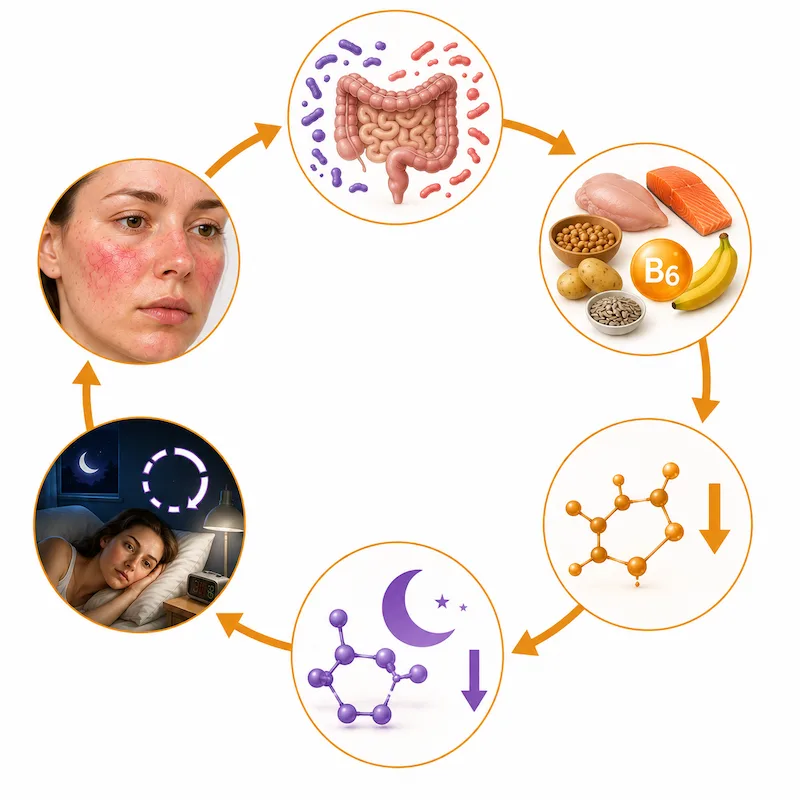
This is the self-reinforcing cycle that connects gut health, sleep quality, histamine burden, and rosacea in a single unified picture: poor gut health impairs serotonin and therefore melatonin production, which worsens sleep quality and removes the antioxidant protection sleep provides, which worsens the gut’s overnight repair capacity, which further impairs serotonin and melatonin production, which sustains the cycle indefinitely without upstream intervention.
One Bad Night Is Enough to Start the Cascade
One of the most clinically important and least communicated facts about sleep and rosacea is how quickly sleep deprivation affects the stress hormone picture. Research confirms that even a single night of poor sleep raises cortisol levels the following evening by 37 to 45 percent. That elevated evening cortisol then suppresses melatonin production the following night — making the next night’s sleep harder to achieve and less restorative. Poor sleep produces the hormonal conditions that make the next night’s sleep worse, which raises cortisol further, which suppresses melatonin further, and so on.
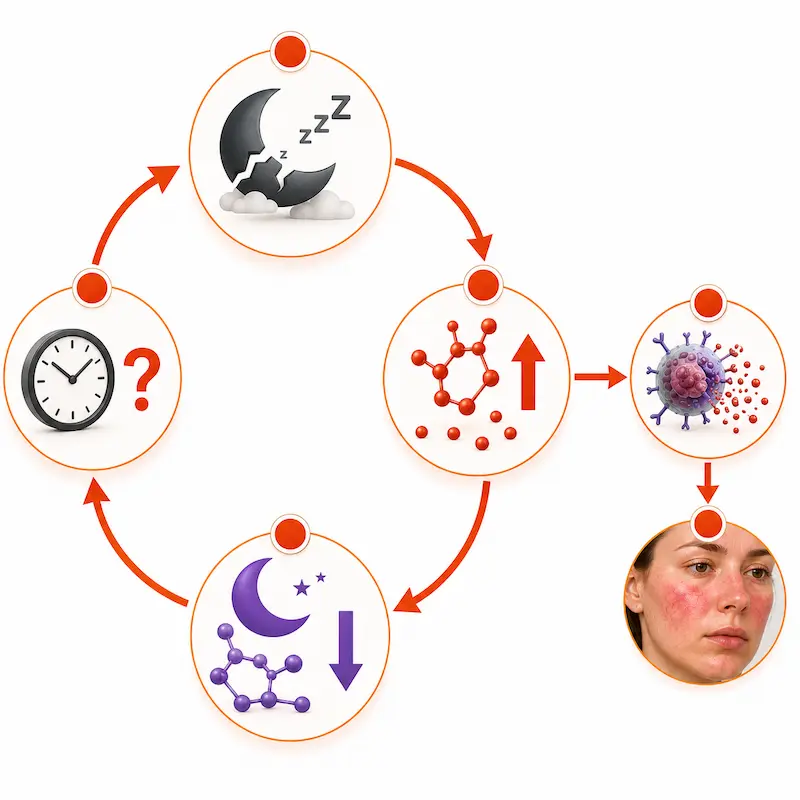
For rosacea, that one-bad-night cortisol elevation matters because cortisol activates the immune cells in the skin called mast cells, which release histamine producing the flushing and redness that rosacea patients recognize. It suppresses thyroid function, reducing the body’s ability to break down histamine through the DAO enzyme. It raises blood sugar, producing the compounds that structurally damage the collagen and elastin supporting rosacea’s reactive vasculature. All of the mechanisms we have established throughout this cluster — the histamine-mast cell picture, the thyroid-DAO picture, the blood sugar-structural damage picture — are simultaneously activated by the cortisol elevation that follows even a single night of disrupted sleep.
When this state becomes chronic — when poor sleep is not an occasional event but a persistent pattern — the sustained cortisol elevation becomes immuno-suppressive rather than simply immuno-activating. The immune system’s regulatory capacity is gradually depleted. Gut dysbiosis worsens because the overnight gut repair window has been chronically shortened. Nutrient insufficiencies deepen because gut absorption is impaired and the body’s demands for repair nutrients consistently exceed what the shortened sleep window can deliver. The histamine burden rises. The mast cells become progressively more sensitized. And the threshold at which any trigger — food, heat, stress, sun — produces a visible rosacea response gets progressively lower.
Poor Sleep, Inflammation, and What It Means for Rosacea Specifically
Sleep deprivation elevates inflammatory signaling throughout the body — and one of the most consistent markers of this elevation is a signaling molecule called IL-6. Research has confirmed that IL-6 plays a central role in rosacea’s immune and vascular mechanisms — driving the chronic inflammation, blood vessel changes, and tissue damage that characterize the condition. IL-6 is also produced in the gut in response to dysbiosis, which connects the gut health picture to the inflammatory picture and to the melatonin depletion cascade simultaneously.
The practical clinical consequence: a rosacea patient with chronically poor sleep is sustaining elevated inflammatory signaling that directly feeds the same mechanisms driving her skin condition. The rosacea is not worsening because of some separate sleep-skin connection. It is worsening because poor sleep is sustaining the systemic inflammatory environment that the rosacea was already expressing from the gut, the immune system, and the hormonal picture — and doing so continuously, through the night, in the window that should have been dedicated to reducing it.
Poor Sleep Goes Far Beyond Skin — What It Does to the Brain
The urgency of addressing chronic poor sleep extends significantly beyond rosacea and skin health. During sleep, the brain runs its own dedicated waste clearance system — researchers have called it the glymphatic system — that is active primarily during deep sleep and is responsible for flushing out the toxic proteins that accumulate in brain tissue during waking hours. Research confirms that this clearance system removes the same proteins that are linked to Alzheimer’s disease and Parkinson’s disease when it is allowed to function normally. When sleep is chronically disrupted, those proteins accumulate instead of being cleared.
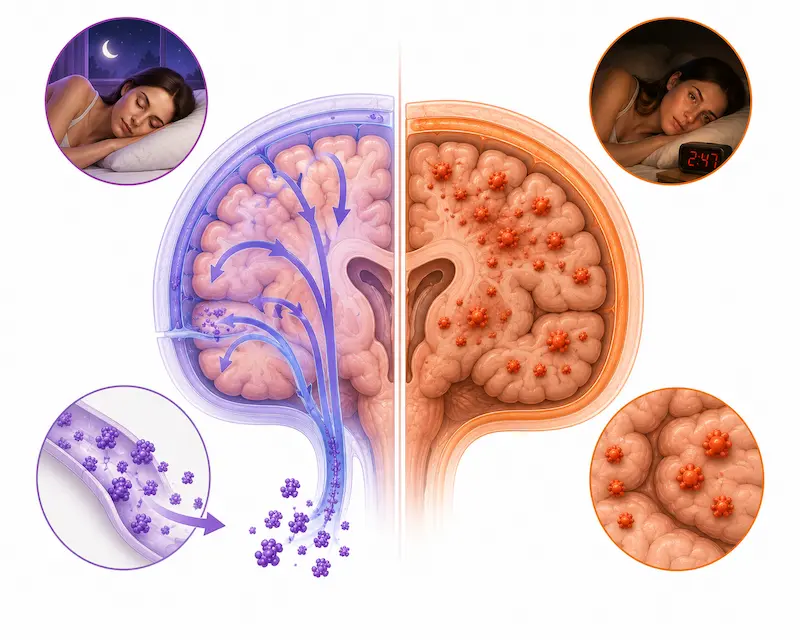
A single night of poor sleep measurably impairs this brain clearance. Chronic poor sleep, over months and years, allows the accumulation of these proteins to compound — creating the neurodegenerative conditions that express as cognitive decline and dementia decades before a diagnosis is made. Research published in the American Heart Association journal has confirmed the connection between sleep disruption, impaired brain clearance, and accelerated neurodegeneration.
Your rosacea is telling you something important when it flares after poor sleep. It is communicating that the internal environment — the stress hormones, the gut integrity, the immune regulation, the melatonin protection — is not being adequately restored. That same signal applies to your brain. The glymphatic clearance that poor sleep is impairing is not a luxury. It is a fundamental biological maintenance process that your brain depends on every night to prevent the accumulation of damage that compounds silently over decades.
The Pattern I Consistently See
In my functional medicine practice, poor sleep is often present in patients with persistent or progressively worsening rosacea. But it is rarely the starting point — it is almost always a consequence of the same upstream picture that is driving the rosacea. The gut dysbiosis impairing serotonin and melatonin production is causing the sleep difficulty. The elevated cortisol from chronic physical and emotional stress is preventing the deep, restorative sleep stages. The histamine burden — from food, mast cell activation, and DAO insufficiency — is causing the nocturnal histamine dump that wakes patients in the night with palpitations, itching, and anxiety. The blood sugar dysregulation is causing the overnight cortisol surges that fragment sleep architecture.
Sleep quality improves as the upstream picture is addressed — not because sleep was targeted directly, but because the gut, the hormonal balance, the histamine burden, and the nutrient picture that were preventing restorative sleep have been corrected. And as sleep quality improves, the rosacea picture improves alongside it — because the repair window that the skin, gut, and immune system had been chronically denied is finally being restored night after night.
This is why addressing poor sleep in the context of rosacea cannot be reduced to sleep hygiene advice — earlier bedtimes, screen limits, and blackout curtains. These help at the margins. But they cannot correct gut dysbiosis impairing melatonin synthesis, or histamine-driven nocturnal immune activation fragmenting sleep architecture, or cortisol elevation from unaddressed physiological stressors preventing deep sleep stages. The investigation that finds and addresses those upstream drivers is what changes the sleep picture — and the rosacea picture — simultaneously.
Sleep Is Not Optional for Rosacea — Or for Long-Term Health
Can poor sleep make rosacea worse? Yes — through a specific, multi-system cascade that removes the body’s ability to repair itself at every level simultaneously. And the consequences of chronic poor sleep extend far beyond what shows on your skin. The same overnight window your skin needs to restore its barrier and reduce its reactivity is the window your brain needs to clear the toxic proteins that accumulate silently into neurodegeneration. Poor sleep is not a lifestyle inconvenience. It is a clinical condition with measurable biological consequences that compound over time in ways that go far beyond what any topical treatment or medication can address.
If your rosacea consistently worsens with poor sleep, the most important clinical question is not how to sleep better. It is what is preventing restorative sleep in the first place — and which rosacea upstream root-causes are sustaining that prevention. The gut, the histamine picture, the hormonal balance, the cortisol burden, the nutrient status — all of these are identifiable, measurable, and addressable. And addressing them is what allows sleep to do what it is designed to do: restore, repair, and protect every system in the body that depends on it.
→ Book your Initial Functional Medicine Health and Skin Assessment
P.S. If finances have been the only thing standing between you and starting your functional medicine journey — flexible payment options are available through Cherry on our website. No interest, no impact on your credit score, quick approval, and affordable monthly payments. Apply in minutes on our website.
Q1: Can poor sleep make rosacea worse?
Yes — through a specific multi-system cascade. Poor sleep removes the body’s primary repair window for the skin, the gut, and the immune system simultaneously. It elevates cortisol — even a single bad night raises next-day cortisol by 37 to 45 percent — which activates the immune cells in the skin that release histamine, suppresses thyroid function reducing histamine breakdown, and raises blood sugar producing structural damage to the skin’s collagen and elastin. It suppresses melatonin — the body’s natural antioxidant and immune regulator — removing the protection that normally contains mast cell reactivity and reduces systemic inflammation. And it prevents the gut’s overnight repair, worsening the intestinal permeability that drives systemic immune activation and rosacea’s inflammatory picture from the inside out.
Q2: Why does my rosacea flare after a bad night’s sleep?
Because the elevated cortisol that follows even one night of poor sleep immediately activates the immune cells in the skin that produce histamine and the inflammatory response characteristic of a rosacea flare. This cortisol elevation also suppresses the thyroid function that would normally help break down that histamine, and raises blood sugar that produces compounds damaging the skin’s structural proteins. The effect is rapid — within 24 hours of disrupted sleep the internal conditions that produce rosacea flares are measurably worsened. When poor sleep is persistent, these effects compound: the cortisol elevation becomes chronic, the melatonin protection is chronically suppressed, and the gut repair window is chronically shortened, progressively deepening every upstream driver of rosacea simultaneously.
Q3: How does poor sleep affect the skin?
During sleep, the skin undergoes its most significant repair activity: cell turnover accelerates, collagen synthesis increases, and the skin barrier is restored. Poor sleep shortens or removes this repair window, leaving the skin beginning each day with barrier integrity not fully restored and repair processes incomplete. Simultaneously, poor sleep elevates cortisol and suppresses melatonin — the body’s primary antioxidant and immune regulator — increasing oxidative damage to the skin’s structural proteins and dysregulating the immune function that prevents mast cell hyperreactivity. The combination of impaired barrier repair, increased oxidative stress, and dysregulated immune function explains why consistently poor sleep is one of the most reliable predictors of progressive rosacea worsening.
Q4: How do I prevent morning rosacea flares?
Morning rosacea flares most commonly reflect one of two overnight mechanisms: the circadian histamine dump from mast cell activation during the dark period, or the cortisol surge from blood sugar dropping overnight. The histamine dump pattern — waking suddenly with facial redness, itching, or racing heart — reflects mast cells that are already sensitized from gut dysbiosis, hormonal imbalance, or toxic burden reaching their peak reactivity during sleep. The blood sugar pattern — waking anxious, sweaty, or hungry — reflects a cortisol surge correcting overnight hypoglycemia that simultaneously activates mast cells. Preventing morning flares requires addressing the upstream drivers producing those overnight responses, not simply adjusting sleep habits. The gut microbiome, histamine burden, hormonal balance, and blood sugar regulation all need to be in the investigation.
Q5: Can lack of sleep worsen skin long-term?
Yes — and the structural consequences compound over time. Chronically elevated cortisol from poor sleep produces compounds that attach to collagen and elastin making them stiff and brittle — the same structural damage that blood sugar elevation and mast cell enzyme activity are simultaneously producing. The progressive thinning and weakening of the skin matrix that results makes rosacea skin less able to contain its reactive vasculature and more vulnerable to every trigger that the upstream environment is already primed to respond to. Beyond the structural consequences, chronic poor sleep progressively depletes the melatonin protection that contains mast cell reactivity and the gut health that supports the serotonin production melatonin depends on — creating a deepening spiral that is significantly harder to reverse the longer it continues.
Q6: Does cortisol and stress cause rosacea?
Cortisol — the body’s primary stress hormone — is one of the most consistent upstream drivers of rosacea, and it is elevated not only by emotional stress but by poor sleep, gut dysfunction, blood sugar dysregulation, and toxic burden. When cortisol is chronically elevated, it suppresses thyroid function reducing histamine breakdown, activates mast cells in the skin producing histamine and the inflammatory response of rosacea, and raises blood sugar producing structural damage to skin collagen and elastin. Poor sleep is one of the most reliable drivers of sustained cortisol elevation — making it a significant rosacea driver through the same hormonal pathway as emotional stress. For a complete explanation of the stress-cortisol-rosacea connection, see our dedicated post on why stress makes rosacea worse.
Written by Natalie Maibenko – a Certified Functional Medicine Practitioner and Master Esthetician with 23+ years of experience and founder of Unique Verve

Natalie Maibenko
Functional Medicine & Skincare Expert – Helping You Take Control of Your Health and Achieve Lasting Skin Results Nationwide — Virtual Practice
As a Certified Functional Medicine Practitioner my Expertise Encompasses:
- Immune System: frequent illness, UTIs, yeast infections
- Allergies, Asthma
- Skin Problems: acne, cystic acne, rosacea, eczema, dermatitis, ichthyosis, psoriasis, vitiligo, melasma
- Inflammation: arthritis, rhinitis, joint & muscle pain, migraines, headaches
- Sleep Disturbunces, Insomnia
- Gut Problems: IBS/IBD, bloating, acid reflux, gas, constipation, diarrhea, parasites, fungal/yeast overgrowths
- Hormonal Imbalances: PCOS, PMS symptoms, weight problems/inability to lose weight, thyroid problems
- Hair Loss, Alopecia
- Mood Imbalances: anxiety, depression, irritability
- Metabolic Dysfunction, Insulin Resistance, Type 2 Diabetes
- Optimizing Wellness for Successful Pregnancy
- Autoimmune Conditions: Hashimoto’s thyroiditis, grave’s disease, reumatoid arthritis (RA), lupus, etc
- Bone Health: osteopenia/ osteoporosis
- Effective Anti-Aging Strategies without Injectables with the inside-out & outside-in approach
- Detoxification of Heavy Metals, Mycotoxins, Environmental Toxins
- Reversing Breast Implant Illness
- Preparation for the Explant Surgery and Optimization of Wellness & Vitality Post-Explant
