
Introduction
Can you treat rosacea without antibiotics? If you have been managing rosacea with repeated courses of doxycycline, minocycline, or metronidazole — watching your skin improve briefly and then relapse as soon as you stop — this is the most important question you can ask. Because the relapse is not a coincidence, and the pattern you are experiencing is not bad luck. It is a predictable clinical consequence of using antibiotics to manage a condition whose underlying drivers have nothing to do with bacteria.
Research published in Advances in Therapy states explicitly that conventional antibiotic therapy for rosacea is usually unsatisfactory because of frequent relapses. This is not a minority opinion in the literature. It is the clinical reality that most rosacea patients discover through their own experience — the antibiotics work while you take them and stop working when you don’t, and each course leaves the internal environment in a slightly worse state than before.
This post explains why. Not in a way that dismisses the role antibiotics have played in providing temporary relief — but in a way that explains the mechanism through which long-term antibiotic use damages the very internal environment that rosacea healing depends on. And why, in my functional medicine practice, the most meaningful and lasting rosacea improvements I see come from addressing that internal environment rather than repeatedly suppressing its downstream expression.
Why Antibiotics Keep Failing Rosacea — The Relapse Pattern Explained
Antibiotics address rosacea through two mechanisms: their anti-inflammatory properties (particularly doxycycline at low doses) and their antimicrobial action against specific organisms like Demodex-associated bacteria. Both of these mechanisms produce real and measurable short-term improvement in rosacea symptoms. Neither of them addresses the upstream immune dysregulation, gut dysfunction, thyroid insufficiency, hormonal imbalance, or toxic burden that created the rosacea environment in the first place.
When antibiotics are stopped, the upstream environment is unchanged. The gut dysbiosis, the mast cell hyperreactivity, the histamine overload, the leaky gut — all of it remains exactly as it was before the antibiotic course began, or in many cases is worse because of the antibiotic’s effect on the gut microbiome itself. The rosacea returns because its cause was never addressed. And the returning rosacea often appears more resistant and more reactive than it was before, because the internal environment has been further compromised by the antibiotic course designed to treat it.
This is the vicious cycle that conventional dermatology rarely acknowledges: the antibiotic that provides temporary improvement simultaneously damages the gut environment that is the most important lever for lasting rosacea improvement. Can you treat rosacea without antibiotics? For most patients, the more important question is whether treating rosacea primarily with antibiotics is making the condition harder to resolve over time.
What Antibiotics Do to the Gut Environment Rosacea Depends On
The gut microbiome is not a passive bystander in rosacea. It is an active participant in every mechanism that drives or resolves rosacea: it regulates immune function, produces the short-chain fatty acids that prevent mast cell hyperreactivity, maintains the intestinal barrier that prevents LPS from entering systemic circulation, controls histamine production and degradation, and supports the Treg regulatory cells that prevent autoimmune progression. The gut microbiome is, in functional medicine terms, the foundational upstream environment in which rosacea either thrives or resolves.
Antibiotics damage this environment in several specific and clinically significant ways.
Destruction of Lactic Acid-Producing Bacteria
Lactic acid-producing bacteria — particularly Lactobacillus species — are the primary regulators of the gut’s chemical environment. They produce lactic acid that maintains an acidic pH that naturally suppresses opportunistic and pathogenic species. When antibiotics eliminate lactic acid-producing bacteria, they remove the chemical control mechanism that keeps opportunistic organisms in check. The resulting shift in gut pH and microbial composition creates the conditions in which opportunistic species — including Candida, E. coli, H. Pylori, and SIBO-causing organisms — can establish overgrowth in the now-vacated microbial niche.
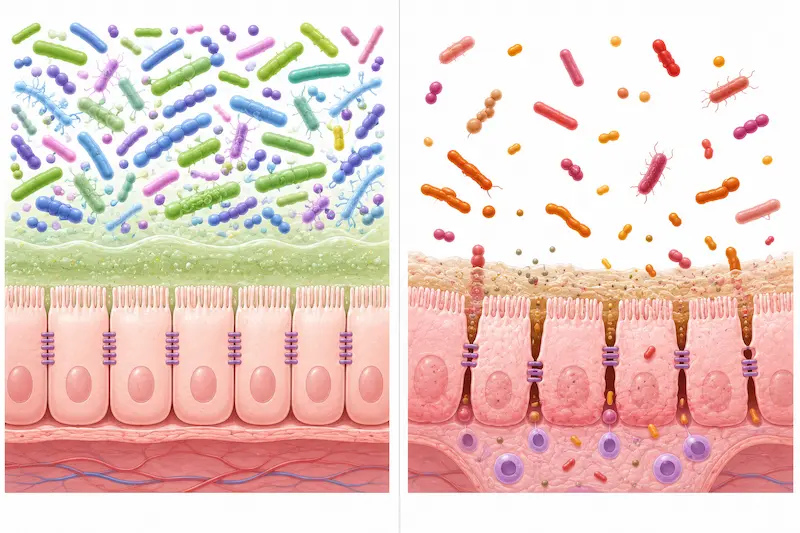
The research on rosacea and SIBO is particularly striking in this context: SIBO was found in almost half of rosacea patients in a prospective study, with the highest risk in papulopustular rosacea. When SIBO was eradicated, almost all patients achieved complete resolution or significant improvement of rosacea — and skin lesions remained in remission without other treatments for more than 9 months. Antibiotics taken for rosacea may be contributing to the SIBO that is driving the rosacea.
Colonic Mucus Layer Reduction
Antibiotics have been shown to reduce the thickness of the colonic mucus layer — the protective gel that lines the intestinal wall and acts as a physical barrier between luminal contents and the epithelial cells beneath. This mucus layer reduction directly increases intestinal permeability, contributing to the leaky gut state where bacterial fragments, LPS, and undigested food particles cross into systemic circulation and trigger the mast cell activation and systemic immune response that drives rosacea.
The colonic mucus layer is produced and maintained by goblet cells whose function depends on the short-chain fatty acids (SCFAs) produced by healthy commensal bacteria from dietary fiber fermentation. Antibiotics that eliminate the SCFA-producing bacteria simultaneously reduce the supply of goblet cell fuel — meaning mucus layer thinning is a direct downstream consequence of the same bacterial elimination that causes dysbiosis.
Microbial Diversity Loss That May Never Fully Recover
This is the most clinically consequential long-term effect of antibiotic use for rosacea, and the one most rarely discussed with patients. The gut microbial community that exists in each individual is a product of decades of microbial colonization, dietary influence, environmental exposure, and immune selection. Antibiotics disrupt this community acutely — but the recovery is neither complete nor guaranteed.
During recovery, which may take months or years, the microbial community often repopulates differently from its original state. Sometimes, microbial diversity never fully re-establishes into its original composition. Whether and how fully the microbiome recovers depends on factors both obvious — diet, lifestyle, stress levels — and less obvious to most patients: which systems were impacted by the antibiotics (motility, thyroid function, digestion, nutrient absorption, detoxification, immune function) and whether those imbalances were identified and addressed before the recovery window closed. The narrowing of the recovery window with each additional antibiotic course is one of the most important reasons why repeated antibiotic treatment for rosacea compounds the problem rather than resolving it.
The Nutrient Depletion Cascade — Why Antibiotics Deplete What Rosacea Skin Needs Most
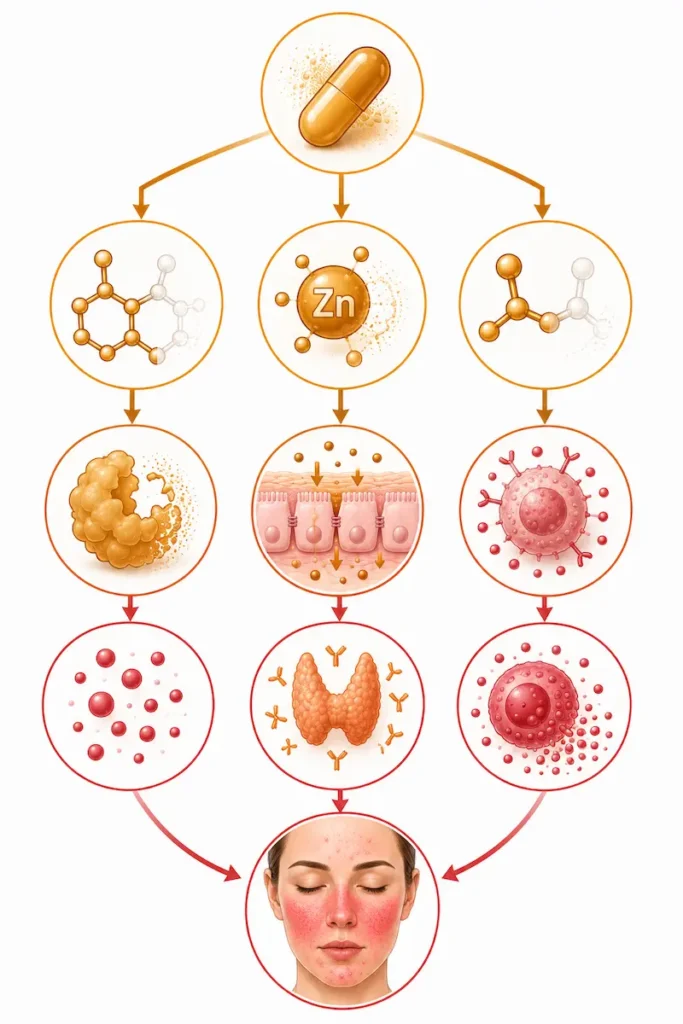
Beyond the direct microbiome destruction, antibiotics produce a significant and underappreciated nutrient depletion cascade that directly worsens the specific deficiencies most relevant to rosacea. This cascade operates through multiple simultaneous pathways:
B Vitamin Depletion and DAO Impairment
The gut microbiome is a major producer of B vitamins — particularly B12, folate, B6, and biotin — synthesized directly by commensal bacteria and absorbed in the colon. When antibiotics eliminate the bacteria responsible for this synthesis, B vitamin production drops significantly. For rosacea specifically, B6 depletion is the most clinically consequential: B6 is an essential cofactor for diamine oxidase (DAO), the primary enzyme responsible for degrading histamine in the gut. Depleted B6 from antibiotic use directly impairs DAO activity — increasing histamine accumulation, amplifying mast cell reactivity, and worsening the histamine-driven redness, flushing, and reactivity that characterize rosacea.
Zinc Depletion and Barrier Compromise
Zinc is essential for skin barrier integrity, thyroid peroxidase (TPO) enzyme activity, vitamin A metabolism, and immune regulation. Antibiotics deplete zinc through two mechanisms: direct chelation by tetracycline-class antibiotics (which form insoluble complexes with zinc, preventing absorption) and indirect depletion through elimination of the zinc-preserving gut bacteria. For rosacea skin that already has a compromised acid mantle and barrier, zinc depletion from antibiotic use compounds the barrier vulnerability rather than supporting the barrier restoration that rosacea healing requires.
Short-Chain Fatty Acid Depletion and Immune Dysregulation
Short-chain fatty acids — butyrate, propionate, and acetate — produced by commensal bacteria fermenting dietary fiber are among the most important immune regulatory metabolites in the body. They inhibit inflammatory cell proliferation, decrease cytokine production, inhibit NF-κB signaling, promote Treg differentiation, and maintain the intestinal barrier that prevents immune activation from luminal contents. When antibiotics eliminate the SCFA-producing bacteria, these immune regulatory metabolites disappear — removing the most important natural brake on the mast cell activation and immune dysregulation driving rosacea.
The Paradox: Antibiotics for Rosacea Worsen the Very Environment Rosacea Needs to Heal
The nutrient depletion cascade from antibiotic use — depleted B6 impairing histamine degradation, depleted zinc impairing barrier integrity and thyroid function, depleted SCFAs removing immune regulatory braking — produces a gut environment that is progressively more hospitable to the upstream drivers of rosacea, not less. Each antibiotic course treats the downstream skin inflammation while making the internal environment that produces it slightly worse. This is the mechanism behind the relapse pattern that almost every long-term antibiotic rosacea patient experiences: the antibiotics work while you take them, and the rosacea returns as soon as you stop, often worse than before.
The Pattern I Consistently See
In my functional medicine practice, I regularly see patients who have been on repeated courses of antibiotics for rosacea — sometimes for years or decades — and whose rosacea has become progressively more resistant, more reactive, and more difficult to manage with each course. The antibiotic history is almost always a consistent thread: initial improvement, relapse, stronger or longer course, initial improvement again, faster relapse, and so on until the antibiotics stop producing meaningful improvement at all.
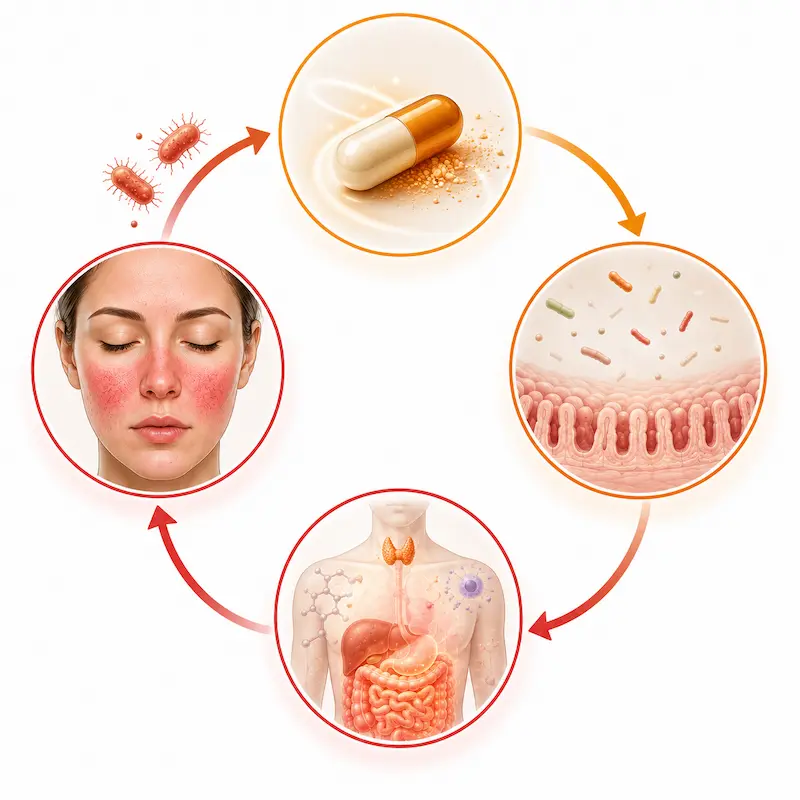
When the functional medicine investigation finally happens for these patients, the gut picture is almost universally compromised: significant dysbiosis, reduced microbial diversity, often SIBO or H. Pylori overgrowth, intestinal permeability confirmed by Wheat Zoomer anti-LPS antibodies, and the nutrient insufficiencies — vitamin B6, zinc, vitamin A, omega-3 fatty acids — that directly result from years of impaired gut absorption and SCFA-depletion from repeated antibiotic courses.
The rosacea in these patients is not more severe because they failed to respond to treatment. It is more severe because the treatment they received repeatedly damaged the internal environment their rosacea depended on healing. And the functional medicine investigation — identifying what the antibiotic history did to the gut, what nutrients were depleted, what organisms overgrew, what barriers were compromised — is the starting point for meaningful and lasting improvement that the antibiotic cycle never provided.
Can You Treat Rosacea Without Antibiotics?
Yes — and for many patients, the most significant improvement they experience comes only after they stop the antibiotic cycle and begin the internal investigation that antibiotics were preventing them from pursuing. The question is not whether antibiotics have a role in managing specific acute rosacea presentations — in some cases they do. The question is whether long-term antibiotic management of a condition driven by gut dysfunction, immune dysregulation, thyroid insufficiency, and hormonal imbalance is the right primary strategy for a condition whose upstream drivers are entirely accessible to investigation and intervention.
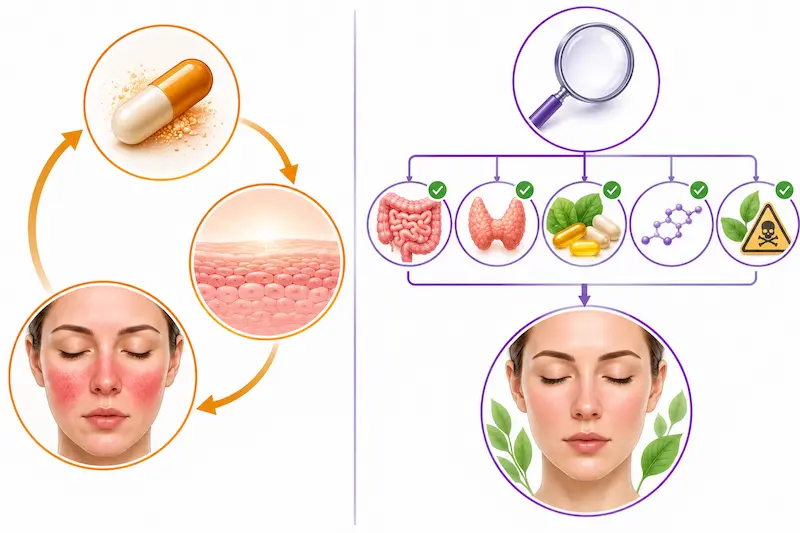
The internal environment that rosacea depends on for resolution includes a diverse, balanced gut microbiome with intact barrier function; adequate production of DAO cofactors including B6, vitamin C, and zinc; sufficient SCFA production for immune regulation and mast cell control; thyroid function adequate to support gut motility, DAO production, and immune regulatory capacity; and the hormonal balance that prevents the estrogen-driven mast cell stimulation that keeps the histamine bucket full. None of these are addressed by antibiotics. All of them are addressable through functional medicine investigation.
The rosacea that returns after each antibiotic course is not a treatment failure. It is a signal that the upstream picture was never investigated. And the longer that signal is suppressed rather than followed, the more entrenched the upstream environment becomes.
The Window for Restoration Narrows With Each Course
Every antibiotic course for rosacea buys temporary skin improvement at the cost of a gut environment that becomes progressively harder to restore. The question is not whether antibiotics help rosacea — they do, temporarily. The question is what they cost, and whether the cost is worth it when the upstream environment that produces the rosacea remains completely unaddressed.
If you have been through the antibiotic cycle — if your rosacea keeps returning, if it is becoming more resistant, if you have been on antibiotics for months or years without lasting resolution — the most important next step is not a stronger antibiotic or a longer course. It is the upstream investigation that has never happened: the gut microbiome assessment, the full thyroid panel, the nutrient status including B6 and zinc and omega-3s, the toxic burden, the hormonal picture. All of it is measurable. All of it is addressable. And addressing it is what makes rosacea improvement lasting rather than temporary.
→ Book your Initial Functional Medicine Health and Skin Assessment
P.S. If finances have been the only thing standing between you and starting your functional medicine journey — flexible payment options are available through Cherry. No interest, no impact on your credit score, quick approval, and affordable monthly payments. Apply in minutes on our website.
Frequently Asked Questions
Q1: Can antibiotics make rosacea worse over time?
Yes — and through a specific mechanism that is rarely explained to rosacea patients. Antibiotics eliminate the lactic acid-producing bacteria that keep opportunistic gut organisms in check, reduce the colonic mucus layer that maintains intestinal barrier integrity, and deplete the SCFA-producing bacteria whose metabolites regulate immune function and mast cell activity. Each of these effects worsens the gut environment that rosacea resolution depends on. Repeated antibiotic courses compound this damage cumulatively, making the microbiome progressively less diverse, the barrier progressively more compromised, and the immune regulatory capacity progressively more depleted — which explains why rosacea typically becomes more resistant and more reactive with each antibiotic course rather than progressively improving.
Q2: Will antibiotics fix my rosacea long-term?
Research published in Advances in Therapy states explicitly that conventional antibiotic therapy for rosacea is usually unsatisfactory because of frequent relapses. This reflects the fundamental mismatch between what antibiotics do — suppress downstream inflammation and specific organisms temporarily — and what rosacea requires for lasting resolution: investigation and correction of the upstream gut dysfunction, immune dysregulation, thyroid insufficiency, and hormonal imbalance that is producing the skin inflammation in the first place. Antibiotics address the symptom. They do not address the cause. And when the symptom returns after each course, it is the cause communicating that it was never addressed.
Q3: Why do antibiotics stop working for rosacea after a while?
Because each course of antibiotics further damages the gut environment that rosacea resolution depends on, while leaving the upstream drivers completely unaddressed. The initial improvement from antibiotics reflects their anti-inflammatory and antimicrobial effects. The diminishing returns over time reflect the compounding gut microbiome damage — progressively reduced diversity, worsening SIBO and opportunistic organism overgrowth, depleted DAO cofactors impairing histamine degradation, and reduced SCFA production impairing immune regulation — that makes the rosacea environment progressively more entrenched with each course. Antibiotic resistance development in the gut microbiome also plays a role: repeated tetracycline use selects for tetracycline-resistant organisms, reducing antibiotic effectiveness over time.
Q4: How can I control rosacea without antibiotics?
Rosacea without antibiotics is addressable when the upstream internal environment driving it is investigated and corrected. The functional medicine investigation typically reveals gut dysbiosis, intestinal permeability, H. Pylori or SIBO overgrowth, subclinical thyroid dysfunction, nutrient insufficiencies including B6, zinc, and omega-3 fatty acids, hormonal imbalance from poor estrogen clearance or perimenopausal progesterone decline, and toxic burden priming immune hypervigilance. Each of these is measurable and addressable. Rosacea that has not responded to long-term antibiotic management almost always has a functional medicine picture that explains the treatment resistance — and addressing that picture produces improvements that antibiotics alone were never capable of achieving.
Q5: What happens to my rosacea if I stop taking antibiotics?
In most cases, rosacea returns when antibiotics are stopped — which is the predictable consequence of managing a condition with a treatment that addresses the downstream expression without touching the upstream cause. Stopping antibiotics without simultaneously beginning to address the upstream gut, thyroid, hormonal, and nutrient picture that is driving the rosacea will almost certainly result in relapse. However, stopping antibiotics is an important step because continued antibiotic use continues to damage the gut environment that functional medicine intervention depends on for success. The ideal transition — working with a functional medicine practitioner to begin upstream investigation and intervention while carefully managing the antibiotic taper — gives the gut microbiome the best opportunity to begin restoring as the antibiotic pressure is removed.
Q6: Why do dermatologists prescribe long-term low-dose antibiotics for rosacea?
Dermatologists prescribe low-dose doxycycline — typically 40mg sub-antimicrobial dose — for rosacea primarily for its anti-inflammatory rather than antimicrobial properties, at concentrations intended to reduce inflammation without significantly altering the gut microbiome. The intention is sound: using the anti-inflammatory mechanism without the full microbiome-disrupting effect of therapeutic antibiotic doses. In practice, however, even sub-antimicrobial doses of doxycycline produce measurable gut microbiome changes over time, and the fundamental limitation remains: the anti-inflammatory effect does not address the upstream immune dysregulation producing the rosacea. The downstream suppression continues indefinitely while the upstream cause continues to progress.
Written by Natalie Maibenko – a Certified Functional Medicine Practitioner and Master Esthetician with 22+ years of experience and founder of Unique Verve

Natalie Maibenko
Functional Medicine & Skincare Expert – Helping You Take Control of Your Health and Achieve Lasting Skin Results Nationwide — Virtual Practice
As a Certified Functional Medicine Practitioner my Expertise Encompasses:
- Immune System: frequent illness, UTIs, yeast infections
- Allergies, Asthma
- Skin Problems: acne, cystic acne, rosacea, eczema, dermatitis, ichthyosis, psoriasis, vitiligo, melasma
- Inflammation: arthritis, rhinitis, joint & muscle pain, migraines, headaches
- Sleep Disturbunces, Insomnia
- Gut Problems: IBS/IBD, bloating, acid reflux, gas, constipation, diarrhea, parasites, fungal/yeast overgrowths
- Hormonal Imbalances: PCOS, PMS symptoms, weight problems/inability to lose weight, thyroid problems
- Hair Loss, Alopecia
- Mood Imbalances: anxiety, depression, irritability
- Metabolic Dysfunction, Insulin Resistance, Type 2 Diabetes
- Optimizing Wellness for Successful Pregnancy
- Autoimmune Conditions: Hashimoto’s thyroiditis, grave’s disease, reumatoid arthritis (RA), lupus, etc
- Bone Health: osteopenia/ osteoporosis
- Effective Anti-Aging Strategies without Injectables with the inside-out & outside-in approach
- Detoxification of Heavy Metals, Mycotoxins, Environmental Toxins
- Reversing Breast Implant Illness
- Preparation for the Explant Surgery and Optimization of Wellness & Vitality Post-Explant
