
Introduction
What gut problems cause skin issues? It is one of the most important questions a woman with chronic rosacea, hormonal acne, eczema, or psoriasis can ask — and one that conventional dermatology almost never raises. If you have been managing a skin condition with topical treatments, antibiotics, or prescription medications without achieving lasting resolution, the answer to this question may change everything about how you understand your skin and what it is actually signaling.
In my functional medicine and functional dermatology practice, I work from a foundational clinical principle: any dis-ease — and for that matter, any genuine wellness — always starts in the gut. The gut is not one organ among many. It is the central regulatory environment that influences every downstream system in the body, including the immune system, the hormonal system, the nervous system, and the skin. When the gut is well, the body reflects that wellness. When the gut is compromised, the body reflects that too — often most visibly on the face.

The skin is not isolated from the rest of the body. It is a mirror. The redness, the breakouts, the inflammatory patches, the persistent reactivity — these are not primary skin problems. They are downstream expressions of upstream imbalances that almost always originate, or are significantly amplified, in the gut. And the gut problems driving skin inflammation rarely begin as dramatic events. They begin as small inconveniences — occasional bloating, acid reflux after meals, a tendency toward loose stools, chronic burping, persistent fatigue after eating — that, when sustained long enough, produce consequences that extend far beyond the digestive system and appear, among other places, on the skin.
This post explores the gut-skin connection at the level of mechanism, pattern, and clinical practice — what gut problems cause skin issues, how they do it, and what a genuine root-cause investigation looks like. As always, every protocol I build is individualized to what your specific testing and health history reveal. What follows is the clinical framework I work within.
What Is the Gut-Skin Axis and Why Does It Matter?
The gut-skin axis is the bidirectional communication network between the gastrointestinal system and the skin — mediated through immune regulatory, inflammatory, microbial, hormonal, and neural pathways that connect these two seemingly separate organ systems into a single integrated functional unit.
The concept is not new. The first formal scientific observation linking gut health to skin disease was made over a century ago, when researchers noted that patients with skin conditions had significantly higher rates of gastrointestinal dysfunction than the general population. Modern research has confirmed and expanded that observation dramatically. We now understand that the gut microbiome, intestinal permeability, gut immune function, and the metabolites produced by gut bacteria all have direct, measurable effects on skin inflammation, skin barrier integrity, mast cell activity, and the vascular reactivity that produces the visible symptoms of rosacea, acne, eczema, and psoriasis.
Understanding the gut-skin axis matters clinically because it reframes what skin conditions actually are. They are not localized dermatological problems that happen to have some dietary triggers. They are systemic, immune-mediated inflammatory conditions that express themselves on the skin — and whose primary drivers are almost always internal, upstream, and addressable through a functional medicine lens that conventional dermatology is not structured to apply.
What Gut Problems Cause Skin Issues? The Core Mechanisms
The gut-skin connection operates through four primary pathways. Understanding them at a high level — without getting lost in clinical detail — is what allows the pattern to become recognizable in your own symptom picture.
1. Leaky Gut and LPS Translocation
The intestinal lining is a single-cell-layer barrier separating the contents of the gut from the bloodstream. When this barrier is compromised — through dysbiosis, chronic stress, food sensitivities, parasitic infection, or nutritional deficiency — bacterial fragments called lipopolysaccharides (LPS) pass through the damaged tight junctions into circulation. The immune system responds to LPS as a threat, triggering the release of pro-inflammatory cytokines that activate mast cells throughout the body — including in the skin. Activated mast cells release histamine, which produces the vascular dilation, flushing, and reactivity characteristic of rosacea and eczema. In acne, LPS-driven immune activation amplifies the inflammatory component of breakouts that goes far beyond simple bacterial overgrowth in the follicle. In psoriasis, increased intestinal permeability allows microbial fragments to reach immune cells that drive the dysregulated immune response at the root of the condition.
Leaky gut is explored in depth in our post on the histamine-rosacea gut connection — the same intestinal barrier dysfunction that drives rosacea drives a broader spectrum of skin inflammation across all four conditions.
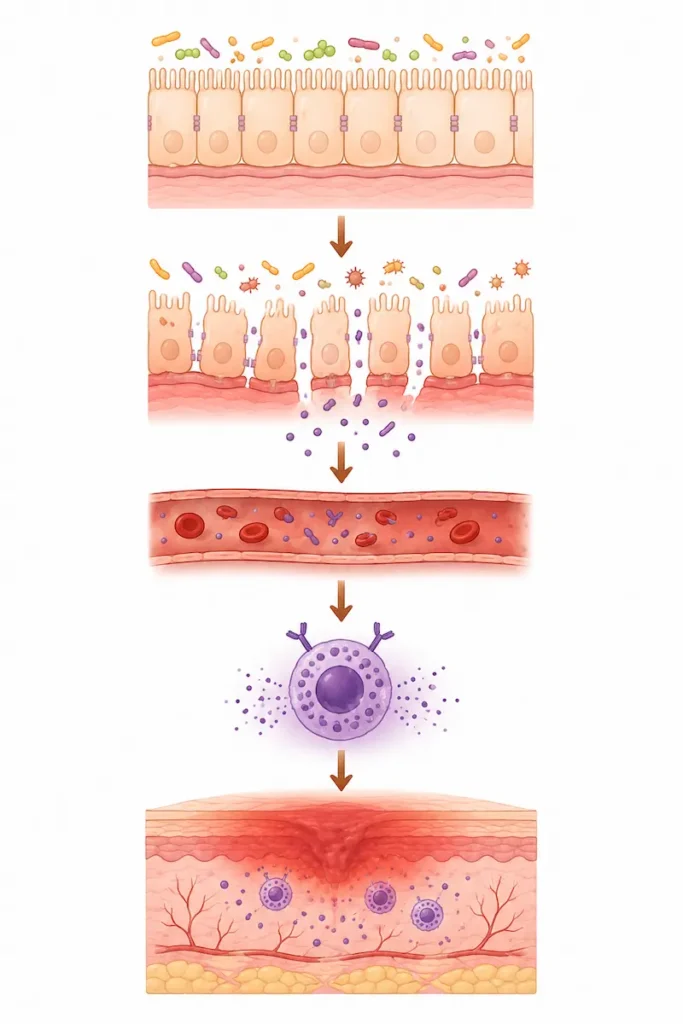
2. Gut Dysbiosis and Histamine Overload
A disrupted gut microbiome — dysbiosis — impairs the production of diamine oxidase (DAO), the primary enzyme responsible for breaking down histamine in the gut. When DAO production is reduced, histamine that should be degraded before reaching circulation accumulates systemically, keeping mast cells in a state of chronic activation and driving the vascular reactivity and skin inflammation that persists regardless of topical treatment. Certain pathogenic bacteria also produce histamine directly as a metabolic byproduct, adding to the accumulation. The result is a histamine load the body cannot clear, sustaining the inflammatory environment that produces and worsens rosacea, acne, and eczema simultaneously.
3. The Estrobolome and Estrogen Clearance
The estrobolome — the community of gut bacteria responsible for metabolizing and clearing estrogen — is directly disrupted by gut dysbiosis. When the estrobolome is compromised, estrogen that should be cleared through the liver and excreted is instead deconjugated by bacterial enzymes and recirculated into the bloodstream. This estrogen recirculation drives relative estrogen dominance — a state in which estrogenic signaling is amplified even when circulating estrogen levels appear normal on standard blood work. Estrogen directly stimulates mast cells, increases histamine output, and amplifies the vascular reactivity driving rosacea flares and the hormonal component of acne. The estrobolome is the missing link between gut dysbiosis and hormonal skin conditions that standard dermatology never investigates.
4. The Gut-Immune Axis
Approximately 70% of the immune system resides in the gut. When the gut is dysregulated — through infection, dysbiosis, parasitic burden, or intestinal permeability — immune regulation throughout the entire body is compromised. The regulatory T cells that normally prevent the immune system from overreacting to normal stimuli are reduced. The inflammatory cytokine environment shifts toward chronic activation. And the mucosal immune defenses that should prevent pathogenic organisms from establishing in the gut are progressively weakened. This systemic immune dysregulation is the common upstream mechanism connecting gut health to all four skin conditions — rosacea through mast cell activation, acne through inflammatory bacterial overgrowth, eczema through allergic immune sensitization, and psoriasis through the T-cell dysregulation that drives plaque formation.
What Creates the Gut Problems Driving Skin Issues?
Understanding the gut-skin mechanisms is only part of the picture. The more important clinical question is what creates the gut dysfunction in the first place — because addressing the gut without addressing its upstream drivers produces incomplete and temporary results. In my practice, the four most consistently present upstream drivers across all skin conditions are:
Thyroid Dysfunction
Suboptimal thyroid function reduces stomach acid production, slows gut motility, impairs the migrating motor complex (the gut’s housekeeping mechanism between meals), and reduces immune competence — collectively creating the internal environment in which dysbiosis, SIBO, and enhanced intestinal permeability develop and persist. A TSH that falls within conventional normal ranges can still represent suboptimal thyroid function sufficient to drive significant gut dysfunction. Full thyroid panel assessment — including free T3, free T4, reverse T3, and both antibodies — is non-negotiable in any comprehensive gut-skin investigation.
Blood Sugar Dysregulation
Chronically elevated blood sugar directly feeds pathogenic gut bacteria, sustains the dysbiotic environment that drives leaky gut and histamine overload, and impairs immune function at the cellular level. Blood sugar dysregulation also damages the endothelial lining of blood vessels through glycation — contributing directly to the vascular reactivity visible in rosacea and the compromised skin barrier seen in eczema, rosacea, acne and psoriasis. Fasting insulin and HbA1c are the most clinically informative metabolic markers for identifying the blood sugar picture driving gut-skin dysfunction, and both are consistently under-evaluated in dermatological contexts.
Hormonal Imbalances
Beyond estrogen dominance driven by the estrobolome, hormonal imbalances across the full spectrum — progesterone decline in perimenopause, androgen dominance driving sebum excess, cortisol dysregulation from chronic stress impairing gut motility and mucosal immunity — all create and sustain the gut dysfunction that drives skin inflammation. Hormones and the gut operate in a bidirectional loop: gut dysbiosis worsens hormonal imbalance, and hormonal imbalance worsens gut dysbiosis. Breaking this cycle requires addressing both simultaneously, with testing that captures the full hormonal picture rather than a single circulating hormone value.
Nutrient Insufficiencies
The gut lining, the immune cells that regulate it, and the enzymatic systems responsible for histamine breakdown, estrogen clearance, and pathogen defense all require specific nutrient cofactors to function. Zinc, vitamin A, vitamin D, B vitamins, selenium, magnesium, and amino acids are consistently depleted in patients with chronic skin conditions — not coincidentally, but causally. Nutrient insufficiency impairs the gut’s ability to maintain barrier integrity, regulate its microbial population, and produce the enzymes needed to prevent the histamine overload and immune dysregulation driving skin inflammation. Micronutrient assessment with SNPs — identifying both cellular nutrient levels and the genetic variants affecting how nutrients are absorbed and utilized — is one of the most clinically informative steps in a gut-skin investigation in my functional medicine practice.
The Pattern I See: When the Gut Is Telling the Skin’s Story
In my functional medicine practice, I consistently observe that patients presenting with rosacea, hormonal acne, eczema, or psoriasis almost always have gut symptoms they have not connected to their skin. Sometimes these symptoms are prominent and distressing. More often they are background noise — things the person has lived with long enough to normalize, never having been told they might be relevant to her skin.
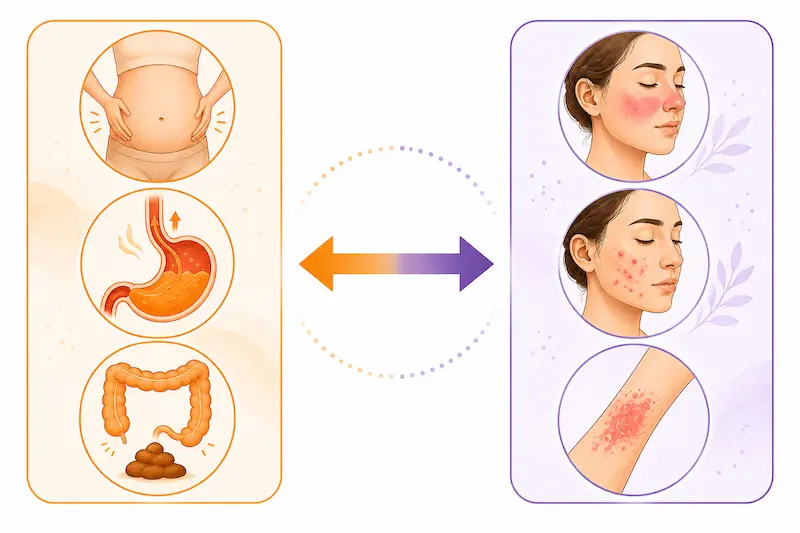
The gut symptom picture I see most consistently includes: daily or frequent bloating, often worsening after meals or by the evening; acid reflux or GERD that may be managed with antacids or proton pump inhibitors without ever addressing the underlying cause; chronic burping or excessive gas; loose stools occurring regularly, sometimes alternating with periods of constipation; and a general sense of digestive discomfort or heaviness after eating that has been present for so long it feels normal.
What the patient almost never connects — and what conventional medicine almost never asks about — is that her bloating and her rosacea share an origin. That her acid reflux and her eczema are expressions of the same upstream disruption. That her constipation and her hormonal acne are downstream consequences of the same gut environment that is simultaneously driving the skin inflammation she has been treating topically for years.
The gut symptoms are not separate from the skin condition. They are its context — and often its explanation. When I see the gut symptom picture alongside the skin presentation, I know the investigation needs to start upstream, in the gut, before we can meaningfully address what is happening on the face.
Beyond the digestive symptoms, I also consistently see systemic patterns that reflect the same upstream dysfunction: poor sleep and difficulty staying asleep, mood imbalances including irritability, anxiety, or low mood, brain fog and difficulty concentrating, fatigue that does not resolve with rest, hair loss, joint pain, and hormonal symptoms including PMS, irregular cycles, or perimenopausal acceleration. These are not coincidental. They are parallel expressions of the same internal imbalance — the same thyroid dysfunction, blood sugar dysregulation, hormonal imbalance, and nutrient insufficiency that is driving the gut dysfunction that is driving the skin inflammation.
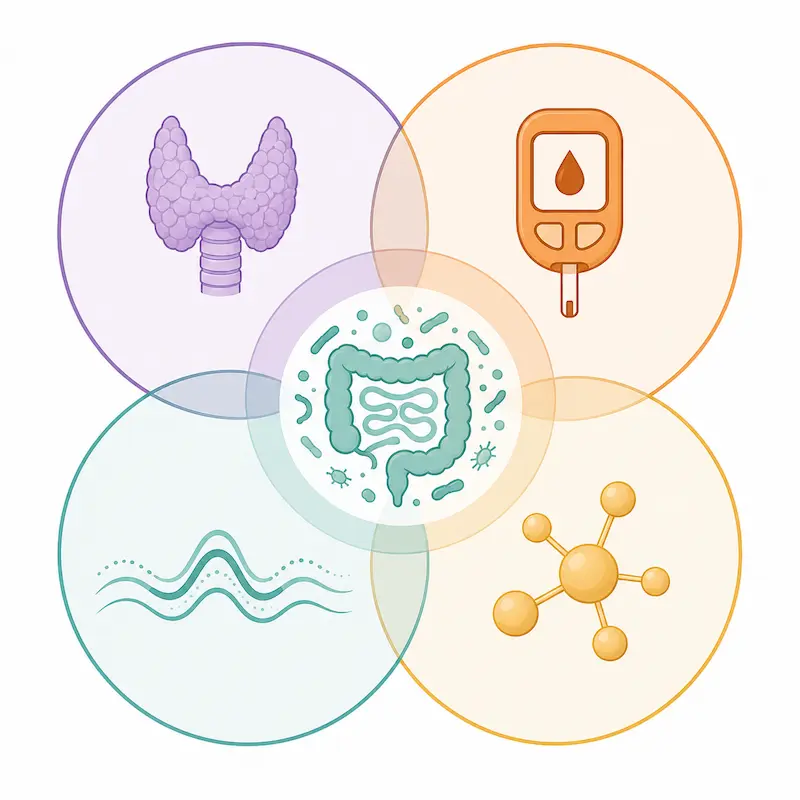
In my functional medicine practice, I do not just focus on the skin. I focus on the entire biochemistry — because skin healing requires addressing all imbalances simultaneously, and because when the body heals from the inside, the skin reflects that healing as one of the most visible and gratifying downstream consequences.
Why Medications Keep Falling Short — And What They Were Never Designed to Do
I am not against medications. Used appropriately, they can serve a valuable triage function — reducing the immediate burden of inflammation, clearing an active infection, or managing a symptom that is significantly impairing quality of life while the underlying picture is being investigated and addressed.
But medications are never designed to be taken indefinitely, and they are never designed to address the upstream root causes that produced the condition in the first place. This distinction matters — because conventional skin treatment is almost always structured around ongoing medication use, and the patients I see who have been on antibiotics, topical prescriptions, or immunosuppressants for years are not managing a controlled condition. They are managing a condition whose root causes have never been addressed, while the medications they are taking deplete the very nutrients required for gut and thyroid function, immune and detox competence, and skin healing.
Long-term antibiotic use — the most common conventional treatment for rosacea and acne — depletes B vitamins needed for histamine breakdown and methylation, devastates the gut microbiome creating or worsening the dysbiosis driving skin inflammation, worsens intestinal permeability, and reduces the microbial diversity that is the foundation of immune regulation. Proton pump inhibitors used for acid reflux deplete magnesium, B12, zinc, and iron — nutrients essential for thyroid and detoxification function, immune competence, and the enzymatic systems responsible for histamine clearance. Corticosteroids used for eczema and psoriasis impair gut integrity, suppress immune function, and worsen blood sugar dysregulation — three of the primary upstream drivers of the conditions they are managing.
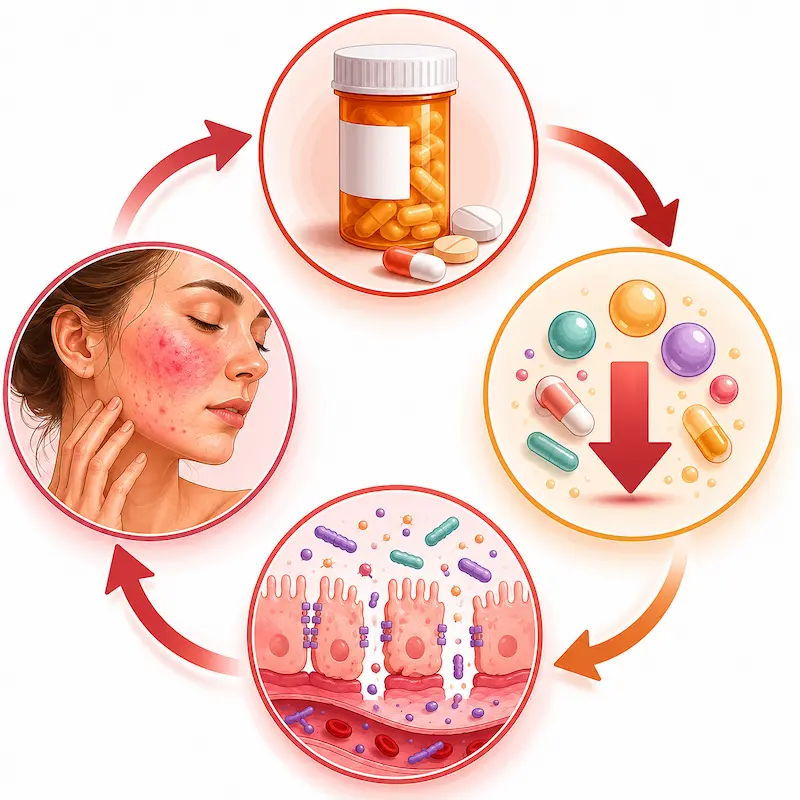
The result is a cycle that is genuinely counterproductive: the medication manages the downstream symptom while worsening the upstream environment, creating the conditions for the symptom to return when the medication is reduced or stopped. The skin condition does not resolve — it becomes progressively more treatment-dependent, while the underlying gut dysfunction becomes progressively more entrenched.
Breaking this cycle requires going upstream. Not abandoning the triage medications when they are genuinely needed — but investigating and addressing the root causes that made them necessary, so that the goal shifts from ongoing management to actual resolution. That is the work of functional medicine.
What Testing Helps Identify Gut-Skin Problems?
Every workup in my practice is built around the individual — your health history, your symptom picture, and the specific patterns your testing reveals. The panels most consistently relevant to the gut-skin connection include the Gut Zoomer for comprehensive microbiome assessment, pathogen detection; the Wheat Zoomer for anti-LPS antibodies that confirm gut bacterial fragments are entering circulation and to detect severity of intestinal permeability; the full thyroid panel including TSH, free T3, free T4, reverse T3, and both antibodies; the Hormone Zoomer (24-hour urinary panel) for comprehensive evaluation of all steroid hormones and their clearance pathways as well as evaluation of adrenal output; the Micronutrient Panel with SNPs for cellular nutrient levels and genetic variants affecting metabolism; and metabolic markers including fasting insulin, HbA1c, and a comprehensive metabolic panel. Where toxic burden is suspected — particularly in patients with constipation, loose stool, fatigue, or a history of significant environmental exposure — the Total Tox Burden panel identifies heavy metals, mycotoxins, and environmental chemicals that suppress immune function and compound gut dysfunction. Testing is never prescriptive — it is the clinical map from which an individualized protocol is built.
The Functional Medicine Approach: Addressing the Whole Biochemistry
The functional medicine approach to gut-driven skin conditions does not start with the skin. It starts with the upstream question: what specific combination of internal drivers is creating the gut dysfunction that is producing this person’s skin inflammation? And it does not stop at the gut. It addresses the full biochemical picture — thyroid function, blood sugar regulation, hormonal balance, immune competence, nutrient status, and detoxification capacity — because all of these systems are interconnected, all of them influence gut function, and all of them must be in balance for the gut to heal and for the skin to reflect that healing durably.
The protocol is always sequenced — because the order in which imbalances are addressed matters as much as the interventions themselves. And it is always individualized — because the specific combination of drivers is different for every person, which is why a protocol built around your specific testing and health history and symptoms will always outperform a generic elimination diet or supplement protocol built around population-level assumptions.
When the upstream drivers are corrected and the gut environment is restored, the skin reflects that restoration. Not just the skin condition — but mood, sleep, energy, cognitive clarity, immune resilience, hormonal symptoms, and the broader sense of vitality that chronic gut dysfunction quietly erodes over time. The skin is the most visible signal. The body that heals underneath it is the real outcome.
Your Skin Is Not the Problem. It Is the Signal.
Any dis-ease — and any genuine wellness — starts in the gut. The skin is not isolated from the rest of the body. Once your body heals from inside, your skin follows. And that resolution is available — when the upstream investigation is finally done.
If you have rosacea, hormonal acne, eczema, or psoriasis that has not responded meaningfully to conventional treatment, the most important shift you can make is not finding a better topical or a different prescription. It is asking what your skin and gut are trying to tell you — and finding a clinical framework that is actually designed to listen.
That is what functional medicine offers. Not a faster treatment, but a more complete one. An investigation of the upstream drivers that created the conditions for your skin condition to develop and persist. A protocol built around your specific biochemistry. And the possibility of resolution — not just of the skin, but of the mood, sleep, energy, cognition, and immune resilience that the same internal imbalance has been quietly affecting alongside it.
→ Book your Initial Functional Medicine Health and Skin Assessment
P.S. If finances have been the only thing standing between you and starting your functional medicine journey — flexible payment options are available through Cherry. No interest, no impact on your credit score, quick approval, and affordable monthly payments — available for functional medicine programs, lab testing, supplements, and Environ skincare. Apply in minutest here.
Frequently Asked Questions About What Gut Problems Cause Skin Issues
Q1: What gut problems cause skin issues?
Several gut conditions are consistently associated with skin inflammation. Leaky gut (increased intestinal permeability) allows bacterial fragments called LPS to enter circulation and activate mast cells that drive rosacea, acne, eczema, and psoriasis. Small intestinal bacterial overgrowth (SIBO) and H. Pylori infection create systemic inflammation that reaches the skin through immune and histamine pathways. Gut dysbiosis impairs DAO enzyme production needed to break down histamine, sustaining the mast cell activation that produces skin reactivity. A disrupted estrobolome allows estrogen to recirculate rather than clear, driving the hormonal component of skin conditions. And low stomach acid creates the permissive environment in which all of these conditions develop simultaneously.
Q2: What gut problems cause skin breakouts, rosacea, eczema and psoriasis?
The same underlying gut dysfunction drives all four conditions through shared mechanisms — with different inflammatory pathways predominating depending on the individual. Leaky gut and LPS translocation activate mast cells producing rosacea redness and eczema reactivity. Gut dysbiosis and histamine overload amplify the inflammatory environment of all four conditions. Disrupted estrogen clearance through the estrobolome drives the hormonal component of acne and rosacea. And gut-driven immune dysregulation is increasingly recognized as central to the T-cell dysfunction underlying psoriasis. In clinical practice, these conditions frequently overlap and share upstream gut drivers — which is why the gut investigation is the most important starting point regardless of which skin condition is most prominent.
Q3: How do I know if my skin issues are gut-related?
The combination of a chronic skin condition alongside any of the following gut symptoms strongly suggests a gut-skin connection: frequent bloating or abdominal distension, acid reflux or GERD, chronic burping or gas, loose stools or constipation occurring regularly, or a general pattern of digestive discomfort after meals. Beyond digestive symptoms, systemic patterns including poor sleep, mood imbalances, brain fog, fatigue, hair loss, and joint pain alongside a skin condition reflect the same upstream gut dysfunction expressing itself across multiple systems simultaneously. Comprehensive functional medicine testing — particularly the Gut Zoomer and Wheat Zoomer — provides objective evidence of whether gut infection, dysbiosis, and intestinal permeability are active contributors to the skin picture.
Q4: Does IBS affect your skin?
Yes — and the connection is mechanistic rather than coincidental. IBS involves alterations in gut motility, gut microbiome composition, and intestinal permeability that directly affect skin health through the gut-skin axis. The intestinal permeability component of IBS allows LPS to enter circulation and activate the mast cell-histamine cascade driving rosacea, acne, psoriasis and eczema. The dysbiosis component impairs DAO production and estrobolome function, amplifying histamine burden and hormonal imbalance. And the chronic inflammation of IBS — whether dominated by loose stools or constipation — sustains the systemic inflammatory environment that makes skin conditions harder to resolve. A functional medicine investigation of IBS almost always reveals contributors relevant to concurrent skin conditions.
Q5: Does diarrhea or loose stool affect your skin?
Yes — chronic loose stools or diarrhea, particularly when they occur regularly, are a signal of gut dysfunction that has direct downstream consequences for the skin. Loose stools accelerate intestinal transit and reduce the gut’s ability to absorb the nutrients — zinc, B vitamins, amino acids, and fat-soluble vitamins — required for skin barrier integrity, immune function, and histamine breakdown. They are also a hallmark presentation of hydrogen-dominant SIBO, in which bacterial overgrowth in the small intestine produces gas through fermentation, drives intestinal permeability, and creates the LPS translocation that activates mast cells in the skin. Addressing the underlying cause of loose stools — whether SIBO, parasitic infection, food sensitivity, or dysbiosis — almost always produces improvement in concurrent skin conditions.
Q6: Does constipation affect your skin?
Yes — significantly, and through multiple mechanisms. Constipation slows the transit and excretion of estrogen metabolites through the stool, allowing them to be reabsorbed and recirculated — driving the estrogen dominance that worsens hormonal acne, eczema, psoriasis and rosacea. It also allows the accumulation of bacterial endotoxins and waste products that should be cleared, increasing the systemic toxic burden that the liver and immune system must process. Constipation is frequently a presentation of methane-dominant SIBO (intestinal methanogen overgrowth), hypothyroidism reducing gut motility, or magnesium insufficiency — all of which have direct implications for skin inflammation and all of which require upstream investigation rather than symptomatic management.
Q7: Can SIBO cause rosacea, acne, eczema, and psoriasis?
Yes — SIBO is one of the most clinically significant and most consistently overlooked gut drivers of all four skin conditions. Research specifically links SIBO to rosacea, with studies showing markedly higher SIBO prevalence in rosacea patients and skin improvement following SIBO treatment. The mechanism applies equally to acne, eczema, and psoriasis: bacterial overgrowth in the small intestine produces endotoxins that translocate through a compromised intestinal barrier into circulation, activating the immune-inflammatory cascade that drives skin inflammation. SIBO also impairs nutrient absorption, reduces DAO production needed for histamine breakdown, and creates the intestinal permeability that allows LPS-driven mast cell activation to sustain skin reactivity regardless of topical treatment.
Q8: Does eczema really start in your gut?
For many patients, yes — and the evidence is increasingly compelling. Research consistently finds disrupted gut microbiome composition in eczema patients, including reduced populations of beneficial bacteria and altered short-chain fatty acid production that normally supports intestinal barrier function and immune regulation. The gut-immune connection is particularly direct in eczema: leaky gut allows microbial antigens to reach systemic circulation and prime the Th2-dominant immune response characteristic of atopic eczema. Gut dysbiosis in early life is now recognized as a significant risk factor for eczema development. And in clinical practice, comprehensive gut restoration — addressing dysbiosis, intestinal permeability, and the upstream drivers of both — consistently produces meaningful improvement in eczema that topical treatment alone cannot achieve.
Q9: What is the gut-skin axis?
The gut-skin axis is the bidirectional communication network between the gastrointestinal system and the skin, mediated through immune, inflammatory, microbial, hormonal, and neural pathways. It means that what happens in the gut directly affects what happens in the skin — and vice versa. Through this axis, gut dysbiosis drives mast cell activation in the skin through LPS translocation. Intestinal permeability allows histamine to accumulate systemically and sustain vascular reactivity visible as rosacea. A disrupted estrobolome allows estrogen to recirculate and amplify hormonal acne. And gut-driven immune dysregulation drives the T-cell dysfunction underlying psoriasis. Understanding the gut-skin axis reframes skin conditions from localized dermatological problems to systemic expressions of internal imbalance — which is the starting point for actually resolving them.
Q10: Can low stomach acid cause acne and rosacea?
Yes — and this is one of the most consistently overlooked upstream connections in the gut-skin picture. Adequate stomach acid is the gut’s primary chemical defense against bacterial overgrowth in the upper GI tract. When stomach acid is low — whether from H. Pylori infection producing urease that neutralizes gastric acid, hypothyroidism reducing acid production, chronic stress impairing parietal cell function, or long-term proton pump inhibitor use — bacteria that should be killed before reaching the small intestine survive and migrate there. This is the direct pathway from low stomach acid to SIBO development. SIBO in turn drives the LPS translocation, histamine overload, and gut-immune dysregulation that produce and sustain rosacea and acne. The conventional practice of reducing stomach acid for reflux frequently worsens this entire cascade.
Q11: Why does my rosacea flare after eating?
Post-meal rosacea flares typically indicate one or more of the following: a food sensitivity creating an immune response that activates mast cells and triggers histamine release; high-histamine foods overwhelming a DAO enzyme system already impaired by gut dysbiosis or intestinal damage; blood sugar spikes after meals driving endothelial inflammation and vascular reactivity; or fermentation of carbohydrates by SIBO bacteria producing gas, endotoxins, and intestinal pressure that amplifies systemic inflammation. Identifying which of these mechanisms is most active in your specific case requires testing rather than elimination guesswork — because the foods most likely to be triggering your rosacea may not be on any standard rosacea trigger list.
Q12: Does dairy really cause acne and rosacea?
For some individuals, yes — but the mechanism is more nuanced than dairy as a universal trigger. Dairy drives acne through IGF-1 stimulation increasing sebum production and androgen activity, and through whey protein’s insulin-spiking effect. For rosacea, dairy is most problematic when it appears on a food sensitivity panel as an immune-reactive food for that individual, or when it contributes to gut dysbiosis in someone with lactase insufficiency creating undigested lactose that feeds pathogenic bacteria. The clinical picture is individual: some patients see dramatic improvement from removing dairy, others see no change.
Q13: Can your microbiome imbalance cause eczema flares?
Yes — and this connection is one of the best-researched aspects of the gut-skin axis. Specific patterns of microbiome imbalance — including reduced Lactobacillus and Bifidobacterium populations, reduced short-chain fatty acid producing bacteria, and increased pathogenic bacterial load — are consistently associated with eczema severity. These imbalances impair the production of butyrate and other short-chain fatty acids that maintain intestinal barrier integrity and regulate the Th2-dominant immune response driving atopic eczema. Microbiome imbalance also reduces DAO enzyme production, amplifying the histamine burden that triggers eczema flares. Restoring microbiome diversity and function through targeted interventions based on comprehensive testing is one of the most impactful steps in a functional medicine approach to eczema.
Q14: Why is my skin worse after adding probiotics?
This is a clinically important and frequently misunderstood response. Several mechanisms can explain worsening skin after starting probiotics. First, certain probiotic strains produce histamine as a metabolic byproduct — Lactobacillus casei, L. reuteri, and L. bulgaricus are among the most common histamine-producing strains, and introducing them in a patient with already-elevated histamine burden can significantly worsen rosacea, acne, and eczema reactivity. Second, if SIBO is present, certain probiotics can worsen the overgrowth rather than correct it. Third, some patients experience a die-off reaction as probiotic supplementation shifts the gut microbiome and increases the release of toxins from declining pathogenic populations. Probiotic selection and timing must be individualized to the patient’s specific microbiome picture and histamine status.
Q15: Why won’t my dermatologist mention my gut?
Because dermatology is structured around skin-level diagnosis and management — a model designed to identify visible pathology and prescribe topical or systemic treatments that address it directly. Dermatologists receive minimal training in gut health, functional nutrition, or the gut-skin axis, and the clinical visit structure does not provide time for the detailed health history investigation that would reveal the gut symptoms running alongside the skin condition. This is not a criticism — it is a structural limitation of how conventional medicine is organized. Dermatology provides valuable services for diagnosis, ruling out serious skin conditions, and managing acute flares. Functional medicine provides what dermatology is not designed to offer: an upstream investigation of why the skin condition developed, what internal environment is sustaining it, and what addressing that environment makes possible.
Q16: What tests help identify gut-skin problems?
The most clinically informative testing for the gut-skin connection includes the Gut Zoomer (comprehensive microbiome assessment, pathogen detection including H. Pylori and SIBO markers), the Wheat Zoomer (anti-LPS antibodies confirming gut bacterial translocation into circulation and leaky gut severity), and a comprehensive food sensitivity panel identifying immune-reactive foods sustaining chronic gut and systemic inflammation. Beyond gut-specific testing, the full thyroid panel, Hormone Zoomer (24-hour urinary panel for estrogen metabolites and clearance), Micronutrient Panel with SNPs, and metabolic markers including fasting insulin complete the upstream picture. Every testing protocol is individualized based on your specific health history and symptom presentation.
Q17: Why does stress affect both my gut and my skin?
Through two primary pathways. First, chronic stress elevates cortisol, which increases intestinal permeability, reduces secretory IgA (the gut’s primary mucosal immune defense), suppresses the diversity of the gut microbiome, and directly impairs gut motility — creating the conditions for dysbiosis, SIBO, and leaky gut to develop and persist. Second, stress suppresses the migrating motor complex (MMC) — the gut’s housekeeping mechanism that sweeps residual bacteria from the small intestine between meals. When the MMC is impaired, bacteria accumulate in the small intestine and SIBO develops or recurs regardless of other interventions. Through both pathways, chronic stress creates and sustains the gut dysfunction that drives skin inflammation — which is why stress management is a clinical component of gut-skin restoration, not a lifestyle afterthought.
Written by Natalie Maibenko – a Certified Functional Medicine Practitioner and Master Esthetician with 22+ years of experience and founder of Unique Verve

As a Certified Functional Medicine Practitioner my Expertise Encompasses:
- Immune System: frequent illness, UTIs, yeast infections
- Allergies, Asthma
- Skin Problems: acne, cystic acne, rosacea, eczema, dermatitis, ichthyosis, psoriasis, vitiligo, melasma
- Inflammation: arthritis, rhinitis, joint & muscle pain, migraines, headaches
- Sleep Disturbunces, Insomnia
- Gut Problems: IBS/IBD, bloating, acid reflux, gas, constipation, diarrhea, parasites, fungal/yeast overgrowths
- Hormonal Imbalances: PCOS, PMS symptoms, weight problems/inability to lose weight, thyroid problems
- Hair Loss, Alopecia
- Mood Imbalances: anxiety, depression, irritability
- Metabolic Dysfunction, Insulin Resistance, Type 2 Diabetes
- Optimizing Wellness for Successful Pregnancy
- Autoimmune Conditions: Hashimoto’s thyroiditis, grave’s disease, reumatoid arthritis (RA), lupus, etc
- Bone Health: osteopenia/ osteoporosis
- Effective Anti-Aging Strategies without Injectables with the inside-out & outside-in approach
- Detoxification of Heavy Metals, Mycotoxins, Environmental Toxins
- Reversing Breast Implant Illness
- Preparation for the Explant Surgery and Optimization of Wellness & Vitality Post-Explant
With love and gratitude,
Natalie Maibenko
Functional Medicine & Skincare Expert – Helping You Take Control of Your Health and Achieve Lasting Skin Results Nationwide — Virtual Practice
