
Introduction
Why do I have eczema all of a sudden? If you had clear skin for years — or even for decades — and eczema has recently appeared or dramatically worsened without an obvious explanation, the most important thing to understand is this: eczema never appears randomly. There is always an upstream reason. And that reason almost never has to do with the skin itself.
Adult-onset eczema — or a sudden significant worsening of existing eczema — is one of the most consistent signals I see in functional medicine practice that the body’s internal burden has finally crossed a threshold it could no longer compensate for. The gut, the immune system, the hormonal balance, the toxic burden, and the body’s capacity to clear stress hormones have all been quietly accumulating pressure. And the skin is the most visible place where that accumulated pressure finally becomes impossible to ignore.

This post explains what actually causes eczema to appear suddenly in adulthood, what the final straw typically looks like in clinical practice, why the internal picture behind eczema goes far deeper than most dermatologists investigate, and what the functional medicine investigation finds that changes the trajectory from indefinite management to genuine resolution.
Eczema Never Appears Without a Reason — Even When the Reason Isn’t Obvious
The most frustrating experience for most adult-onset eczema patients is the absence of a satisfying explanation. Their dermatologist confirms the diagnosis, prescribes a steroid cream, and when they ask why it appeared now — after thirty years of clear skin, after a stressful year, after moving to a new home, after a course of antibiotics — the answer is usually a variation of “we don’t always know what triggers it.”
Functional medicine disagrees with that answer. Not because it has a simple single-cause explanation for eczema, but because it asks different questions. Not what is happening on the skin, but what changed in the body’s internal environment that allowed eczema to develop now. And in clinical practice, that question almost always has a traceable answer.
The internal environment that produces eczema involves a specific kind of immune dysregulation — an immune system that has shifted away from balanced surveillance and toward a state of chronic hypervigilance, producing excessive inflammatory responses to triggers that a healthy immune system would manage without visible consequence. That shift does not happen overnight. It accumulates — through gut microbiome damage, through toxic burden, through sustained stress, through nutrient depletion — until a final straw event crosses the threshold and eczema appears on the skin.
The Final Straw — Why Eczema Appears When It Does
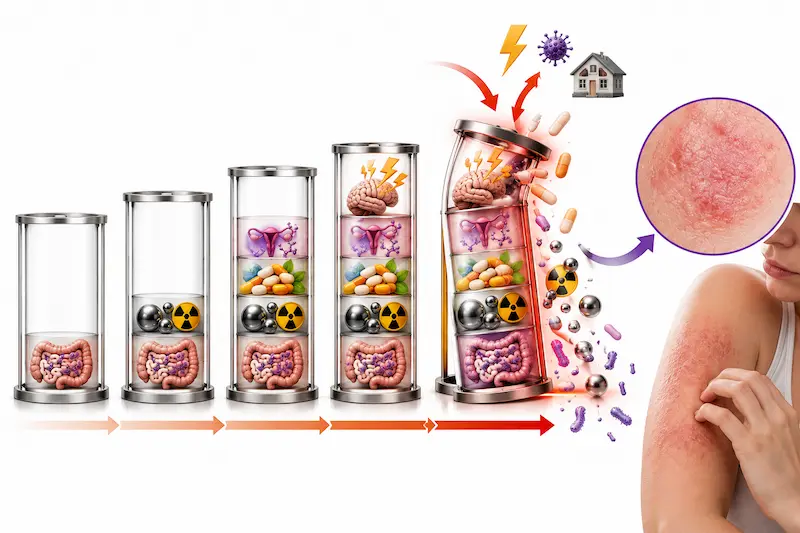
In my clinical practice, adult-onset eczema almost never has a single cause. It has an accumulation of causes — each one individually manageable by the body’s compensatory systems — that finally compound to a point where the body’s capacity to compensate is exceeded. The eczema that appears after a bereavement, a divorce, a major life disruption, or a significant illness is not caused by that event alone. It is caused by that event landing on a body that was already carrying years of accumulated burden and had very little compensatory reserve left.
This is the final straw model — and it explains one of the most common clinical puzzles in eczema: why two people can experience the same devastating loss and only one develops eczema. The difference is not the severity of the stress. It is the state of the internal environment that the stress lands on. A person with a healthy gut microbiome, adequate nutrient reserves, low toxic burden, and efficient stress hormone clearance has significantly more compensatory capacity than a person whose gut has been repeatedly disrupted by antibiotics, whose magnesium reserves are depleted, whose detoxification systems are burdened by toxins and heavy metal accumulation, and whose stress hormones are already chronically elevated from a physiological stressor that has never been identified or addressed.
The Role of Stress Hormones and Genetic Vulnerability
One of the most clinically important and least discussed aspects of the stress-eczema connection is what happens to stress hormones after a stressful event. The body produces stress hormones in response to any significant demand — emotional or physical — and then an enzyme is responsible for breaking those hormones down and clearing them from circulation. This enzyme requires magnesium to function properly. When magnesium is insufficient — which is extremely common given how heavily magnesium is depleted by stress, poor gut absorption, and the dietary patterns of most adults — the enzyme’s activity is impaired and stress hormones linger significantly longer than they should.
Genetic variants in this enzyme are also surprisingly common — affecting a meaningful proportion of the population across all ancestries. Individuals with reduced enzyme activity from genetic variants clear stress hormones at approximately 40 percent lower rates than those without the variant. In the context of magnesium deficiency on top of a genetic vulnerability, a significant emotional stressor can produce a sustained stress hormone elevation that keeps the immune system in a state of chronic activation far longer than the event itself would warrant — long enough, in many cases, to cross the immune threshold that allows eczema to establish.
Toxic Burden as the Hidden Accumulating Driver
In my clinical practice, heavy metals — particularly mercury, lead, and cadmium — and mycotoxins from mold exposure are the most consistently present toxic burden findings in adult-onset eczema patients. These are not acute toxicities. They are slow, cumulative accumulations over years or decades that maintain the immune system in a state of chronic hypervigilance — lowering the threshold at which any additional trigger, including emotional stress, a gut infection, or a hormonal shift, is sufficient to produce the immune dysregulation that expresses as eczema.
Research confirms the mercury-eczema connection specifically: a prospective study of over 1,000 mother-child pairs found that cord blood mercury concentrations and postnatal mercury exposure were both associated with increased atopic dermatitis risk in children. This means the toxic burden picture for some patients begins before birth — transmitted from mother to child through the placenta and cord blood. And a separate study confirmed a positive correlation between mercury levels and atopic dermatitis in adults, establishing the connection across the full life course.
The mold and mycotoxin picture is equally important. Moving to a new home — one of the most consistently reported triggers for sudden-onset eczema in both clinical practice and online communities — is frequently a mycotoxin exposure story. Mold in walls, HVAC systems, basements, and older buildings produces mycotoxins that accumulate in the body’s tissues, prime the immune system for hyperreactivity, and lower the threshold at which eczema and other atopic conditions develop or worsen.
The Cascade That Follows the Final Straw
Once the immune threshold is crossed and eczema establishes, the initial trigger activates a cascade of downstream imbalances that compound and sustain the condition independently of the original trigger. Gut dysbiosis develops or worsens — either as a direct consequence of the stress event suppressing the gut’s protective microbiome, or as a preexisting condition that was part of the accumulated burden all along. Thyroid function declines — both because cortisol suppresses thyroid hormone availability and because gut dysbiosis impairs the mineral absorption that thyroid function depends on. Maldigestion follows — producing the nutrient insufficiencies that deplete the skin’s barrier, the immune system’s regulatory capacity, and the enzyme systems responsible for histamine degradation. Each downstream imbalance compounds the others, and the eczema that began as an acute immune response becomes a self-sustaining chronic picture that no topical treatment can resolve because its roots are entirely upstream of the skin.
When the Roots Go Back Further Than Your Own Life
One of the most important and most rarely discussed aspects of adult-onset eczema is that some of its upstream drivers began before the patient was born. Research now confirms that a mother’s mercury burden, antibiotic exposure during pregnancy, and significant emotional stress during pregnancy all independently increase the risk of atopic dermatitis in her child. The toxic burden, the microbiome disruption, and the stress hormone picture a mother carries into pregnancy can be transmitted to her child through epigenetic mechanisms — changes in how genes are expressed that do not alter the DNA itself but do alter how that DNA responds to the environment for years or decades after birth.
This is not a reason for alarm or guilt. It is a reason for understanding — and for action. If you have been wondering why your eczema appeared seemingly without cause, part of the answer may be that the internal vulnerability began earlier than your own conscious memory of your health. And if you are planning a pregnancy, this research makes the strongest possible case for functional medicine preconception wellness — assessing and reducing toxic burden, optimizing thyroid and gut function, and supporting the stress hormone clearance systems before conception, so that the internal environment your child begins life with is as resilient and as protected as it can be.
One of my most meaningful clinical cases illustrates this directly. A client came to me after two miscarriages — and alongside the fertility concerns, she was also dealing with eczema, tinnitus, allergies, hair loss, and profound fatigue. Her testing revealed high BPA and chemical burden, gut dysbiosis impairing thyroid function, and subclinical hypothyroidism. Her eczema cleared within the first month of her functional medicine program. She became pregnant within weeks of starting. Eight months later she sent a photo of her newborn with a note that their dream had come true. Her full story is documented here. Her case is a particularly vivid example of why eczema is never just a skin condition — and why the body that cannot maintain a pregnancy and the skin that cannot maintain its barrier integrity are often expressing the same upstream environment through completely different pathways.
What the Functional Medicine Investigation Looks For
The functional medicine investigation for adult-onset eczema does not begin with the skin. It begins with the question: what changed in the body’s internal environment that allowed eczema to develop now? The investigation typically reveals a consistent picture across patients who present with sudden-onset or worsening eczema:
Gut microbiome disruption — often initiated or significantly worsened by antibiotic courses, dietary changes, or stress events that altered the microbial composition and diversity the immune system depends on for regulation. The gut is where a significant proportion of immune regulation happens, where histamine is produced and degraded, and where the microbial signals that calibrate the immune system’s reactivity are generated. When the gut is dysbiotic, the immune system loses one of its primary regulatory inputs.
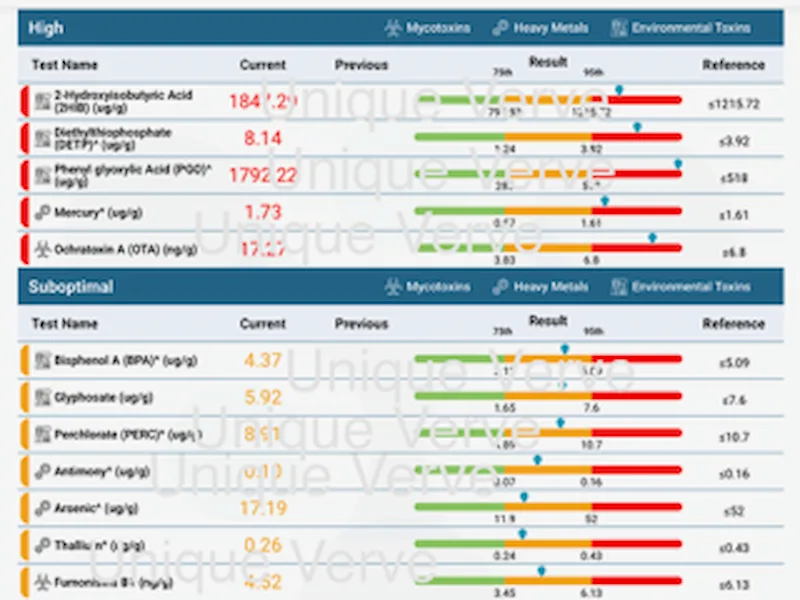
Toxic burden — particularly heavy metals including mercury, lead, and cadmium, and mycotoxins from mold exposure. These accumulate slowly, maintain the immune system in a state of chronic hypervigilance, and lower the threshold for eczema expression without producing obvious acute symptoms that would prompt investigation. Total Tox Burden testing identifies these systematically rather than waiting for symptoms to become severe enough to suggest toxicity.
Thyroid insufficiency — often subclinical, invisible to standard TSH-only testing, but producing significant downstream consequences including impaired skin barrier repair, reduced immune regulatory capacity, and the gut motility impairment that allows dysbiosis to compound. A full thyroid panel including free T3, reverse T3, and thyroid antibodies reveals the picture that TSH-only testing misses.
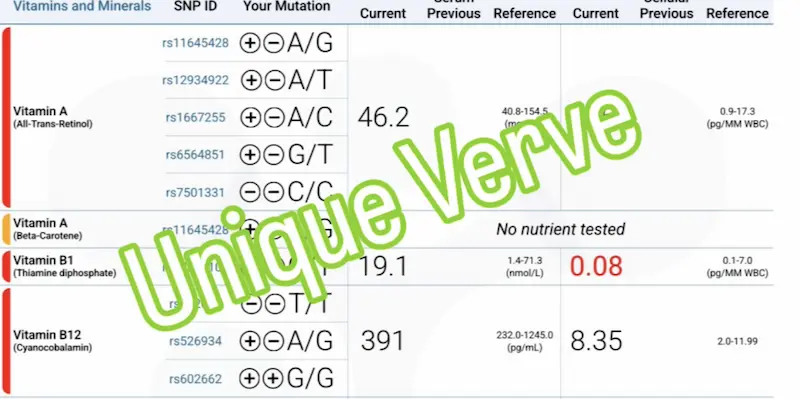
Nutrient insufficiencies — particularly magnesium (depleted by stress and impaired by poor gut absorption), zinc (essential for skin barrier integrity and immune regulation), vitamin A, omega-3 fatty acids, and B vitamins that support both histamine degradation and the methylation pathways that process stress hormones. The Micronutrient Panel with SNPs reveals both current cellular status and genetic variants that impair absorption and utilization.
Hormonal imbalance — particularly estrogen dominance from poor clearance through the gut, or hormonal shifts from pregnancy, postpartum changes, or perimenopause, that amplify mast cell reactivity and histamine overload. The hormonal picture connects directly to the eczema picture through the same estrogen-mast cell-histamine pathway established for rosacea.
The Pattern I Consistently See
Across patients who come to me with sudden-onset or significantly worsening eczema, the functional medicine investigation almost always reveals the same picture: a final straw event — a bereavement, a divorce, a new home, a significant illness, a pregnancy, a course of antibiotics — landing on a body that was already carrying years of accumulated burden that had never been identified or addressed. The gut was already dysbiotic. The magnesium was already depleted. The mercury or mold burden was already present. The thyroid was already suboptimal. And the final straw event was simply the load that exceeded what the body’s remaining compensatory capacity could contain.
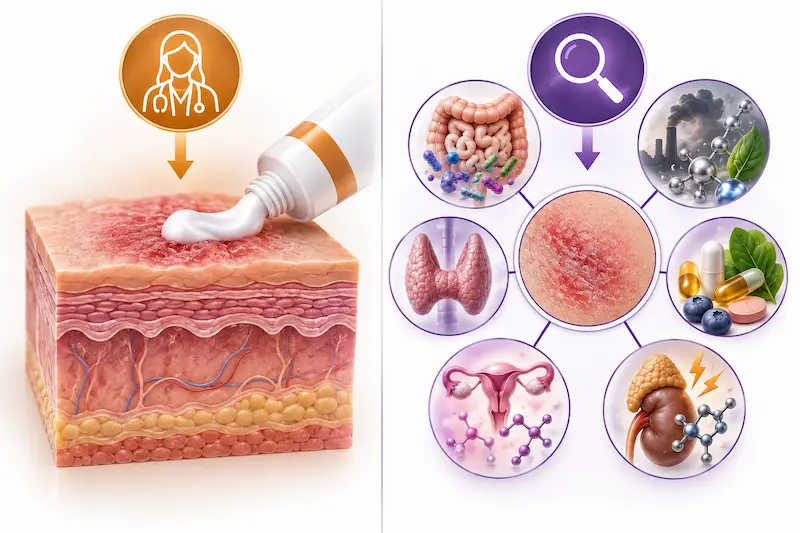
The eczema that results from this picture is not a skin condition that needs a better topical. It is a systemic signal that needs an upstream investigation. And when that investigation happens — when the gut is restored, the toxic burden is identified and cleared, the thyroid is supported, the nutrients are repleted, and the stress hormone clearance systems are addressed — the eczema responds in ways that no topical treatment ever achieved. Not because the skin was treated, but because the internal environment that was producing the skin condition was finally identified and changed.
Your Skin Is Telling You Something. The Question Is Whether Anyone Is Listening.
Eczema appearing suddenly in adulthood is not random, not permanent, and not just a skin condition. It is a signal from a body whose internal burden has crossed a threshold — and whose compensatory systems have finally been exceeded. The investigation that identifies that burden and addresses it is what changes the trajectory. Not from indefinite management of a chronic condition, but from understanding what the body has been communicating all along — and finally giving it what it needs to resolve.
If your eczema appeared suddenly and has never been adequately explained, or if it has been worsening despite conventional treatment, the most important next step is not a stronger steroid or a new topical protocol. It is the upstream investigation that asks why eczema appeared now, what changed in the internal environment that allowed it to develop, and what the body needs to restore the immune regulation, gut health, and barrier integrity that eczema has been signaling the loss of.
→ Book your Initial Functional Medicine Health and Skin Assessment
P.S. If finances have been the only thing standing between you and starting your functional medicine journey — flexible payment options are available through Cherry on our website. No interest, no impact on your credit score, quick approval, and affordable monthly payments. Apply in minutes on our website.
Q1: Why did I suddenly get eczema as an adult?
Adult-onset eczema almost never appears randomly. It reflects an accumulated internal burden — gut dysbiosis, toxic load from heavy metals or mold, depleted nutrient reserves, hormonal shifts, or sustained stress hormone elevation — that has finally crossed the threshold the body’s compensatory systems could contain. A significant life event is often the final straw that crosses that threshold: a bereavement, a course of antibiotics, a move to a new home, a pregnancy, or a major stress period. The straw is rarely the cause. The accumulated burden underneath it is. Functional medicine investigates that burden rather than treating the skin surface that is expressing it.
Q2: Is my eczema actually a gut problem?
For most eczema patients, gut health is a central part of the picture — though rarely the only part. The gut microbiome is where a significant proportion of immune regulation happens, where histamine is produced and degraded, and where the microbial signals that calibrate immune reactivity are generated. When gut dysbiosis disrupts these processes, the immune system loses one of its primary regulatory inputs and becomes progressively more prone to the hyperreactive responses that produce eczema. Research confirms that up to 24 percent of atopic dermatitis patients test positive for small intestinal bacterial overgrowth — and that bacterial overgrowth in the small intestine produces toxic metabolites that increase intestinal permeability, driving systemic immune activation. Addressing gut health is almost always part of addressing eczema — but it works best when the toxic burden, thyroid, nutrient, and hormonal picture are investigated and addressed alongside it.
Q3: Why won’t my eczema go away with standard treatment?
Standard eczema treatment — steroid creams, antihistamines, immunosuppressants — addresses the downstream inflammatory expression of eczema without touching the upstream internal environment that is producing it. When treatment stops, the upstream environment is unchanged, and the eczema returns — often more resistant than before. Steroid creams in particular can thin the skin barrier over time, reducing the structural protection that eczema-prone skin depends on, while providing less and less relief as the internal drivers continue to progress. The functional medicine approach investigates what is producing the immune dysregulation, gut dysfunction, and nutrient depletion that the eczema is expressing — and addresses those drivers rather than suppressing the skin’s expression of them.
Q4: Can eczema be cured or just managed?
The distinction between cure and management depends on what is being addressed. Conventional management suppresses eczema symptoms while leaving the upstream drivers intact — producing the cycle of improvement and relapse that most eczema patients know well. The functional medicine approach does not use the word cure, but what it consistently produces is resolution of the upstream environment that was producing the eczema — alongside the understanding and tools to maintain that environment so the eczema does not return. Patients who address the gut, toxic burden, thyroid, hormonal, and nutrient picture that was driving their eczema consistently experience genuine and lasting improvement that conventional management never achieved. Whether that constitutes a cure depends on the definition. What it produces, in practice, is the kind of lasting resolution that a cream applied to the surface of a systemic condition was never designed to deliver.
Q5: Does eczema indicate larger health issues?
Yes — and this is one of the most important reframes for eczema patients who have been told their condition is purely a skin issue. Eczema is consistently associated with autoimmune conditions, thyroid dysfunction, gut dysbiosis, histamine intolerance, hormonal imbalance, and toxic burden — not because these conditions cause each other in a simple linear way, but because they are all expressions of the same upstream immune and metabolic environment. A patient presenting with eczema alongside fatigue, gut symptoms, hormonal irregularities, allergies, or mood changes is not presenting with multiple separate conditions. She is presenting with one upstream environment expressing through multiple downstream channels simultaneously. Addressing the upstream picture addresses all of its downstream expressions together.
Q6: What does functional medicine look for that dermatology doesn’t?
Dermatology investigates the skin. Functional medicine investigates what is creating the conditions in which the skin cannot function normally. Where a dermatologist sees eczema, a functional medicine practitioner asks: what is producing the immune dysregulation driving this? What is the state of the gut microbiome and intestinal barrier? Is there a toxic burden — heavy metals, mycotoxins, environmental chemicals — maintaining immune hypervigilance? What does the full thyroid panel reveal that TSH-only testing missed? What nutrient insufficiencies are depleting the skin barrier and the immune regulatory capacity simultaneously? What is the hormonal picture, and is estrogen dominance amplifying mast cell reactivity? And what changed in the internal environment that allowed eczema to appear now? These are the questions that the functional medicine investigation asks — and that together produce the upstream understanding that makes lasting eczema improvement possible.
Written by Natalie Maibenko – a Certified Functional Medicine Practitioner and Master Esthetician with 23+ years of experience and founder of Unique Verve

As a Certified Functional Medicine Practitioner my Expertise Encompasses:
- Immune System: frequent illness, UTIs, yeast infections
- Allergies, Asthma
- Skin Problems: acne, cystic acne, rosacea, eczema, dermatitis, ichthyosis, psoriasis, vitiligo, melasma
- Inflammation: arthritis, rhinitis, joint & muscle pain, migraines, headaches
- Sleep Disturbunces, Insomnia
- Gut Problems: IBS/IBD, bloating, acid reflux, gas, constipation, diarrhea, parasites, fungal/yeast overgrowths
- Hormonal Imbalances: PCOS, PMS symptoms, weight problems/inability to lose weight, thyroid problems
- Hair Loss, Alopecia
- Mood Imbalances: anxiety, depression, irritability
- Metabolic Dysfunction, Insulin Resistance, Type 2 Diabetes
- Optimizing Wellness for Successful Pregnancy
- Autoimmune Conditions: Hashimoto’s thyroiditis, grave’s disease, reumatoid arthritis (RA), lupus, etc
- Bone Health: osteopenia/ osteoporosis
- Effective Anti-Aging Strategies without Injectables with the inside-out & outside-in approach
- Detoxification of Heavy Metals, Mycotoxins, Environmental Toxins
- Reversing Breast Implant Illness
- Preparation for the Explant Surgery and Optimization of Wellness & Vitality Post-Explant
