
Introduction
Environ skincare for rosacea is one of the most clinically effective topical approaches available for reactive, treatment-resistant skin — but only when the form of vitamin A, the delivery system, and the pace of introduction are right. If you have rosacea, you have almost certainly been told to avoid vitamin A. Your dermatologist may have said it. Your esthetician may have said it. The internet almost certainly said it. Retinol is too harsh, too irritating, too inflammatory for reactive rosacea-prone skin. Start with something calming instead.
This is one of the most consequential clinical errors in conventional rosacea skincare. And understanding why it is an error — and what the correct relationship between vitamin A and rosacea actually is — changes everything about how you approach your skin.
Rosacea, along with every other inflammatory skin condition, is a visible signal of vitamin A insufficiency in the skin. The reactivity, the redness, the inability to tolerate products — these are not reasons to avoid vitamin A. They are the skin’s way of showing you exactly what it is deficient in. The question is not whether to use vitamin A, but which form, which base, which concentration, and in what sequence — internal and topical — will allow the skin to receive it without reacting to it.
In my clinical practice as a Certified Functional Medicine Practitioner and Master Esthetician with 22+ years of experience, I use Environ skincare as my clinical topical line of choice for rosacea alongside when also addressing rosacea root causes through my functional dermatology practice. Not because it is gentle in a passive sense, but because its low-dose progressive vitamin A approach — the AVST Step-Up System — is the only topical vitamin A methodology I have seen consistently succeed with reactive, treatment-resistant rosacea skin. And when combined with the internal functional medicine work that addresses why the skin became reactive in the first place, the results are consistently transformative.
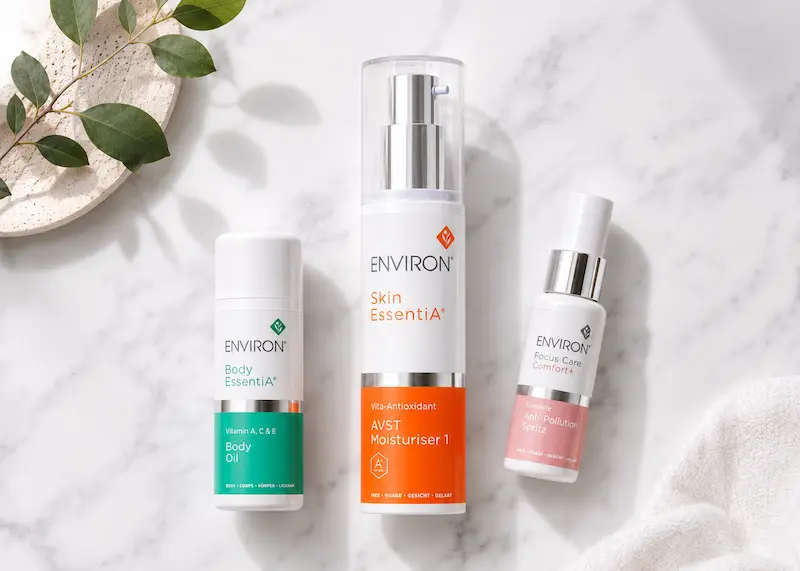
As an authorized Environ retailer and Certified Functional Medicine Practitioner, my approach to Environ skincare for rosacea is always clinical — built around what the skin can receive, not what marketing suggests it should tolerate.
This post explains the science behind why vitamin A is non-negotiable for rosacea skin, why most vitamin A products fail reactive skin, and how Environ’s approach makes the difference. As always, every protocol is individualized — what follows is the clinical framework I work within.
Rosacea Is a Vitamin A Deficiency Signal — Not a Reason to Avoid It
Vitamin A is the most critical skin-normalizing vitamin in existence. It regulates cell turnover, maintains the integrity of the skin’s epithelial barrier, modulates the immune response in the skin, reduces the inflammatory signaling that drives mast cell activation, normalizes sebaceous gland function, and supports the structural protein production — collagen, elastin, and filaggrin — that gives skin its resilience and barrier competence.
When these functions are working optimally — when the skin has adequate vitamin A — it is less reactive, less inflamed, more structurally intact, and more capable of managing the triggers that would otherwise produce a rosacea flare. When vitamin A is insufficient in the skin — as it is in virtually every rosacea patient I assess — the skin loses its regulatory capacity, its barrier becomes compromised, its inflammatory threshold drops, and it becomes progressively more reactive to stimuli it should be able to tolerate without response.
The inability to tolerate any product — including low-dose topical vitamin A — is itself clinical evidence of profound vitamin A deficiency in the skin. The skin’s vitamin A receptors have been understimulated for so long that the cellular machinery required to absorb and utilize vitamin A has downregulated. Introducing any active at this stage produces reactivity not because vitamin A is wrong for rosacea skin but because the skin does not yet have sufficient receptor infrastructure to receive it.
This is the clinical reframe that changes everything: the solution is not to avoid vitamin A. The solution is to build the skin’s capacity to receive it — slowly, progressively, in the right form, from the right base, starting at the right concentration.
The Vitamin A Receptor Story: Why Low and Slow Is the Only Approach That Works
Vitamin A does not act directly on skin cells. It must be transported into the cell through specific nuclear receptors — retinoic acid receptors (RARs) and retinoid X receptors (RXRs) — that are located on the cell membrane and within the cell nucleus. These receptors are the gatekeepers that allow vitamin A to enter the cell, bind to DNA, and activate the gene expression responsible for the skin-normalizing functions vitamin A is known for.
Here is the critical clinical insight that most vitamin A skincare misses entirely: these receptors are not fixed. Their density — the number of receptors available on and within each cell — is dynamic. When vitamin A is introduced gradually and consistently at low concentrations, the cell responds by synthesizing more receptors — upregulating its capacity to receive and utilize vitamin A over time. The skin literally builds its own infrastructure for vitamin A absorption through the low and slow approach.
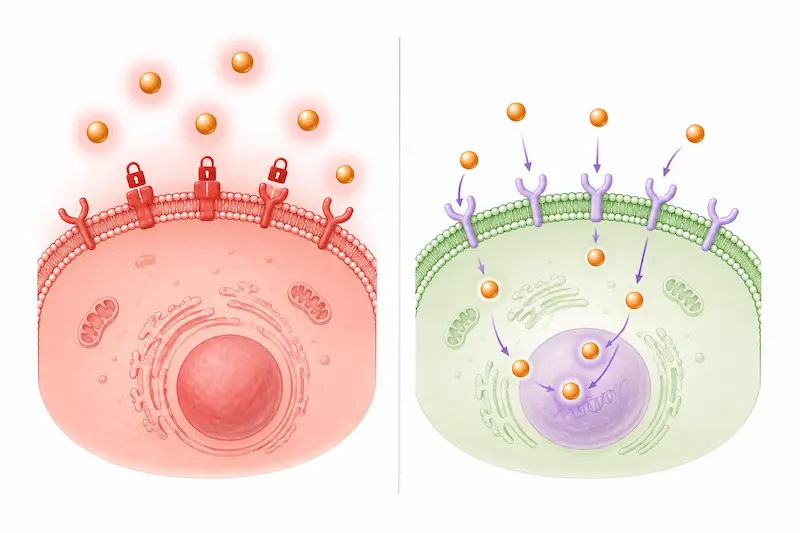
For rosacea skin — already inflamed, already barrier-compromised, already reactive — this rejection response is not a temporary inconvenience. It is a significant setback that further compromises the barrier, amplifies the inflammatory environment, and makes the skin more reactive than it was before treatment began. This is why so many rosacea patients have had traumatic experiences with retinol or prescription vitamin A and concluded that all vitamin A is wrong for their skin. The form and the dose were wrong. The vitamin A itself was not.
Form Matters: Why Retinyl Palmitate and Retinyl Propionate Are Different From Retinol
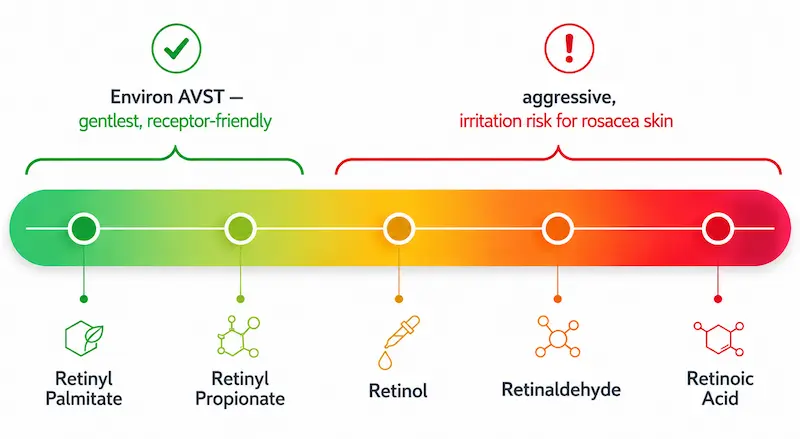
Not all vitamin A is the same. The form determines how aggressively it interacts with the skin, how rapidly it is converted to retinoic acid (the active form at the DNA level), and how much inflammatory signaling it produces before the cell can absorb and utilize it. Understanding the spectrum of vitamin A forms is essential to understanding why Environ’s formulations work for rosacea skin when retinol and retinoic acid do not.
The Vitamin A Conversion Pathway
In the skin, all vitamin A forms must ultimately be converted to retinoic acid to exert their biological effects at the gene expression level. The pathway moves from retinyl esters (the most stable and gentlest form) → retinol → retinaldehyde → retinoic acid. Each step in the conversion is regulated by enzymes within the skin, and each step produces more biological activity — and more potential for irritation — than the one before it.
Retinyl Palmitate and Retinyl Propionate — The Ester Forms
Retinyl palmitate and retinyl propionate are vitamin A esters — the most stable, most gentle, and most skin-compatible forms of topical vitamin A. They are the forms used in Environ’s AVST range. As esters, they must undergo enzymatic conversion within the skin before becoming biologically active — a process the skin controls at its own pace according to its receptor density and metabolic capacity. This self-regulated conversion is the key to why ester forms work for rosacea skin: the skin converts exactly as much vitamin A as it currently has the receptor infrastructure to receive, producing biological activity without the inflammatory overstimulation of forms that bypass this regulation.
Retinyl propionate, used in Environ’s higher AVST steps, is a more lipophilic ester that penetrates the skin more deeply than retinyl palmitate while maintaining the same gentle conversion profile. It produces meaningful vitamin A activity in the deeper layers of the dermis where collagen and elastin synthesis occur — without the surface irritation that prevents rosacea patients from tolerating more aggressive retinoid forms.
Retinol — The Mid-Conversion Form
Retinol is already one conversion step closer to retinoic acid than the ester forms. It does not require the first enzymatic conversion step, which means it enters the active vitamin A pathway more rapidly and produces biological activity more quickly. For skin with adequate vitamin A receptor density — healthy, non-reactive skin — retinol is an effective and reasonably well-tolerated form. For rosacea skin with depleted receptor infrastructure and a compromised barrier, retinol’s faster conversion rate produces exactly the inflammatory response described above: vitamin A that cannot enter cells efficiently floats outside them, triggering the reactivity that causes most rosacea patients to abandon vitamin A entirely.
Retinoic Acid and Prescription Isotretinoin — The Most Aggressive Forms
Retinoic acid is the fully active form of vitamin A at the cellular level. It requires no conversion and acts immediately on nuclear receptors — producing the most powerful and most rapid biological response of any topical vitamin A form, and the most significant potential for inflammatory reaction in receptor-depleted skin. Prescription topical retinoids (tretinoin, adapalene) and oral isotretinoin operate at this level of activity — which is why they produce dramatic results in some acne patients and dramatic inflammatory responses in rosacea patients whose skin is not equipped to manage the receptor demand.
There is an additional concern with prescription isotretinoin that is rarely discussed: the packaging. Isotretinoin, like all forms of vitamin A, is highly sensitive to oxidation — it degrades and loses biological activity when exposed to air, light, and moisture. Prescription isotretinoin typically comes in a tube, which means every time the tube is opened, the remaining product is exposed to the very conditions that degrade it. Oxidized vitamin A is not just inactive — it can produce free radical activity that amplifies the inflammatory environment in already-reactive skin. Environ’s packaging is specifically designed to protect vitamin A from oxidation, maintaining potency from the first application to the last.
The Base Matters Too
Beyond the form of vitamin A, the base in which it is delivered significantly affects how rosacea skin responds. Oil-based formulations — like Environ’s ACE Body Oil — contain minimal ingredients, reducing the potential for individual ingredient reactivity while providing a lipid-rich delivery vehicle that is inherently compatible with the skin’s own barrier lipids. Cream-based formulations contain a broader ingredient spectrum including emulsifiers, preservatives, and humectants that, while individually benign, create more points of potential reactivity for a compromised rosacea barrier. Beginning with an oil-based vitamin A formulation reduces this complexity and gives the most reactive skin the simplest possible introduction to topical vitamin A.
The Environ AVST Step-Up System: How Progressive Vitamin A Works
Environ skincare for rosacea is built on the receptor synthesis principle described above — the AVST (Vita-Antioxidant) Step-Up System starts at the lowest possible vitamin A concentration that produces measurable biological activity — AVST 1 — and progressively increases concentration through AVST 2, 3, 4, and 5 as the skin demonstrates tolerance and readiness.
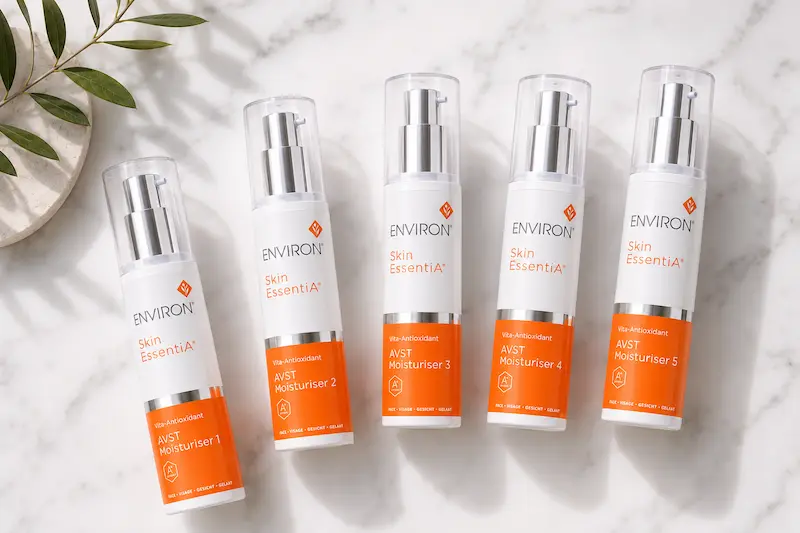
Each step allows the skin to synthesize more vitamin A receptors at its own pace — building the cellular infrastructure needed to absorb higher concentrations without inflammatory response. By the time a patient reaches AVST 3 or 4, her skin has developed the receptor density that allows meaningful vitamin A activity in the deeper layers where collagen and elastin synthesis occur — producing the structural improvements in skin quality, barrier resilience, and inflammatory regulation that make rosacea progressively less reactive over time.
The AVST system requires patience and consistency. Vitamin A must be applied morning and night to maintain the continuous low-level receptor stimulation that drives receptor synthesis. Missing applications interrupts the upregulation process and slows progress. This daily commitment is non-negotiable for meaningful results — but it is only achievable with a formulation gentle enough for twice-daily use on reactive rosacea skin, which is exactly what the ester-form, oil-based AVST range provides.
Why Penetration Technology Becomes Essential as Skin Improves
One of the most counter-intuitive aspects of the Environ approach — and one that most patients discover only after their skin has significantly improved — is that healthy skin is actually a more effective barrier to product penetration than compromised skin. As rosacea skin heals and the barrier is restored through the AVST step-up protocol, the skin becomes better at doing what healthy skin is designed to do: keeping things out.
This is biologically correct behavior. But it creates a clinical paradox: the better your skin gets with Environ, the harder it becomes for the topical vitamin A to penetrate to the deeper dermal layers where it does its most meaningful work. A patient who has progressed through AVST 1 and 2 and sees her skin stabilizing is simultaneously creating a barrier that her AVST 3 or 4 must work harder to cross.
This is where Environ’s penetration technology — sonophoresis and iontophoresis, delivered through the Environ Gold Roller and Environ DF Mobile device — becomes not just beneficial but clinically essential for continued progress. Sonophoresis uses low-frequency ultrasound ways to temporarily create channels in the stratum corneum, allowing product to penetrate significantly deeper than passive application. Iontophoresis uses a mild electrical current to drive charged molecules — including vitamin A and C — actively into the skin through electromigration, bypassing the surface barrier entirely.
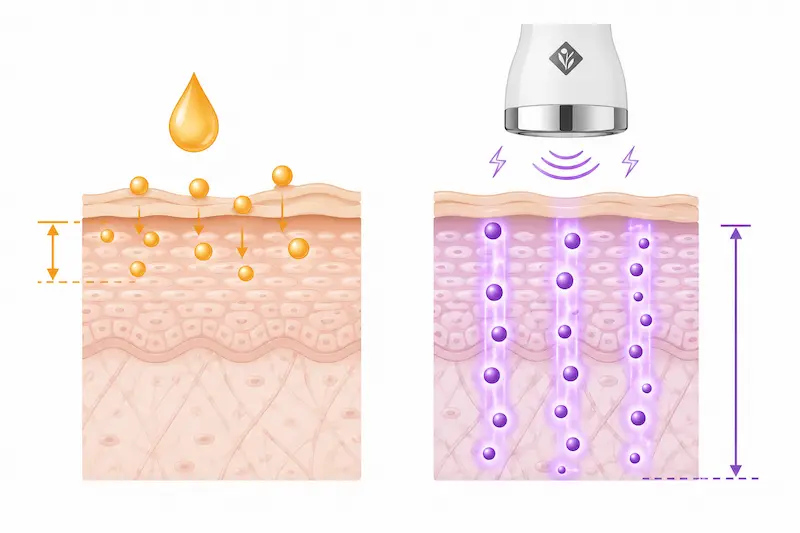
The clinical result is that the same concentration of vitamin A applied after roller preparation or DF Mobile treatment reaches the dermis at meaningfully higher concentrations than passive application alone — producing more significant collagen stimulation, inflammatory regulation, and structural skin improvement per application. For a patient who has invested in a clinical-grade skincare protocol and wants to maximize every application, using the products without the roller and DF Mobile is genuinely leaving the most valuable part of the protocol unrealized. In my practice, I consider the penetration technology as integral to the Environ protocol as the products themselves — particularly once the skin has healed enough to form a competent barrier.
Environ Skincare for Rosacea: The Clinical Approach
Environ skincare for rosacea follows one consistent clinical principle regardless of where a patient starts: go as slowly as the skin requires and as progressively as it allows. The degree of reactivity, the specific inflammatory drivers, the history of previous treatments, and the stage of the internal functional medicine work all influence which Environ products are appropriate and in what sequence. What follows is the clinical framework I work within — not a rigid protocol, but a principled approach that is individualized to each patient’s skin.
The Universal Safe Starting Point: ACE Body Oil
Across all degrees of rosacea reactivity, the starting point for Environ skincare for rosacea is always the ACE Body Oil — the safest and most universally appropriate entry point regardless of how reactive the skin currently is. As an oil-based formulation delivering vitamins A, C, and E in a minimal-ingredient lipid base, the ACE Body Oil provides the gentlest possible introduction to topical vitamin A: ester-form retinol in a delivery vehicle with maximum compatibility and minimum reactivity potential.
As a cleansing step, the Environ Dual Action Pre-Cleansing Oil provides gentle lipid-based cleansing that removes impurities without stripping the acid mantle or further compromising the reactive barrier — an essential first step for any rosacea skincare routine.
Sun Protection: Non-Negotiable and Formulation-Specific
UV exposure is a direct mast cell activator and one of the most consistent rosacea triggers. Broad-spectrum SPF is non-negotiable in any rosacea skincare protocol regardless of season or cloud cover. The formulation matters: for rosacea skin, mineral-based SPF is preferred over chemical filters which can produce reactive responses in sensitized skin.
For those who prefer a richer, more hydrating SPF formulation, I recommend Tizo Ultra Zinc in tinted or non-tinted form — a mineral SPF 40 with a creamy texture that provides excellent barrier support alongside UV protection. For those who prefer a lighter, matt finish, Environ RAD Shield Mineral Sunscreen SPF 30 is formulated specifically to complement Environ’s vitamin A routine.
As Reactivity Reduces: Building the Protocol
As the internal functional medicine work begins to reduce systemic inflammation and the skin starts to demonstrate greater tolerance, the Environ protocol can be progressively expanded. The sequence is individualized, but the clinical principles are consistent: add one product at a time, allow the skin to demonstrate tolerance before adding the next, and never push the pace beyond what the skin is showing readiness for.
The Environ Botanical Infused Moisturising Toner prepares the skin to receive the active ingredients that follow, supporting the transient hydration and gentle conditioning that make the skin more receptive to vitamin A application.
The Environ Vita-Enriched Antioxidant Gel provides vitamin A pre-cursor, beta-carotene, C, and E in a gel formulation that suits skins beginning to tolerate active ingredients — a step beyond the oil base that introduces the antioxidant complex in a format the skin is ready for.
The Environ AVST Moisturiser 1 is the entry point of the formal step-up system for facial vitamin A. It is introduced once the skin has demonstrated tolerance to the oil-based formulations and is ready to begin the progressive receptor upregulation that the AVST system is designed to deliver. For anti-aging focused rosacea patients — those managing rosacea alongside visible signs of skin aging — the Focus Care Youth+ range provides vitamin A alongside advanced peptide complexes that address fine lines, loss of firmness, and skin texture simultaneously.
The Environ Hydrating Oil Capsules provide single-use, precisely dosed antioxidant and vitamin A oil nourishment that is particularly valuable for the driest or most stripped rosacea skin — each capsule is sealed to prevent oxidation, ensuring the vitamin A remains potent from application to application.
The Environ Vita-Complex Super Moisturiser provides rich barrier support that reduces transepidermal water loss as the skin rebuilds structural integrity — a critical component for rosacea skin where barrier restoration is both a treatment goal and a prerequisite for tolerating more active formulations.
The Environ Complete Anti-Pollution Spritz provides antioxidant and barrier protection against environmental stressors throughout the day — particularly relevant for rosacea skin whose reactive vascular system amplifies the inflammatory response to pollution, UV, and blue light exposure.
The Environ Alpha Hydroxy Night Cream, containing lactic and glycolic acid, is a meaningful addition for specific stages of rosacea skin recovery — particularly when Demodex overgrowth is part of the picture. The gentle exfoliating action of the alpha hydroxy acids supports cell turnover and the clearing of the follicular environment in which Demodex mites reside, while the vitamin A in the ACE Body Oil or AVST 1 moisturiser simultaneously addresses the immune dysregulation driving the overgrowth. This formulation is appropriate only once the skin has demonstrated meaningful stability — it is not a starting point.
The Environ Antioxidant and Peptide Eye Gel addresses the periorbital area where rosacea frequently produces redness, puffiness, and fine lines, delivering vitamins A, C, and E alongside a triple peptide complex that supports the delicate skin around the eyes where rosacea’s vascular component is often most visible.
For the Most Reactive Skin: When Internal Repletion Comes First
In my functional medicine practice, I often work with rosacea patients whose skin is so reactive that they cannot tolerate even the lowest-concentration Environ formulations at the outset of care. For these patients — and this is a clinical approach I use specifically when topical tolerance is zero — I begin with Unique Verve’s Essential A supplement to begin replenishing vitamin A from the inside out before any topical introduction is attempted.
Essential A contains retinyl palmitate — a fully formed vitamin A ester that is directly bioavailable without requiring conversion. This distinction is clinically important and frequently missed: the body must convert beta-carotene into retinol through a multi-step enzymatic process before it can be utilized as vitamin A. In healthy individuals this conversion is adequate. But in patients with blood sugar dysregulation, insulin resistance, or hypothyroidism — all of which impair the conversion enzyme BCO1 — beta-carotene supplementation fails to reliably raise vitamin A levels because the conversion pathway is compromised. These patients may take beta-carotene indefinitely and remain vitamin A deficient at the cellular level.
This is particularly relevant for women in perimenopause and beyond. As thyroid function declines — which I see consistently in my rosacea functional medicine patients, and which directly correlates with rosacea exacerbation — the ability to convert beta-carotene into usable vitamin A declines alongside it. The result is a compounding deficiency: low thyroid function impairs vitamin A conversion, vitamin A insufficiency depletes receptor density in the skin, and the skin becomes progressively more reactive and more resistant to topical vitamin A introduction. Retinyl palmitate in Essential A bypasses this conversion barrier entirely — delivering fully formed vitamin A that the body can utilize directly regardless of thyroid status or metabolic function.
The thyroid connection is also important in a second direction: adequate vitamin A is required for healthy thyroid hormone receptor function and T4 to T3 conversion. Vitamin A insufficiency and thyroid dysfunction sustain each other in a bidirectional loop that is almost always present in treatment-resistant rosacea. Addressing both simultaneously — internal vitamin A repletion through Essential A alongside targeted thyroid support — creates the internal conditions in which the skin begins to rebuild its receptor infrastructure. This is why, after several weeks on the Essential A protocol, many patients who previously could not tolerate any topical begin to successfully introduce the Environ ACE Body Oil as their first step toward the full AVST protocol.
This internal-to-external vitamin A progression is the most complete expression of the inside-out philosophy: restoring vitamin A sufficiency from within, allowing the skin’s own biology to rebuild its receptor capacity, and then introducing topical vitamin A progressively as the skin demonstrates readiness. For the best results, this approach is combined with addressing the internal root causes and triggers — gut dysfunction, blood sugar dysregulation, hormonal imbalances, thyroid and immune dysfunction — that created the vitamin A insufficiency in the first place.
A Patient Case: When the Skin Could Not Tolerate Anything
One of my patients came to me with rosacea that had not responded to any conventional treatment and had left her unable to tolerate any skincare product whatsoever — including water on some days. Her skin was at a level of reactivity that made conventional skincare impossible and that most estheticians would have considered untreatable topically. Her case is one of the clearest illustrations I have seen of what Environ skincare for rosacea can achieve when the internal and external approaches are properly sequenced.
We began with her functional medicine program — addressing the internal picture of gut dysbiosis, hormonal imbalance, and thyroid dysfunction that had created the systemic inflammatory environment driving her skin’s extreme reactivity. The Essential A supplement was introduced simultaneously to begin internal vitamin A repletion alongside thyroid support and addressing her rosacea root causes.
Approximately two weeks into the functional medicine program — as the internal inflammatory picture began to stabilize — something shifted. Her skin, for the first time in years, showed signs of being willing to receive a topical. We began with the Environ ACE Body Oil applied to her décolleté, not her face — the most conservative possible introduction. She tolerated it without reaction.
From there, the progression was gradual and individualized to exactly what her skin demonstrated readiness for. Over several months, she moved from the ACE Body Oil to the AVST range, introducing each new step only when the previous one was clearly tolerated and welcomed. Her skin did not just stop reacting. It began to change in quality — becoming less red, less reactive, more structurally stable, and more capable of tolerating the environment that had previously triggered flares on a daily basis.
The Environ products did not create this change on their own. The functional medicine work created the internal conditions that made the topical work possible. The topical work then accelerated and extended the visible skin transformation that the internal work had initiated. This is the inside-out approach in clinical practice — and it is why I never recommend Environ in isolation for rosacea patients whose internal picture has not yet been investigated and addressed.
The Form, the Approach, and the Internal Foundation
Vitamin A is the most crucial skin-normalizing vitamin. When the skin is showing signs of rosacea or any inflammatory skin condition, it is telling you it is deficient in the one thing that can normalize it. The answer is not to withhold it. The answer is to give it in the right form, from the right base, at the right pace — and to create the internal conditions that allow the skin to receive it. Environ skincare for rosacea is the most complete expression of this principle I have found in 22+ years of clinical practice — and the only topical vitamin A system I consistently recommend for reactive rosacea skin.
If you have been told that vitamin A is not for your rosacea skin, I want to offer a different framing: your skin’s inability to tolerate vitamin A is not a permanent state. It is a current state — one that reflects depleted receptor infrastructure, compromised barrier integrity, and systemic vitamin A insufficiency that can be addressed progressively from the outside and, when necessary, from the inside first.
Environ’s clinical approach to vitamin A — the ester forms, the oil-based delivery, the step-up system, the penetration technology — is the most thoughtfully designed topical vitamin A system available for skin that has been told it cannot have the one thing it needs most. In my practice, I have seen it work for skin that nothing else had reached.
→ Shop Environ Skincare at Unique Verve — Authorized Environ Retailer
P.S. If finances have been the only thing standing between you and starting your functional medicine journey — flexible payment options are available through Cherry. No interest, no impact on your credit score, quick approval, and affordable monthly payments — available for functional medicine programs, lab testing, supplements, and Environ skincare. Apply in minutes here.
Frequently Asked Questions
Q1: Is Environ good for rosacea sensitive skin?
Yes — and it is specifically the Environ approach to vitamin A that makes it appropriate for rosacea-prone sensitive skin where other vitamin A products fail. Environ’s AVST Step-Up System uses retinyl ester forms (retinyl palmitate and retinyl propionate) rather than retinol or retinoic acid, delivered in fat-soluble base and low-ingredient formulations that minimize reactivity potential. The progressive concentration increase across AVST 1 through 5 allows the skin to build vitamin A receptor density at its own pace, introducing biological activity without the inflammatory response that causes rosacea patients to abandon vitamin A entirely. For the most reactive rosacea skin, the Environ ACE Body Oil provides the most conservative and universally appropriate starting point across all degrees of skin sensitivity.
Q2: Can I use retinol if I have rosacea?
Standard retinol in the concentrations found in most consumer skincare products is not recommended for reactive rosacea skin — but this is not because vitamin A is wrong for rosacea. It is because retinol is already one conversion step from retinoic acid and produces biological activity faster than rosacea skin’s depleted vitamin A receptor infrastructure can accommodate. The result is the classic retinoic reaction: vitamin A that cannot enter cells efficiently remains outside them and triggers an inflammatory response that worsens rosacea. Environ’s ester forms — retinyl palmitate and retinyl propionate — undergo regulated enzymatic conversion within the skin at a pace the skin’s own receptor density controls, producing meaningful vitamin A activity without the inflammatory rejection response. This is why Environ works for rosacea skin where retinol does not.
Q3: Will vitamin A make my rosacea flare up?
High-dose, aggressive forms of vitamin A — retinol, retinoic acid, and prescription retinoids — can trigger significant flaring in rosacea-prone skin. But this is a dose and form problem, not a vitamin A problem. Rosacea skin is deficient in vitamin A — the flaring response is evidence of vitamin A receptors so depleted that the skin cannot absorb and utilize the vitamin A being applied, causing it to accumulate outside cells and produce an inflammatory response. The solution is not to avoid vitamin A but to introduce it in the gentlest possible form, at the lowest effective concentration, allowing the skin to build receptor density gradually through the low and slow approach. Done correctly, vitamin A progressively reduces rosacea reactivity rather than worsening it.
Q4: What is the difference between vitamin A forms for rosacea skin?
Vitamin A forms exist on a spectrum from most gentle to most aggressive: retinyl esters (retinyl palmitate, retinyl propionate) → retinol → retinaldehyde → retinoic acid. Each step closer to retinoic acid produces faster biological activity and greater potential for irritation in skin with insufficient vitamin A receptor density. Retinyl esters — the forms used in Environ’s AVST range — require enzymatic conversion within the skin before becoming active, a process the skin regulates according to its own receptor capacity. This self-regulated conversion is what makes ester forms appropriate for rosacea skin: the skin converts exactly as much vitamin A as it can currently receive without inflammatory response. The base also matters: oil-based formulations with minimal ingredients are the most compatible with reactive rosacea skin, reducing the ingredient reactivity points that cream-based formulations introduce.
Q5: How long until vitamin A improves rosacea?
The timeline is individual and depends on the degree of rosacea reactivity, the stage of internal functional medicine work addressing the root causes of skin inflammation, and how consistently the vitamin A protocol is maintained. In general, initial tolerance improvements are noticeable within 4 to 8 weeks of consistent twice-daily application at the appropriate starting concentration. Meaningful visible improvement in skin reactivity, redness, and barrier resilience typically develops over 3 to 6 months as the skin progressively builds vitamin A receptor density and moves through the AVST step-up concentrations. The most significant structural skin changes — improved skin quality, reduced inflammatory threshold, and lasting barrier competence — develop over 12 months or more of consistent protocol maintenance. Consistency is non-negotiable: vitamin A must be used morning and night to maintain the continuous receptor stimulation that drives improvement.
Q6: Why does my rosacea get worse after using skincare?
Worsening rosacea after applying skincare indicates one or more of the following: a product ingredient is triggering an immune response in sensitized skin, an active ingredient at too high a concentration is producing an inflammatory reaction the skin’s depleted receptor infrastructure cannot manage, a fragrance or preservative in the formulation is activating mast cells in the skin, or the product is disrupting the acid mantle and worsening barrier dysfunction. For rosacea skin, the solution is always to simplify before adding complexity: strip back to the most minimal, most gentle formulation the skin demonstrates tolerance for — typically an oil-based vitamin A formulation with a short ingredient list — and build from there only as the skin shows readiness. Products that worsen rosacea are not the answer, and persisting through worsening reactivity is not clinically appropriate.
Q7: How to use vitamin A without irritation for rosacea?
Four principles reduce the risk of vitamin A irritation for rosacea-prone skin. First, choose ester forms (retinyl palmitate, retinyl propionate) rather than retinol or retinoic acid — they convert to active vitamin A at a pace the skin’s own receptor density controls. Second, start with an oil-based formulation with minimal ingredients, reducing the number of potential reactivity points. Third, begin at the lowest available concentration and progress only when the current concentration is clearly tolerated and welcomed by the skin. Fourth, maintain twice-daily consistency rather than building up slowly from less frequent application — consistent low-dose exposure drives receptor synthesis more effectively than intermittent higher-dose application. For the most reactive skin that cannot tolerate any topical, beginning with internal vitamin A repletion through supplementation can prepare the skin to receive topical vitamin A before any direct application is attempted.
Q8: Can I use vitamin A every night with rosacea?
Yes — and in Environ’s clinical philosophy, morning and night application is the standard and necessary protocol for meaningful results. The continuous low-level vitamin A receptor stimulation that drives receptor synthesis — and progressive improvement in rosacea reactivity — requires twice-daily consistency. This is achievable only with a formulation gentle enough for twice-daily use on reactive skin, which is why Environ’s ester-form, oil-based AVST range is specifically designed for this application frequency. High-dose retinol products, retinoic acid formulations, and prescription retinoids are not appropriate for twice-daily use on rosacea skin and should not be used this way. The form of vitamin A determines whether twice-daily use is therapeutic or inflammatory.
Q9: Is Environ medical grade skincare worth it for rosacea?
For rosacea skin specifically — yes, and the reasoning is clinical rather than commercial. The difference between pharmaceutical-grade vitamin A skincare and consumer retinol products is not primarily price: it is formulation science, ingredient purity, concentration accuracy, and the progressive protocol structure that makes vitamin A accessible to skin that cannot tolerate conventional retinol. Consumer vitamin A products are formulated for skin with adequate receptor infrastructure. Environ is formulated for skin that needs to build that infrastructure progressively. For a rosacea patient who has failed with multiple retinol products and concluded that vitamin A is not for her skin, Environ’s clinical approach is not a more expensive version of the same thing — it is a fundamentally different approach to the same vitamin. As an authorized Environ retailer, I provide clinical guidance on product selection and sequencing that ensures each patient starts at the right point for her skin’s specific level of readiness.
Q10: Do I really need sunscreen with rosacea?
Yes — without exception. UV exposure is one of the most consistent and most direct triggers of rosacea flares: it activates mast cells in the skin, increases vascular reactivity, damages the barrier, and amplifies the inflammatory environment that sustains rosacea. Daily broad-spectrum mineral SPF is non-negotiable in any rosacea skincare protocol regardless of season, geographic location, or cloud cover. The formulation matters: mineral-based SPF (zinc oxide, titanium dioxide) is significantly less reactive than chemical UV filters for sensitized rosacea skin. Additionally, vitamin A increases photosensitivity — making daily SPF not just a rosacea management tool but a clinical requirement of any vitamin A protocol.
Q11: What makes rosacea skin so sensitive to skincare?
Rosacea skin’s extreme sensitivity to skincare products reflects three concurrent vulnerabilities. First, a compromised acid mantle and damaged tight junctions reduce the skin’s ability to exclude irritants and regulate what enters the skin — products that healthy skin tolerates without response reach nerve endings and immune cells that rosacea skin cannot protect. Second, depleted vitamin A receptor infrastructure means the skin cannot absorb and utilize active ingredients efficiently — ingredients that accumulate outside cells trigger inflammatory responses rather than producing the intended biological effect. Third, chronically activated mast cells in rosacea-prone skin have a hair-trigger inflammatory threshold — stimuli that would produce no response in non-rosacea skin produce significant mast cell degranulation and histamine release in reactive rosacea skin. Addressing all three vulnerabilities — barrier repair, vitamin A receptor rebuilding, and systemic mast cell regulation through internal functional medicine work — progressively reduces the skin’s sensitivity to skincare over time.
Q12: Can rosacea skincare also prevent aging?
Yes — and this is one of the most clinically gratifying aspects of the Environ AVST approach for rosacea patients. The mechanisms through which vitamin A normalizes rosacea — stimulating collagen and elastin synthesis, normalizing cell turnover, improving barrier integrity, reducing inflammatory signaling — are identical to the mechanisms through which vitamin A addresses the visible signs of skin aging. A patient who begins the Environ AVST protocol for rosacea and progresses through the step-up concentrations consistently will find that her skin simultaneously becomes less reactive, less inflamed, and structurally younger — with improved skin quality, reduced fine lines, more even texture, and greater resilience. For patients managing both rosacea and the visible signs of aging, the Focus Care Youth+ range provides vitamin A alongside advanced peptide complexes specifically designed to address both simultaneously.
Written by Natalie Maibenko – a Certified Functional Medicine Practitioner and Master Esthetician with 22+ years of experience and founder of Unique Verve

As a Certified Functional Medicine Practitioner my Expertise Encompasses:
- Immune System: frequent illness, UTIs, yeast infections
- Allergies, Asthma
- Skin Problems: acne, cystic acne, rosacea, eczema, dermatitis, ichthyosis, psoriasis, vitiligo, melasma
- Inflammation: arthritis, rhinitis, joint & muscle pain, migraines, headaches
- Sleep Disturbunces, Insomnia
- Gut Problems: IBS/IBD, bloating, acid reflux, gas, constipation, diarrhea, parasites, fungal/yeast overgrowths
- Hormonal Imbalances: PCOS, PMS symptoms, weight problems/inability to lose weight, thyroid problems
- Hair Loss, Alopecia
- Mood Imbalances: anxiety, depression, irritability
- Metabolic Dysfunction, Insulin Resistance, Type 2 Diabetes
- Optimizing Wellness for Successful Pregnancy
- Autoimmune Conditions: Hashimoto’s thyroiditis, grave’s disease, reumatoid arthritis (RA), lupus, etc
- Bone Health: osteopenia/ osteoporosis
- Effective Anti-Aging Strategies without Injectables with the inside-out & outside-in approach
- Detoxification of Heavy Metals, Mycotoxins, Environmental Toxins
- Reversing Breast Implant Illness
- Preparation for the Explant Surgery and Optimization of Wellness & Vitality Post-Explant
With love and gratitude,
Natalie Maibenko
Functional Medicine & Skincare Expert – Helping You Take Control of Your Health and Achieve Lasting Skin Results Nationwide — Virtual Practice
