
Introduction
What causes heart palpitations at night — specifically the kind that wake you from sleep, that your cardiologist cannot find a cardiac cause for, that have been present for months or years and are accompanied by other symptoms that don’t seem related?
One of my functional medicine clients experienced exactly this: nightly heart palpitations for over two years, a diagnosis of left bundle branch block from her cardiologist, and a medical team that told her the only option was to monitor her condition. She was also experiencing, alongside the palpitations, lightheadedness and vertigo, skin rashes and rosacea and acne and very dry itchy skin, constipation, recurrent UTIs, hot flashes, stuffy nose, coughing, hay fever, vaginal dryness, and Raynaud’s syndrome she had been managing since the early 2000s. She had osteoporosis. And not one of her practitioners had ever suggested that any of these conditions might be connected.
Within three months of beginning her functional medicine program, every single one of those symptoms had resolved. Seven months after the program began, a DEXA scan confirmed what her orthopedist could not explain: she had dropped from osteoporosis to osteopenia. Her cardiologist had no answer for her palpitations. Her functional medicine investigation did.

This post explains what causes heart palpitations at night through the functional medicine lens — specifically the histamine receptor connection that conventional cardiology does not investigate, the testing picture that revealed what was driving her cardiac symptoms alongside every other system in her body, and why “we can only monitor” is never the end of the clinical story.
What Causes Heart Palpitations at Night? The Histamine Connection
Nighttime heart palpitations that cannot be explained by structural cardiac disease are one of the most consistent and most overlooked presentations of histamine intolerance and mast cell activation. Histamine acts directly on H2 receptors in cardiac tissue — increasing heart rate and cardiac contractility, producing the racing, fluttering, pounding, or irregular sensation experienced as palpitations. At the same time, histamine acts on H1 receptors to produce vasodilation, which causes the blood pressure drop that produces the lightheadedness and vertigo that so frequently accompany nocturnal palpitations. Two symptoms that look like two separate problems — cardiac and neurological — are frequently the same histamine mechanism expressing through two receptor pathways simultaneously.
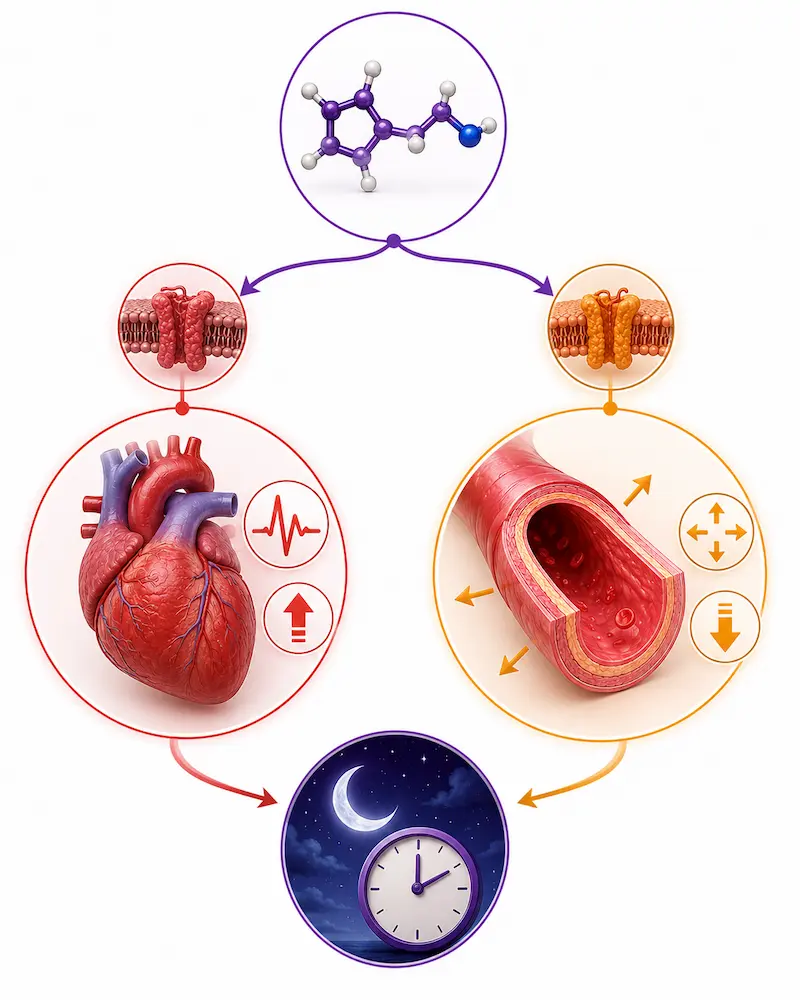
For a complete explanation of histamine intolerance, its full symptom picture, and the upstream drivers that cause histamine to accumulate, see our dedicated post on the signs and symptoms of histamine intolerance . This post focuses specifically on the cardiac presentation and the functional medicine investigation that explains it.
The Histamine Dump — Why It Happens at Night
A critical clinical distinction for patients experiencing nocturnal palpitations: most people can fall asleep without difficulty but are then woken abruptly in the middle of the night by a racing heart, itching, flushing, or a surge of anxiety. This is not the same as difficulty falling asleep. This pattern — falling asleep, then being woken by a sudden cardiac or systemic reaction — is the clinical signature of what is commonly called a histamine dump.
Research published in Frontiers in Immunology confirms that the molecular circadian clock drives mast cell reactivity in a time-specific pattern — mast cells are primed for peak degranulation during the dark period. This is not incidental. It is an evolutionary mechanism through which the immune system upregulates its surveillance capacity during sleep.
The enzyme responsible for histamine synthesis — histidine decarboxylase (HDC) — also follows a circadian rhythm with protein levels peaking during the dark period, as confirmed in Sleep journal research. In a patient with already-sensitized mast cells from any upstream driver, this circadian priming means the same trigger that produced a manageable daytime response produces a significantly amplified nighttime response — or produces a full histamine dump from a threshold that was not crossed during the day. The abrupt waking, racing heart, itching, and sense of alarm patients describe as being startled awake by nothing is the clinical experience of this circadian mast cell degranulation peak.
When the patient lies down, increased venous return to the heart raises cardiac preload and amplifies the perception of each heartbeat. The removal of sympathetic override from daytime physical activity and cognitive engagement makes the cardiac sensations significantly more perceptible. And in the quiet of the bedroom, the heartbeat becomes the dominant sensory input — making even a moderate histamine-driven increase in cardiac rate and contractility feel significantly more alarming than it would during the noise and movement of the day.
What Is Behind the Mast Cell Activation?
The nocturnal histamine dump has an upstream cause that must be identified. In clinical practice, the most consistent mast cell activation drivers — and the questions I investigate for every client with nocturnal histamine symptoms — include:
Hormonal fluctuation — particularly estrogen dominance. Estrogen directly stimulates mast cell degranulation through estrogen receptor expression on mast cells, while progesterone stabilizes them. The perimenopausal progesterone decline removes this mast cell-stabilizing counterbalance — which is why nocturnal palpitations, hot flashes, and the histamine dump pattern are so disproportionately reported by women in their late 30s through 50s. The circadian mast cell peak at night combined with estrogen-driven mast cell sensitization creates a predictable pattern of nighttime histamine surges.
Toxic burden — mercury, mycotoxins, and environmental chemicals prime mast cells for hyperreactivity by maintaining chronic immune activation and oxidative stress. A mast cell sensitized by toxic burden requires a significantly lower threshold trigger to degranulate — meaning the circadian mast cell peak alone may be sufficient to produce a full histamine dump without any additional dietary or environmental trigger. This was the most consistent explanation for the severity and persistence of nocturnal histamine symptoms in the client case described below.
Environmental allergens — mold, dust, and dust mites are consistently underinvestigated in nocturnal palpitation presentations. Dust mite density is highest in bedding, mattresses, and pillows. Mold spore exposure is highest in enclosed sleeping environments with poor ventilation. Both are potent mast cell triggers that act specifically at night when the patient is in prolonged contact with the exposure source. A patient whose nocturnal palpitations occur in one sleeping environment but not another has a strong clinical clue pointing toward environmental allergen mast cell activation.
DAO insufficiency as an amplifier — not the primary cause but the multiplying factor. DAO does not initiate the histamine dump. The mast cell degranulation does. DAO’s job is to degrade the released histamine before it accumulates to symptomatic levels.
When DAO is insufficient — from gut dysbiosis depleting B6 and the SCFA-producing bacteria that support DAO synthesis, from thyroid insufficiency reducing DAO production, from antibiotic damage to the microbiome — the histamine released by the circadian mast cell peak accumulates unchecked. The same mast cell event that a patient with adequate DAO would experience as mild and transient becomes a prolonged, symptomatic histamine dump in a patient with DAO insufficiency. The severity of the dump is therefore determined by two variables simultaneously: the mast cell sensitization level (upstream driver-dependent) and the DAO degradation capacity (gut and thyroid-dependent).
Low Blood Sugar — The Second Nocturnal Trigger
Not all nocturnal palpitations are histamine-driven. Low blood sugar produces its own distinct nocturnal palpitation mechanism that frequently coexists with the histamine picture and amplifies it. When blood glucose drops during sleep — from insulin resistance, reactive hypoglycemia after a high-carbohydrate dinner, or impaired glycogen release from a compromised liver — the adrenal stress response releases epinephrine and norepinephrine to correct the hypoglycemia. These catecholamines simultaneously elevate heart rate and cardiac contractility as a side effect of their glucose-mobilizing action, producing palpitations that may wake the patient.
The catecholamines released to correct low blood sugar also directly stimulate mast cell degranulation — creating a cortisol-histamine amplification loop where low blood sugar produces stress hormones, stress hormones trigger mast cells, mast cells release histamine, histamine produces palpitations and wakefulness, wakefulness produces more stress hormones, and the cycle sustains itself through the night. This is why patients with both blood sugar dysregulation and histamine intolerance and/or overload often describe their nocturnal palpitations as lasting hours rather than resolving after a single waking episode.
The clinical distinction between the two presentations: histamine dump palpitations are typically accompanied by itching, flushing, nasal congestion, warmth, or anxiety, and correlate with high-histamine food at dinner. Hypoglycemic palpitations are typically accompanied by sweating, shakiness, and hunger upon waking, and resolve quickly after eating. Both can coexist in the same patient — and addressing only one while the other continues sustains the nocturnal pattern regardless of how well the addressed driver is managed.
One Client. Every Body System. Resolved in Three Months.
When she first came to me, she had been living with nightly heart palpitations for over two years. Her cardiologist had diagnosed a left bundle branch block — a cardiac conduction abnormality affecting how electrical signals travel through the heart — and had told her that the only available response was monitoring. There was no identified upstream cause. There was no proposed intervention. There was a diagnosis, a follow-up schedule, and no explanation.
Her symptom picture extended far beyond the palpitations, though conventional medicine had never connected the dots. Lightheadedness and vertigo for the past year. Skin symptoms including rashes, rosacea, acne, and severely dry itchy skin. Constipation. Recurrent UTIs — multiple courses of antibiotics over the years. Hot flashes. Stuffy nose and persistent coughing. Hay fever. Vaginal dryness. Raynaud’s syndrome that had been present since the early 2000s. And an osteoporosis diagnosis that had been managed with calcium and vitamin D supplementation without meaningful improvement.
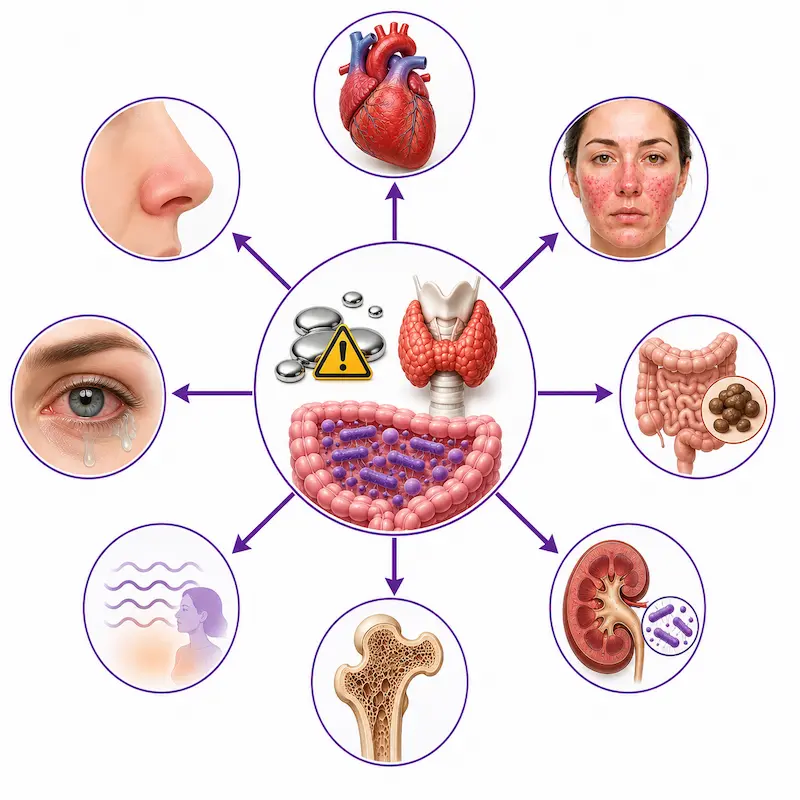
Each of these had been addressed separately, by separate practitioners, with separate treatments. None of them had been investigated together. And none of the practitioners managing any individual condition had asked what might be creating the internal environment in which all of these conditions were simultaneously present and progressively worsening.
What Her Testing Revealed
Her functional medicine investigation produced one of the most comprehensive and clinically instructive testing pictures I have encountered in my practice. Every panel told a consistent story — and every finding connected to every other finding in a picture that explained not just the heart palpitations but every symptom she had been managing across every body system.
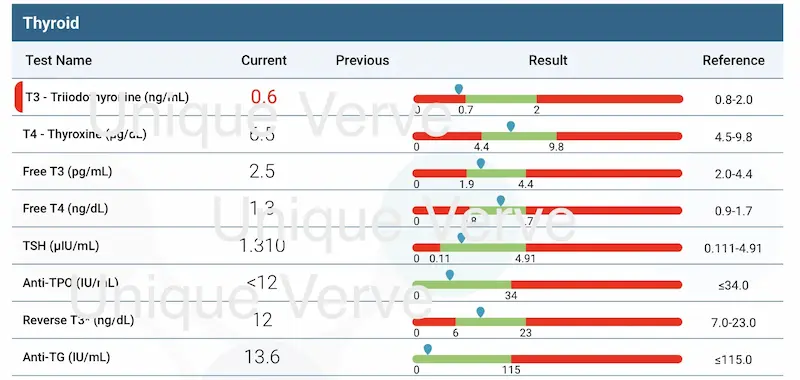
Her thyroid panel revealed significantly suboptimal thyroid function: T3 at 0.6 against a reference range of 0.8-2.0 — below the lower boundary of the range — and free T3 at 2.5, suboptimal by functional medicine standards. This level of thyroid insufficiency impairs gut motility (contributing to her constipation), reduces DAO enzyme production (amplifying histamine accumulation and its cardiac expression), slows detoxification capacity (allowing toxic burden to compound), and impairs immune regulatory function (explaining the recurrent UTIs and skin immune dysregulation). A single finding, upstream of every body system.
Her lipid panel showed elevated HDL — which her conventional practitioners had interpreted as favorable. Research published in Arteriosclerosis, Thrombosis, and Vascular Biology challenges the universal assumption that higher HDL is always protective. In the context of significant oxidative stress, elevated HDL can reflect dysfunctional, oxidatively modified HDL — HDL that has lost its cardioprotective properties through oxidative damage.
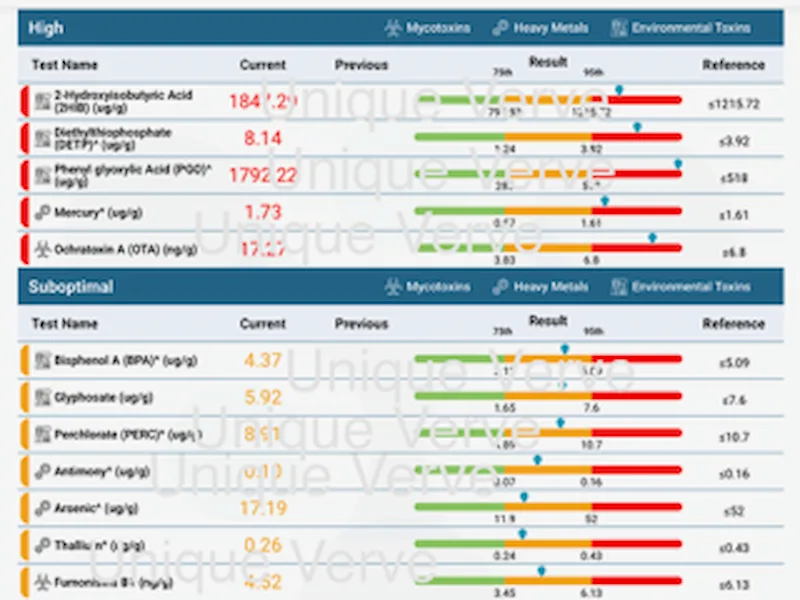
Her Total Tox Burden results confirmed the oxidative stress picture that her elevated HDL was signaling: high mercury, moderately high antimony, arsenic, and thallium, ochratoxin A mycotoxin, and significantly elevated environmental toxins including 2HIB, DETP, PGO, BPA, glyphosate, and PERC. This toxic burden — invisible to every conventional test she had been given — was maintaining her immune system in a state of chronic oxidative hypervigilance that was simultaneously impairing her thyroid conversion, priming her mast cells for histamine over reactivity, and contributing to the cardiac conduction changes associated with heavy metal toxicity.
Her Micronutrient Panel with SNPs revealed genetic variants impairing the absorption and utilization of nutrients critical to every system that was symptomatic. SNPs to vitamin A, zinc, and selenium — driving the thyroid dysfunction, skin issues, poor immune function, and bone density problems simultaneously. SNPs to B2, B9, and B12 — impairing methylation, cardiovascular function, detoxification, and immune regulation. Magnesium SNPs — directly contributing to the heart palpitations through impaired cardiac muscle relaxation and electrical conduction regulation. Vitamin C and vitamin D insufficiency — driving the bone density problems and immune vulnerability confirmed by her osteoporosis diagnosis and recurrent infections.
Her testing also revealed clinically low vitamin K2 — a finding that directly completes the bone density picture. Vitamin K2 is essential for activating osteocalcin, the protein responsible for binding calcium into bone matrix rather than allowing it to deposit in soft tissues and arterial walls. Without adequate K2, the calcium and vitamin D supplementation she had been taking for her osteoporosis was not being effectively directed into bone — it was circulating without the carboxylation signal that tells the body where to deposit it.
Low K2 alongside low vitamin D, magnesium SNPs, and zinc insufficiency created the perfect storm of bone density vulnerability that her osteoporosis diagnosis reflected — and the comprehensive nutrient repletion that included K2 alongside vitamin D and magnesium was part of what produced the DEXA scan improvement seven months later.
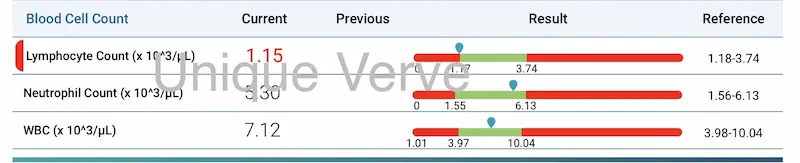
Her lymphocyte count was clinically low at 1.15 against a reference range of 1.18-3.74 — a finding indicative of viral or bacterial immune burden. In the context of her recurrent UTIs, hypothyroidism, and nutrient insufficiencies, this finding was likely a sign of gut dysbiosis that was maintaining a chronic low-grade immune activation that was depleting lymphocyte reserves while simultaneously contributing to the intestinal permeability driving her histamine overload and skin inflammation.
Everything Connected. Nothing Investigated Together.
What her testing revealed was not a collection of separate problems requiring separate treatments. It was a single upstream picture — toxic burden impairing thyroid function, thyroid dysfunction impairing detoxification and DAO production, nutrient SNPs compounding every pathway, gut dysbiosis from years of antibiotic use for recurrent UTIs maintaining chronic immune activation — expressing simultaneously across every body system through whichever physiological pathway each system’s specific vulnerabilities made most accessible.
The heart palpitations were histamine acting on cardiac H2 receptors — from a histamine bucket that was overflowing because mercury was impairing D1 deiodinase conversion and the resulting functional hypothyroidism had reduced her DAO enzyme production to the point where histamine could not be adequately degraded.
The rosacea and skin symptoms were the same immune dysregulation expressing through the skin. The constipation was thyroid-driven gut motility impairment. The recurrent UTIs were from weakened immune system and nutrient insufficiency. The hot flashes and vaginal dryness were hormonal — driven by the same estrogen clearance impairment that compounded the mast cell histamine burden. The osteoporosis was histamine H1 and H2 receptor activity on osteoclasts driving bone resorption, compounded by vitamin D, magnesium, and zinc insufficiency.
One upstream picture. Every body system. And a medical system that had monitored each downstream expression separately for years without ever asking what was producing all of them simultaneously.
The Outcome: Three Months, Seven Months, and a DEXA Scan
Within three months of beginning her functional medicine program — addressing the toxic burden, supporting thyroid function and nutrient repletion, restoring gut integrity, and rebalancing the hormonal picture — every symptom she had been managing across every body system had resolved. The nightly heart palpitations that had been present for over two years stopped. The lightheadedness and vertigo resolved. Her skin calmed. Her bowel function normalized. The recurrent UTIs stopped. The hot flashes resolved. The respiratory symptoms cleared. Her energy returned.
Four months after completing the program — seven months from its beginning — she sent me a text message. Her DEXA scan had been repeated. Her bone density had improved significantly. She had moved from an osteoporosis diagnosis to osteopenia — a meaningful, measurable improvement in bone density that her orthopedist could not explain and that calcium and vitamin D supplementation alone had never produced. The histamine H receptor activity on her osteoclasts had been normalized as her histamine burden and inflammation resolved. Her nutrient insufficiencies had been addressed. The toxic burden driving the oxidative damage to her bone matrix had been cleared. And her bones reflected all of it.
Her cardiologist, who had told her two years earlier that monitoring was the only option, was still monitoring. The functional medicine investigation had found the answer he was not looking for — because he was not looking upstream.
What Causes Heart Palpitations at Night — And What to Do About It
If you are experiencing nighttime heart palpitations that your cardiologist cannot explain — if you have been told your heart is structurally normal, or that your condition can only be monitored, or that the palpitations are stress or anxiety-related — the functional medicine investigation offers a different set of questions. Not what is wrong with the heart, but what is creating the internal environment in which the cardiac symptoms are appearing.
The most consistent upstream drivers I investigate for unexplained nighttime heart palpitations include: histamine intolerance from DAO enzyme insufficiency driven by gut dysbiosis, thyroid dysfunction reducing DAO production and impairing detoxification, toxic burden maintaining the oxidative stress and mast cell priming that keeps the histamine bucket full, magnesium insufficiency impairing cardiac muscle relaxation and electrical conduction, and hormonal imbalance — particularly estrogen dominance from poor clearance — stimulating mast cells and amplifying the histamine burden that is producing the palpitations.
None of these are investigated by a standard cardiologist workup. All of them are measurable through comprehensive functional medicine testing. And all of them are addressable — as the case above demonstrates, in a timeframe that produces meaningful, lasting results rather than indefinite monitoring of a condition whose cause was never identified.
Monitoring Is Not an Answer
What causes heart palpitations at night is rarely what conventional medicine looks for. The heart is not the problem. The heart is expressing a problem — in the histamine burden, in the thyroid insufficiency, in the toxic accumulation, in the nutrient depletion — that is simultaneously expressing through every other system in the body. The investigation is available. The findings are actionable. And the window for the most complete resolution is earlier rather than later.
Every year that the upstream picture goes uninvestigated, the drivers compound. The toxic burden accumulates further. The thyroid dysfunction deepens. The gut dysbiosis becomes more entrenched. The nutrient insufficiencies widen. And the threshold for histamine reactivity — the level of histamine burden at which the cardiac symptoms appear — lowers progressively, until the palpitations become more frequent, more intense, and more difficult to address than they would have been at an earlier stage of investigation.
Monitoring is not an answer. It is a placeholder for an investigation that has not yet happened. If you have been told to monitor your nighttime heart palpitations, the most important next step is not a longer Holter monitor recording or a more frequent cardiology follow-up. It is the upstream investigation that the cardiology workup was never designed to perform.
→ Book your Initial Functional Medicine Health and Skin Assessment
P.S. If finances have been the only thing standing between you and starting your functional medicine journey — flexible payment options are available through Cherry on our website. No interest, no impact on your credit score, quick approval, and affordable monthly payments. Apply in minutes on our website.
Frequently Asked Questions
Q1: Why do heart palpitations only happen at night?
Research confirms the molecular circadian clock drives peak mast cell reactivity during the dark period, and histamine-synthesizing enzyme (HDC) protein levels peak at night. In patients with sensitized mast cells from toxic burden, estrogen dominance, or environmental allergens, this circadian priming produces a nocturnal histamine dump — sudden mast cell degranulation releasing histamine that acts on cardiac H2 receptors, increasing heart rate and contractility. Most patients fall asleep normally then are woken abruptly by a racing heart, itching, or anxiety.
Q2: Why do I wake up with heart palpitations?
Waking from sleep with palpitations is the signature of a nocturnal histamine dump — sudden circadian mast cell degranulation during the dark period. Low blood sugar can also produce nocturnal waking through a catecholamine surge that corrects hypoglycemia while simultaneously stimulating mast cells, creating a cortisol-histamine amplification loop that sustains waking through the night.
Q3: Why do palpitations get worse when lying down?
Lying down increases venous return to the heart, raising cardiac preload and amplifying the perception of each heartbeat. The removal of daytime sympathetic override and sensory distraction makes cardiac sensations more perceptible. In the quiet of the bedroom, even moderate histamine-driven increases in cardiac rate feel significantly more alarming than during daytime noise and movement.
Q4: Can hormonal changes cause nighttime heart palpitations?
Yes — and this is one of the most consistently overlooked connections in both cardiology and gynecology. Estrogen directly stimulates mast cells and drives histamine release, while progesterone stabilizes mast cells and provides the regulatory counterbalance. As progesterone declines in perimenopause — which can begin as early as the mid-30s — the resulting relative estrogen dominance amplifies mast cell degranulation and histamine production, worsening the histamine-cardiac symptom picture. Hot flashes and nighttime heart palpitations frequently occur together in perimenopausal women for exactly this reason: both are estrogen-driven mast cell activation expressing through different physiological pathways simultaneously.
Q5: Can certain foods trigger bedtime palpitations?
Yes — and this is often the most actionable short-term insight for patients experiencing nighttime palpitations. High-histamine foods consumed at dinner — fermented foods, aged cheeses, wine, processed meats, leftovers, canned fish, vinegar-containing foods — significantly increase the histamine load entering the evening hours. When DAO enzyme activity is already impaired — from gut dysbiosis, thyroid insufficiency, B6 or copper deficiency, or antibiotic-related microbiome damage — the additional histamine from evening food consumption can be sufficient to push the histamine bucket over the threshold at which cardiac H2 receptor stimulation produces palpitations. Tracking palpitation intensity against the previous evening’s food choices is often the first clinical clue that histamine is involved.
Q6: Is low magnesium causing my night palpitations?
Magnesium is essential for cardiac muscle relaxation, electrical conduction regulation, and calcium channel function in the heart. Magnesium insufficiency — which is extremely common and frequently missed by standard serum magnesium testing, which measures only circulating magnesium rather than intracellular stores — directly impairs the cardiac electrical stability that prevents palpitations. Cellular magnesium status measured via Vibrant Wellness Micronutrient Panel with SNPs is a more clinically meaningful assessment than serum magnesium alone, and frequently reveals insufficiency in patients whose serum levels appeared normal. Genetic variants (SNPs) in magnesium metabolism genes can also impair absorption and cellular utilization independent of dietary intake — which is why supplementation without SNP assessment can produce inconsistent results.
Written by Natalie Maibenko – a Certified Functional Medicine Practitioner and Master Esthetician with 22+ years of experience and founder of Unique Verve

Natalie Maibenko
Functional Medicine & Skincare Expert – Helping You Take Control of Your Health and Achieve Lasting Skin Results Nationwide — Virtual Practice
As a Certified Functional Medicine Practitioner my Expertise Encompasses:
- Immune System: frequent illness, UTIs, yeast infections
- Allergies, Asthma
- Skin Problems: acne, cystic acne, rosacea, eczema, dermatitis, ichthyosis, psoriasis, vitiligo, melasma
- Inflammation: arthritis, rhinitis, joint & muscle pain, migraines, headaches
- Sleep Disturbunces, Insomnia
- Gut Problems: IBS/IBD, bloating, acid reflux, gas, constipation, diarrhea, parasites, fungal/yeast overgrowths
- Hormonal Imbalances: PCOS, PMS symptoms, weight problems/inability to lose weight, thyroid problems
- Hair Loss, Alopecia
- Mood Imbalances: anxiety, depression, irritability
- Metabolic Dysfunction, Insulin Resistance, Type 2 Diabetes
- Optimizing Wellness for Successful Pregnancy
- Autoimmune Conditions: Hashimoto’s thyroiditis, grave’s disease, reumatoid arthritis (RA), lupus, etc
- Bone Health: osteopenia/ osteoporosis
- Effective Anti-Aging Strategies without Injectables with the inside-out & outside-in approach
- Detoxification of Heavy Metals, Mycotoxins, Environmental Toxins
- Reversing Breast Implant Illness
- Preparation for the Explant Surgery and Optimization of Wellness & Vitality Post-Explant
