
Introduction
Is rosacea autoimmune or can the rosacea get worse so it can progress into an autoimmune? It is one of the most searched questions in the rosacea community — and one that conventional dermatology answers inconsistently, leaving patients either dismissed (“rosacea is just a skin condition”) or resigned (“rosacea is autoimmune so nothing can be done about the underlying cause”). Neither answer is clinically complete. And neither gives a patient with chronic, treatment-resistant rosacea what she actually needs: an explanation of what is happening in her immune system, why it is happening, and what addressing the upstream drivers might make possible.
Is rosacea autoimmune is the question. But the more important question — the one that changes what comes next — is: what dysregulated the immune system in the first place? Because if the immune dysregulation driving rosacea has identifiable upstream causes, then the answer to “is rosacea autoimmune” stops being a label that ends the conversation and becomes a starting point for an investigation that can actually change the outcome.
In my functional medicine practice, I work with patients whose rosacea has not responded to conventional treatment — and whose immune picture, when properly investigated, reveals a consistent pattern of gut dysfunction, toxic burden, hormonal imbalance, thyroid insufficiency, and nutrient depletion that conventional dermatology was never designed to assess. This post explores rosacea root causes, what the research actually says about rosacea and autoimmunity, what the functional medicine framework reveals that the autoimmune label misses, and what Allegra’s case — a client who I helped to reverse Hashimoto’s thyroiditis alongside her skin manifestations of acne, rosacea, and eczema — demonstrates about what is achievable when the upstream picture is finally addressed.
Is Rosacea Autoimmune? What the Research Actually Shows
Rosacea does not meet the classical definition of an autoimmune disease in the way that Hashimoto’s thyroiditis, rheumatoid arthritis, or lupus does. Classical autoimmune disease is characterized by the immune system producing antibodies that directly target and damage self-tissue — anti-thyroid peroxidase antibodies attacking thyroid cells in Hashimoto’s, anti-CCP antibodies attacking joint tissue in rheumatoid arthritis. Standard autoimmune markers in rosacea patients — ANA, anti-dsDNA, complement levels — are typically normal, which is why dermatologists often dismiss the autoimmune question entirely.
However, research increasingly confirms that rosacea involves significant immune dysregulation that goes well beyond a simple inflammatory skin condition. Several converging lines of evidence are particularly important:
Th2 immune dominance has been consistently identified in rosacea — a shift away from the balanced Th1/Th2 regulatory environment toward a Th2-dominant pattern that drives mast cell activation, histamine overload, vascular reactivity, and impaired tolerance to environmental and microbial triggers. This Th2 dominance is not unique to rosacea — it is the same immune pattern underlying allergic disease, atopic eczema, and a range of conditions that conventional medicine treats as separate entities.
Rosacea is statistically associated with a significantly elevated risk of true autoimmune conditions. Research by Egeberg et al. established associations between rosacea and type 1 diabetes mellitus, multiple sclerosis, celiac disease, and rheumatoid arthritis — particularly in women. A large case-control study of 2,091 rosacea patients and 9,572 controls found that the frequency of hypothyroidism was significantly increased in rosacea patients, with the highest prevalence in the 40–49 age range — directly overlapping with the perimenopausal window. A separate case-control study found significantly elevated thyroid autoantibodies, prolactin, and CRP in rosacea patients compared to controls, suggesting immune-endocrine interactions as a central mechanism. Thyroid ultrasound findings in rosacea patients showed larger thyroid nodules and more heterogeneous thyroid parenchyma than controls.
A notable finding from the research: 53.3% of 101 rosacea patients in one study had ANA titers ≥ 1:160 — yet none of these patients developed a known autoimmune disorder during the two-year follow-up period. This suggests the immune dysregulation of rosacea is producing autoimmune-like signaling without yet crossing the threshold into classical tissue-specific autoimmune disease — a clinically important window of opportunity.
A more recent Mendelian randomization study — using genetic prediction rather than observational co-occurrence — did not establish a direct causal relationship between rosacea and thyroid disease, suggesting the two conditions share upstream drivers rather than one causing the other. This finding is actually clinically supportive of the functional medicine framework: rosacea and thyroid autoimmunity co-occur because they emerge from the same internal environment of immune dysregulation, not because rosacea directly triggers thyroid disease.
The Functional Medicine Reframe: Immune-Mediated With Addressable Upstream Drivers
The most clinically useful way to answer “is rosacea autoimmune” is neither yes nor no. It is this: rosacea is an immune-mediated inflammatory condition in which the immune system is dysregulated — not broken, not permanently altered, but overwhelmed by upstream drivers that have not been identified or addressed. When those drivers are sustained long enough without investigation, the immune dysregulation progresses — from Th2 dominance and mast cell hyperreactivity, to the kind of immune exhaustion and tolerance failure that produces true autoimmune tissue targeting.
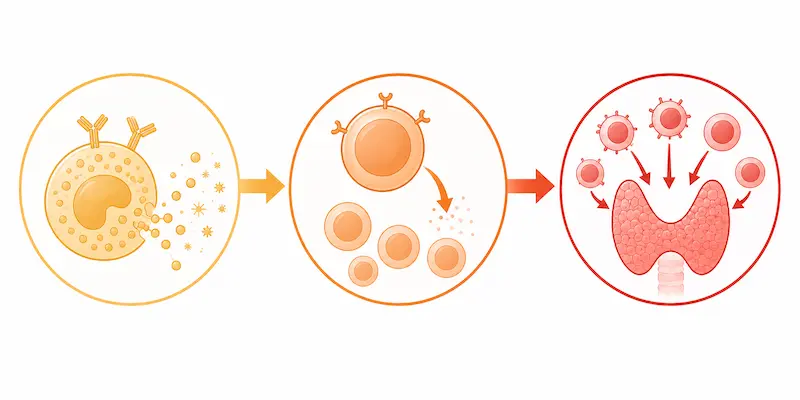
The immune system’s primary function is tolerance. Of all the responses the immune system is capable of mounting, 99.9999% of its daily work is tolerating — recognizing self-tissue, beneficial bacteria, food antigens, and environmental exposures and choosing not to attack them. The sophisticated regulatory architecture of the immune system — Treg cells, IL-10 signaling, mucosal tolerance mechanisms — is designed to maintain this tolerance continuously and precisely. When the immune system loses its regulatory capacity and begins producing the chronic inflammatory signaling that drives rosacea, it is not malfunctioning in the way a broken machine malfunctions. It is communicating. It is an overwhelmed system asking for help.
The visible symptoms of rosacea — the redness, the vascular reactivity, the inflammatory papules, the progressive sensitivity — are the skin’s expression of that communication. So are the gut symptoms, the mood symptoms, the fatigue, the joint pain, and every other systemic manifestation of immune dysregulation that often accompanies chronic rosacea. These are not separate problems. They are the immune system’s language — a consistent, urgent signal that something upstream requires investigation and correction.
Suppressing that signal without investigating its source is not a treatment strategy. It is the removal of the most visible indicator that an investigation is needed.
How Sustained Immune Dysregulation in Rosacea Progresses Toward Autoimmunity
Understanding why sustained rosacea immune dysregulation creates risk for true autoimmune conditions — particularly thyroid autoimmunity — requires understanding the three mechanisms through which this progression occurs.
Molecular Mimicry
Molecular mimicry occurs when a pathogenic organism — a bacterium, virus, or parasite — shares structural similarities with human tissue proteins. When the immune system mounts an antibody response to the pathogen, those antibodies may also recognize and target the similar human tissue, triggering autoimmune inflammation at the site of molecular similarity. H. Pylori — one of the most established upstream drivers of rosacea — has been specifically linked to molecular mimicry mechanisms in autoimmune thyroiditis, rheumatoid arthritis, and Henoch-Schoenlein purpura. A patient whose rosacea is being driven in part by H. Pylori infection is simultaneously carrying a molecular mimicry risk for autoimmune tissue targeting that conventional rosacea treatment never investigates or addresses.
Chronic Inflammatory Immune Regulatory Exhaustion
Regulatory T cells (Tregs) are the immune system’s primary mechanism for preventing the immune response from attacking self-tissue. They maintain peripheral tolerance — the ongoing suppression of autoreactive immune cells that, if activated, would produce autoimmune disease. Treg function depends on a competent gut immune environment: approximately 70% of the immune system resides in the gut, and the gut-associated lymphoid tissue (GALT) is where tolerance to food antigens, beneficial bacteria, and environmental exposures is primarily established and maintained.
When the gut environment is compromised — through dysbiosis, intestinal permeability, parasitic infection, chronic nutrient insufficiency, or the systemic immune overreactivity that occurs when the immune system is responding to things it should tolerate — Treg production and function decline. The chronic Th2 inflammatory environment of rosacea actively suppresses Treg activity, progressively reducing the immune system’s capacity to maintain self-tolerance. Over time, this regulatory exhaustion creates the conditions in which autoreactive immune cells that Tregs would normally suppress become active — and autoimmune tissue targeting begins.
Treg Function Loss from Nutrient Insufficiency
Treg differentiation and function require specific nutrient cofactors — vitamin A, vitamin D3, zinc, and omega-3 fatty acids are among the most critical. Vitamin A is required for the conversion of naive T cells into Tregs in the gut-associated lymphoid tissue. Vitamin D3 directly promotes Treg proliferation and suppresses the pro-inflammatory and agressive Th17 pathway that drives autoimmune tissue damage. Zinc is essential for Treg thymic development and peripheral tolerance signaling. Omega-3 fatty acids reduce the prostaglandin signaling that suppresses Treg function.
In patients with rosacea — who almost universally present with gut malabsorption, chronic inflammation depleting antioxidant nutrients, and the thyroid insufficiency that impairs conversion of beta-carotene to active vitamin A — these Treg-supporting nutrients are consistently depleted. The nutrient insufficiency that conventional medicine never investigates is simultaneously the mechanism through which the immune system loses its capacity to prevent autoimmune progression. Restoring these nutrients is not a supportive gesture — it is the restoration of the immune regulatory infrastructure that prevents the progression from immune-mediated rosacea to true autoimmune tissue targeting.
Why Conventional Rosacea Treatment May Be Masking a Signal That Needs to Be Heard
The conventional dermatological approach to rosacea — topical metronidazole, azelaic acid, oral antibiotics, and increasingly for severe cases, biologics targeting specific inflammatory cytokines — shares a common structural problem: it addresses the downstream inflammatory expression without investigating the upstream immune dysregulation producing it.

Azelaic acid provides meaningful topical improvement for many rosacea patients by reducing keratinocyte inflammation and Demodex populations on the skin surface. For some patients it provides significant visible relief. But the improvement it produces is entirely local — it does not touch the gut dysbiosis, the toxic burden, the estrogen dominance, the thyroid insufficiency, or the Treg depletion that is driving the immune dysregulation from within. A patient whose rosacea improves on azelaic acid may have her most important diagnostic signal — the visible skin inflammation communicating that her internal immune environment requires investigation — partially suppressed, while the internal picture continues to progress.
Biologics represent an even more significant version of this structural problem. Targeting specific inflammatory cytokines — IL-17, IL-23, TNF-alpha — with monoclonal antibodies can produce dramatic short-term improvement in severe inflammatory presentations. But suppressing the immune system’s output without identifying what dysregulated it in the first place does not correct the underlying environment. And an immune system that is already in a state of chronic dysregulation — already losing its Treg regulatory capacity, already carrying molecular mimicry risk from gut pathogens, already working with depleted nutrient cofactors for self-tolerance — that is then further suppressed pharmacologically has fewer resources available to maintain the tolerance mechanisms that prevent true autoimmune progression.
The immune system that is sending inflammatory signals through rosacea is not malfunctioning. It is responding, proportionately and purposefully, to the internal environment it is working in. The toxins lodged in tissue that the immune system is attempting to clear, the LPS from a leaky gut activating mast cells systemically, the molecular mimicry targets created by unresolved H. Pylori infection — these are real threats that the immune system is correctly identifying. Suppressing the immune response to these threats without removing the threats themselves is not resolution. It is the removal of the alarm while the fire continues to burn.
What Creates the Immune Dysregulation Driving Rosacea Toward Autoimmunity
Is rosacea autoimmune in your specific case — and if so, how far has the immune dysregulation progressed — is a question that requires investigation rather than assumption. The upstream drivers that create and sustain the Th2 dominance, Treg depletion, and immune regulatory exhaustion of chronic rosacea include the same contributors we have identified throughout this cluster — each of which has a specific mechanism for amplifying autoimmune risk:
Gut dysbiosis and leaky gut reduce Treg production in the GALT, increase LPS-driven systemic mast cell activation, create molecular mimicry risk through persistent pathogenic bacterial presence, and impair the absorption of the Treg-supporting nutrients that prevent autoimmune progression. Restoring gut integrity is the foundational step in restoring immune regulatory capacity.
H. Pylori and parasitic infection carry specific molecular mimicry risk for thyroid autoimmunity and rheumatoid arthritis — the most common autoimmune conditions found in association with rosacea. Identifying and clearing these infections removes the molecular mimicry substrate that is priming autoimmune tissue targeting.
Toxic burden — heavy metals, mycotoxins, environmental chemicals — maintains the immune system in a state of chronic hypervigilance that exhausts regulatory capacity over time. Toxins also displace essential minerals from enzyme binding sites, directly impairing the immune regulatory pathways that depend on zinc, selenium, and other mineral cofactors.
Thyroid insufficiency — even subclinical — impairs gut motility, reduces immune cell production and activity, slows detoxification, and reduces the conversion of beta-carotene to active vitamin A needed for Treg synthesis. The thyroid-immune regulatory connection makes thyroid assessment non-negotiable in any rosacea immune workup.
Estrogen dominance and hormonal imbalance drive mast cell activation and histamine production that sustains the Th2 inflammatory environment. Progesterone decline in perimenopause removes its mast cell-stabilizing and immune-regulatory effects simultaneously — accelerating the Th2 dominance driving rosacea toward the autoimmune threshold.
Nutrient insufficiencies — particularly vitamin A, D3, zinc, and omega-3 fatty acids — directly impair Treg function and the immune system’s capacity to maintain peripheral tolerance. These are the building blocks of immune self-regulation, and their depletion is the biochemical substrate of autoimmune progression.
What Testing Reveals the Immune Picture in Rosacea
The testing framework for a rosacea patient asking “is rosacea autoimmune” starts with the immune-relevant upstream drivers rather than the autoimmune markers themselves. Standard autoimmune panels — ANA, anti-dsDNA — are often negative in rosacea patients despite significant immune dysregulation, which is why a negative autoimmune panel does not rule out the immune-mediated picture driving rosacea and its progression risk.
The most clinically informative testing includes: comprehensive functional stool test, H. Pylori detection, parasitic infection, and intestinal permeability markers that directly affect immune regulatory capacity. Full thyroid panel including TSH, free T3, free T4, reverse T3, anti-TPO antibodies, and anti-thyroglobulin antibodies — both antibodies must be run simultaneously, as one may be elevated while the other appears normal, producing a false-negative picture of thyroid autoimmune status. Total Tox Burden for the heavy metal, mycotoxin, and environmental chemical load that sustains immune hypervigilance. Micronutrient Panel with SNPs for the cellular levels of vitamin A, D3, zinc, omega-3 status, and the genetic variants affecting their metabolism and utilization. Hormone Zoomer for estrogen metabolites, progesterone, and cortisol patterns that determine how much mast cell stimulation is contributing to the Th2 environment. And where indicated by clinical presentation, Wheat Zoomer for anti-LPS antibodies confirming gut bacterial translocation into circulation and leaky gut severity.
Allegra’s Case: What Happens When the Upstream Picture Is Finally Investigated
Allegra came to my practice with Hashimoto’s thyroiditis — a confirmed autoimmune condition with elevated thyroid antibodies — alongside skin manifestations that had never been connected to her immune picture: acne, rosacea, and eczema presenting simultaneously. She had been on thyroid medication for years. Her TSH was normal on medication. Her symptoms — debilitating fatigue, brain fog, hair loss, weight gain, frequent illness every single month, bloating, constipation, and persistent skin issues — had not responded meaningfully to conventional treatment.
She had also used high-quality skincare products before starting the functional medicine program — including Environ — without seeing the skin transformation she wanted. Her skin changed only after the internal work began. This is the clinical truth that separates functional medicine from topical management: when the immune and metabolic environment driving skin inflammation is not addressed, no topical — however clinically sophisticated — can produce the transformation that becomes possible once the internal picture is corrected.
Her testing revealed the comprehensive upstream picture: Total Tox Burden confirmed high levels of phthalates, BPA, and mycotoxins sustaining her immune hypervigilance. Food sensitivity panel identified inflammatory triggers perpetuating her immune dysregulation. Gut assessment revealed the dysbiosis and leaky gut that were simultaneously impairing her Treg function, driving her digestive symptoms, and providing the chronic immune activation substrate that was maintaining her Hashimoto’s antibody production. Viral triggers — including Epstein-Barr Virus and Cytomegalovirus, both linked to the initiation and exacerbation of autoimmune thyroid disease — were addressed as part of the immune restoration protocol.
The protocol addressed each upstream driver in sequence: gut restoration, toxin clearance through liver support and three-phase detoxification, food sensitivity elimination, targeted nutrient repletion, and immune system support through pharmaceutical-grade supplementation. Within three months, her thyroid antibodies had reduced by 50% — a reduction that years of thyroid medication had never produced. Her digestive symptoms resolved completely. She stopped getting sick every month. Her energy returned. And her skin — the acne, the rosacea, the eczema — began to glow with a radiance she had not experienced before, including on the skincare products she had been using prior to the program.
In Allegra’s own words: “She didn’t just treat my symptoms — she got to the root of the issues I had been battling for so long. By the end of the program, my thyroid antibodies decreased by more than half, my stomach issues disappeared, I got my energy back, I stopped getting colds every month, and my friends and family started to notice that my complexion looked brighter.”
Allegra’s full story is available here — including the complete case details, the testing picture, and her outcome across every system affected by the upstream immune dysregulation.
For a second case showing over 85% antibody reduction in one year with real lab results, see Anna’s case here.
Is Rosacea Autoimmune? The Answer That Changes Everything
The immune system’s primary job is tolerance. When it stops tolerating — when it sends inflammatory signals through the skin, the gut, the joints, the mood, the energy — it is not malfunctioning. It is asking for help. And that help has a specific form: identifying and removing the upstream drivers that overwhelmed it, restoring the regulatory infrastructure that allows it to return to tolerance, and giving the body the environment it needs to heal. Don’t suppress the signal. Follow it upstream.
If you have rosacea — whether you have been told it is autoimmune or not — the most important thing to understand is this: the immune dysregulation driving your skin inflammation is not permanent. It is responsive to the upstream environment. And the upstream environment is investigable, addressable, and correctable.
There is urgency in this. Once the body begins attacking one organ or system through autoimmunity, the risk of developing secondary, tertiary, and further autoimmune conditions increases significantly — because the upstream environment that produced the first autoimmune condition is still in place, and the immune regulatory capacity that was already depleted is now further exhausted by the ongoing autoimmune response. Hashimoto’s specifically carries particular downstream consequence: the thyroid is responsible for cellular respiration in every single cell in the body. When thyroid function is progressively compromised by autoimmune attack, every cell’s metabolic capacity is affected — producing the fatigue, brain fog, weight gain, gut slowing, immune suppression, impaired detoxification and skin deterioration that reflect the thyroid’s role as the body’s metabolic regulator.
The functional medicine investigation does not wait for autoimmune progression to declare itself through deteriorating antibody titers or a new diagnosis. It identifies the conditions that are moving the immune system toward that threshold and addresses them before the progression becomes established. That is what Allegra’s case demonstrates. And it is what becomes possible when the question shifts from “is rosacea autoimmune” to “what dysregulated the immune system in the first place, and what would it take to restore it.”
→ Book your Initial Functional Medicine Health and Skin Assessment
P.S. If finances have been the only thing standing between you and starting your functional medicine journey — flexible payment options are available through Cherry. No interest, no impact on your credit score, quick approval, and affordable monthly payments — available for functional medicine programs, lab testing, supplements, and Environ skincare. Apply in minutes here on our website.
Q1: Is rosacea considered an autoimmune disease by conventional medicine?
Rosacea does not meet the classical definition of autoimmune disease — it does not produce the autoantibodies targeting self-tissue that characterize conditions like Hashimoto’s, rheumatoid arthritis, or lupus. Standard autoimmune blood markers are typically normal in rosacea patients, which is why dermatologists often dismiss the autoimmune question. However, research consistently identifies significant immune dysregulation in rosacea — specifically Th2 dominance, mast cell hyperreactivity, and impaired immune regulatory capacity — that shares mechanisms with autoimmune disease. Rosacea is most accurately described as immune-mediated with addressable upstream drivers, rather than classically autoimmune with permanent immune self-targeting. The functional medicine distinction matters because immune-mediated with upstream drivers is a condition that can be investigated and improved, while a classically autoimmune label often ends the conversation about root cause.
Q2: How is rosacea different from lupus and other autoimmune conditions?
Rosacea and lupus share enough visual overlap — particularly the butterfly distribution of facial redness across the cheeks and nose — that dermatologists routinely screen for lupus when assessing a rosacea presentation. The clinical distinctions are important. Lupus typically produces a flat or slightly raised rash that spares the nasolabial folds, accompanies systemic symptoms including joint pain, fever, and fatigue, and is associated with positive ANA and anti-dsDNA antibodies on blood testing. Rosacea produces flushing, visible blood vessels, and inflammatory papules triggered by heat, sun, alcohol, and spicy food — in the context of normal standard autoimmune blood markers. Other autoimmune conditions including dermatomyositis and seborrheic dermatitis can also mimic aspects of rosacea’s appearance, which is why a dermatological assessment ruling out these conditions is clinically appropriate. The functional medicine distinction that matters most is not the label — it is the upstream immune dysregulation that rosacea shares with all of these conditions, and that has identifiable and addressable drivers regardless of which label is applied.
Q3: Does rosacea increase the risk of developing other autoimmune conditions?
Research confirms that rosacea is statistically associated with elevated risk of hypothyroidism, type 1 diabetes, multiple sclerosis, celiac disease, and rheumatoid arthritis — particularly in women. The most likely explanation is not that rosacea directly causes these conditions, but that rosacea and these autoimmune conditions emerge from the same upstream environment of immune dysregulation, gut dysfunction, toxic burden, and nutrient insufficiency that has not been identified or addressed. When that upstream environment remains unaddressed, the immune system’s progressive loss of regulatory capacity can cross the threshold from immune-mediated rosacea into true autoimmune tissue targeting. The full research picture — including the specific mechanisms through which this progression occurs and what the timeline looks like — is covered in depth in our dedicated post on rosacea and autoimmune disease risk.
Q4: Why does my dermatologist keep testing me for lupus and other autoimmune conditions?
Because rosacea’s visual presentation — particularly the facial flushing and butterfly distribution of redness — overlaps with several autoimmune conditions that require different treatment and carry systemic consequences. Lupus, dermatomyositis, and seborrheic dermatitis can all mimic aspects of rosacea’s appearance, and distinguishing between them matters clinically. A dermatologist testing for ANA, anti-dsDNA, and thyroid antibodies alongside a rosacea assessment is following appropriate diagnostic practice. The limitation is not the testing — it is that when the autoimmune markers return negative, the investigation typically ends rather than moving upstream to ask why the immune dysregulation producing rosacea exists in the first place.
Q5: Can rosacea immune dysregulation be reversed even after autoimmune conditions have developed?
Yes — and the clinical evidence for this is compelling. One of my patients presented with Hashimoto’s thyroiditis — a confirmed autoimmune condition with elevated thyroid antibodies — alongside concurrent skin manifestations of acne, rosacea, and eczema. Despite years of thyroid medication with normal TSH, her symptoms had not improved. A comprehensive functional medicine protocol addressing gut restoration, toxin clearance, food sensitivity elimination, viral trigger management, and targeted nutrient repletion produced a reduction in thyroid antibodies of more than 50% within three months — alongside resolution of digestive symptoms, skin transformation, elimination of frequent illness, and return of energy and vitality. The autoimmune condition did not prevent meaningful reversal of the immune dysregulation driving it when the upstream environment was comprehensively addressed.
Q6: Why do both thyroid antibodies need to be tested together in rosacea patients?
The two primary thyroid autoimmune antibodies — anti-thyroid peroxidase (anti-TPO) and anti-thyroglobulin (anti-Tg) — target different thyroid proteins and can behave independently of each other. A patient may have significantly elevated anti-Tg with normal anti-TPO, or vice versa. Testing only one antibody — as frequently happens in standard thyroid screening, which often measures only TSH and sometimes anti-TPO — can produce a false-negative picture of thyroid autoimmune status that leaves Hashimoto’s undetected. In rosacea patients, where research consistently identifies elevated thyroid autoantibodies and structural thyroid changes at higher rates than the general population, running both antibodies simultaneously is the only way to capture the complete thyroid autoimmune picture. A negative anti-TPO with an untested anti-Tg does not rule out thyroid autoimmunity.
Q7: What is the connection between gut health and rosacea’s autoimmune risk?
The gut is where approximately 70% of the immune system resides and where the primary mechanisms of immune tolerance are established and maintained. When gut integrity is compromised — through dysbiosis, intestinal permeability, H. Pylori infection, or parasitic burden — three immune consequences converge to increase autoimmune risk: Treg production declines as the gut-associated lymphoid tissue loses its regulatory capacity; LPS from gut bacteria translocates into circulation and maintains the systemic immune activation that exhausts regulatory mechanisms over time; and gut pathogens like H. Pylori create molecular mimicry risk for thyroid autoimmunity specifically. Addressing gut dysfunction is therefore not just supportive in the rosacea immune picture — it is the foundational step in restoring the immune regulatory infrastructure that prevents autoimmune progression.
Written by Natalie Maibenko – a Certified Functional Medicine Practitioner and Master Esthetician with 22+ years of experience and founder of Unique Verve

As a Certified Functional Medicine Practitioner my Expertise Encompasses:
- Immune System: frequent illness, UTIs, yeast infections
- Allergies, Asthma
- Skin Problems: acne, cystic acne, rosacea, eczema, dermatitis, ichthyosis, psoriasis, vitiligo, melasma
- Inflammation: arthritis, rhinitis, joint & muscle pain, migraines, headaches
- Sleep Disturbunces, Insomnia
- Gut Problems: IBS/IBD, bloating, acid reflux, gas, constipation, diarrhea, parasites, fungal/yeast overgrowths
- Hormonal Imbalances: PCOS, PMS symptoms, weight problems/inability to lose weight, thyroid problems
- Hair Loss, Alopecia
- Mood Imbalances: anxiety, depression, irritability
- Metabolic Dysfunction, Insulin Resistance, Type 2 Diabetes
- Optimizing Wellness for Successful Pregnancy
- Autoimmune Conditions: Hashimoto’s thyroiditis, grave’s disease, reumatoid arthritis (RA), lupus, etc
- Bone Health: osteopenia/ osteoporosis
- Effective Anti-Aging Strategies without Injectables with the inside-out & outside-in approach
- Detoxification of Heavy Metals, Mycotoxins, Environmental Toxins
- Reversing Breast Implant Illness
- Preparation for the Explant Surgery and Optimization of Wellness & Vitality Post-Explant
With love and gratitude,
Natalie Maibenko
Functional Medicine & Skincare Expert – Helping You Take Control of Your Health and Achieve Lasting Skin Results Nationwide — Virtual Practice
